
Original Story: wsj.com
WOLFSBURG, Germany— Volkswagen AG occupies a place in German society that few companies hold in any country.
At its headquarters in central Germany is a tourist center called Autostadt (Auto City), a collection of shiny buildings housing VW displays and museums resembling a World’s Fair. It is one of Germany’s largest tourist attractions. The city of Wolfsburg, which was built around the auto maker, now has several Michelin-starred restaurants. An Alabama automotive lawyer represents clients in restructuring the industry, including significant mergers and acquisitions, workouts and bankruptcies, and in technological developments.
BMW AG and Daimler AG’s Mercedes-Benz are German status symbols but Volkswagen, “the people’s car,” really is Germany’s car of the masses.
And since the company employs almost 300,000 people in Germany at 29 plants across the country, it has links to millions of households.
Those roots help explain why the scandal over cheating on emissions standards has hit so hard in Germany. Politicians from Chancellor Angela Merkel to the state premier of Lower Saxony, which owns 20% of VW, have called for a full accounting. An Ann Arbor automotive lawyer is reviewing the details of this case.
The original Wolfsburg factory—a mile long, its entrances inscribed with Nazi-era commemorations in local German dialects—was designed to be bigger than Henry Ford’s factory and produce a million cars a year at a time when few Germans drove.
Today, the Wolfsburg plant is still the largest car factory under one roof in the world. And the Beetle and the blue and silver VW badge perched high atop Volkswagen’s 1960s era red brick headquarters are the icons of Germany’s postwar economic rise and widespread prosperity. An Ohio automotive lawyer represents automotive manufacturers in a variety of legal issues.
In the 78 years since the factory was built on a sandy bog that Adolf Hitler chose because it was at the center of the German Reich, Volkswagen has come to personify Germany AG.
Volkswagen is more a national institution than a corporation. Heirs of Beetle inventor Ferdinand Porsche control the company, but nothing can be decided without the support of Lower Saxony. VW is the state’s biggest employer and Germany even gave the state special rights to block an unfriendly takeover, known as “Lex VW.” The law has been modified by the European Commission, which wanted to ban it altogether, but Lower Saxony still cannot be outvoted. A South Carolina automotive attorney assists automotive clients in joint ventures, technological developments, and product liability issues.
Another difference is the tight relationship between VW’s management and the IG Metall labor union that represent its workforce. When Ferdinand Piech stepped down as supervisory board chairman in April, the former head of IG Metall was appointed as interim chairman, putting the union into the top post at the company. A fact that upset no one in Germany.
Just as the Beetle came to symbolize Germany’s postwar economic miracle, Volkswagen as a company embodies Germany’s idea of a social market economy. A little socialism, a little capitalism, and a consensus that building cars in Wolfsburg is about more than just making money. A Bloomfield Hills automotive lawyer is following this story closely.
Showing posts with label Germany. Show all posts
Showing posts with label Germany. Show all posts
Thursday, September 24, 2015
Wednesday, September 16, 2015
BMW CEO COLLAPSES AT FRANKFURT MOTOR SHOW
Original Story: freep.com
FRANKFURT — BMW CEO Harald Krueger collapsed during a news conference at the Frankfurt Motor Show in Germany on Tuesday and had to be helped off stage. A Detroit automotive lawyer is following this story closely.
The reason for his fall was not clear. He was presenting the powerhouse automaker's new lineup when he stumbled and fell.
Krueger was conscious when he left the stage. A roundtable he was due to hold with reporters was instead conducted by the firm's chief financial officer.
BMW spokesman Maximilian Schoeberl said Krueger, 49, who took over as BMW's CEO earlier this year, was traveling a lot recently and was not feeling well ahead of the presentation, but decided to go ahead. A Detroit automotive lawyer assists automotive clients with technological developments and general commercial transactions.
He said Krueger experienced "a moment of dizziness" and was seen by a doctor, who recommended that he cancel his other appointments for the day and rest at home.
"His condition is not worrisome, they've ruled out anything serious," Schoeberl said. "Mr Kruger's health is stable and he is recovering well."
The 66th Frankfurt Motor Show is taking place against the background of 23 months of rising car sales in Europe.
Sales in the United States are on track to hit 17 million this year for the first time since 2011.
FRANKFURT — BMW CEO Harald Krueger collapsed during a news conference at the Frankfurt Motor Show in Germany on Tuesday and had to be helped off stage. A Detroit automotive lawyer is following this story closely.
The reason for his fall was not clear. He was presenting the powerhouse automaker's new lineup when he stumbled and fell.
Krueger was conscious when he left the stage. A roundtable he was due to hold with reporters was instead conducted by the firm's chief financial officer.
BMW spokesman Maximilian Schoeberl said Krueger, 49, who took over as BMW's CEO earlier this year, was traveling a lot recently and was not feeling well ahead of the presentation, but decided to go ahead. A Detroit automotive lawyer assists automotive clients with technological developments and general commercial transactions.
He said Krueger experienced "a moment of dizziness" and was seen by a doctor, who recommended that he cancel his other appointments for the day and rest at home.
"His condition is not worrisome, they've ruled out anything serious," Schoeberl said. "Mr Kruger's health is stable and he is recovering well."
The 66th Frankfurt Motor Show is taking place against the background of 23 months of rising car sales in Europe.
Sales in the United States are on track to hit 17 million this year for the first time since 2011.

Wednesday, July 21, 2010
Schaeuble Denied Twice by Merkel Defies Doctors to Save Euro With Germany
Bloomberg News

German Finance Minister Wolfgang Schaeuble defied doctors in March after an operation, traveling to Brussels for a European Union debt crisis meeting. The EU was preparing a financial package to avert a Greek default as traders placed bets against the euro.
Wheelchair-bound Schaeuble, 67, and his peers from the other 15 euro countries crafted an emergency loan bailout in case Greece’s efforts for tax increases and wage cuts failed. The rescue plans, opposed by more than half of Germans, were hatched before Chancellor Angela Merkel endorsed the initiative.
“He came right out of the hospital to the meeting and was a very active member in our discussions,” Luxembourg Finance Minister Luc Frieden said in an interview. “He showed his commitment to public service in a way that maybe others wouldn’t have done.”
Fighting for the EU has been a cornerstone of Schaeuble’s politics during his four decades in parliament. His path has been made more difficult by his relationship with Merkel, 56, who twice denied him the chance to lead Germany.
“We are the country in the middle of Europe,” Schaeuble said in a July 8 interview with Bloomberg News. “Germany has always been at the center of every major war in Europe, but our interest is not to be isolated.”
Less than a week after Schaeuble left his hospital bed, Merkel told reporters that EU leaders should discuss allowing the International Monetary Fund to aid Greece, publicly disagreeing with Schaeuble. She told Deutschlandfunk radio that a March 25 summit was unlikely to produce an aid package for Greece and that the EU shouldn’t create “illusions.”
Cost Burden
European governments said on April 11 that they were prepared to lend at least 30 billion euros ($39 billion) to Greece, complementing IMF aid. The total bailout package was raised May 2 to 110 billion euros over three years, with Germany shouldering more than 25 percent of the euro countries’ cost.
“His goal has always been for Germany to be recognized and anchored in Europe, with less national political responsibility, and an acceptance of Germany paying the EU’s bills,” said Carl Graf von Hohenthal, a management adviser at public-relations firm Brunswick Group Inc. in Berlin. Merkel is “pro-EU, but she wants a bigger political voice for Germany in Europe and she doesn’t want to pay all the bills anymore,” he said.
Schaeuble, a lawyer, has served in Germany’s Bundestag, parliament’s lower house, since 1972. He gained a reputation as a troubleshooter after five years as then-Chancellor Helmut Kohl’s chief of staff and minister for special affairs from 1984 to 1989, the year the Berlin Wall fell. He also held the post of interior minister twice before becoming Merkel’s choice of finance minister in October.
Inside and Out
“Schaeuble knows the EU inside and out because he did the heavy lifting on Europe for Chancellor Kohl in the 1980s and 1990s,” said Ulrich Deupmann, the author of a Schaeuble biography and director of Berlin-based political advisory company Ideas.ag. “He’s been helping construct the EU since his time as Kohl’s chief of staff and in his role in getting the euro approved.”
His relationship with Merkel is complex because of her role in undermining him as Christian Democratic Union leader during a party financing scandal in the late 1990s. Schaeuble admitted taking a donation of 100,000 deutsche marks ($66,000) from an arms dealer who later fled the country before being convicted of tax evasion and sentenced to eight years in prison.
Schaeuble resigned as CDU chairman in 2000, meaning he would never become chancellor. His departure paved the way for Merkel’s ascent. Merkel blocked Schaeuble’s path again in 2004 by ruling against his candidacy for the mainly ceremonial office of German president.
‘Wealth of Experience’
Merkel appointed Schaeuble as her finance minister on Oct. 24. After debates over who would serve in her cabinet ended at 2 a.m., Merkel cited Schaeuble’s “wealth of experience” and said he had her confidence.
“Schaeuble is the person everybody assumes would have been a great chancellor,” said Gary Smith, executive director of the American Academy in Berlin. “Merkel can’t not have him. He’s the figure in the cabinet who gives her gravitas.”
It was Schaeuble who negotiated the unification treaty that brought East and West Germany together in 1990. That was when he first encountered Robert B. Zoellick, then chief U.S. negotiator in international talks that led to German reunification, and now World Bank president.
“Schaeuble served Germans and all the rest of us so well with his steadiness,” Zoellick said in an e-mail.
University Days
Hans-Peter Repnik, a former parliamentarian and a friend from university days, said Schaeuble has always used his “sharp intellect” to convince others of his views.
“If he feels he has to throw a stone very far into the water, he lets the waves ripple for a bit and in the end he mostly reaches his goals,” Repnik said in an interview.
He doesn’t always act multilaterally. The finance minister caused ripples in markets in May with a surprise ban on naked short-selling, which involves investors speculating on declines in companies that they don’t own. Frankfurt-based Deutsche Bank AG, Germany’s biggest bank, dropped as much as 3.7 percent the day after Schaeuble’s May 18 announcement and the euro slid to a four-year low.
Three weeks later, French President Nicolas Sarkozy lent his voice to the German campaign in a joint letter with Merkel to the EU, urging faster curbs in the 27-nation bloc on financial speculation. In response, the European Commission said it would accelerate proposals to regulate short selling and credit-default-swaps.
‘It Works’
“Sometimes one has to go ahead at a unilateral level and others will follow,” Schaeuble said in the interview in Berlin. “You see, it works.”
The minister grew up in Freiburg, a southwestern German city in the wine-growing region that borders France and Switzerland. It was this experience that honed his vision of an integrated Europe with Germany firmly anchored at its core, Repnik said.
“The Franco-German tension from the past was omnipresent until the great mood of optimism and reconciliation with France came about in the 1950s and 1960s,” Repnik said. “German unity and Europe. These are the two topics that have kept Wolfgang Schaeuble busy as long as I’ve known him.”
After an assassination attempt by a deranged man in 1990 left him paralyzed from the chest down, he returned to work within three months. Schaeuble, a chess player and music lover who used to play the violin, is regularly seen around Berlin exercising on a hand bike. Married with four children, he carries a battered 10-year-old briefcase to work.
Directing by Phone
The March EU session wasn’t the only time Schaeuble jeopardized his health for the EU. During a May 9 crisis meeting, the minister was rushed to the hospital in Brussels after reacting to medication. From his bed, he directed negotiations by phone, the Finance Ministry said, helping the EU craft an unprecedented $1 trillion loan package and bond purchases.
His rapport with U.S. Treasury Secretary Timothy F. Geithner, who offered advice in a phone call the day before, helped Schaeuble convince European finance ministers that the EU had to make a show of force on Greece, the ministry said.
He has earned the respect of Geithner, who refers to Schaeuble as one of the “adults” at the policy table.
Urged on by Schaeuble, the German parliament backed loan guarantees of 22.4 billion euros for Greece, more than a quarter of the euro region’s contribution of 80 billion euros, complemented by 30 billion euros from the IMF. German guarantees for the euro rescue package, totaling 750 billion euros, amount to as much as 147.6 billion euros.
No Specialist
He “makes no pretense of being a financial specialist, but he nevertheless cuts to the core of issues in common sense terms,” Zoellick said. “His words carry great weight with his colleagues.”
Schaeuble’s approach to the EU differs from that of Merkel, who grew up in communist East Germany and speaks some English and fluent Russian after study trips to the then-Soviet Union.
It was Schaeuble, who is comfortable in French and English, who floated the idea of a European Monetary Fund, modeled after the IMF to lend to troubled euro members states in return for a say in their budgetary affairs. Merkel adopted the idea, highlighting the envisaged expulsion of euro zone members as a measure of last resort.
Wheelchair-bound Schaeuble, 67, and his peers from the other 15 euro countries crafted an emergency loan bailout in case Greece’s efforts for tax increases and wage cuts failed. The rescue plans, opposed by more than half of Germans, were hatched before Chancellor Angela Merkel endorsed the initiative.
“He came right out of the hospital to the meeting and was a very active member in our discussions,” Luxembourg Finance Minister Luc Frieden said in an interview. “He showed his commitment to public service in a way that maybe others wouldn’t have done.”
Fighting for the EU has been a cornerstone of Schaeuble’s politics during his four decades in parliament. His path has been made more difficult by his relationship with Merkel, 56, who twice denied him the chance to lead Germany.
“We are the country in the middle of Europe,” Schaeuble said in a July 8 interview with Bloomberg News. “Germany has always been at the center of every major war in Europe, but our interest is not to be isolated.”
Less than a week after Schaeuble left his hospital bed, Merkel told reporters that EU leaders should discuss allowing the International Monetary Fund to aid Greece, publicly disagreeing with Schaeuble. She told Deutschlandfunk radio that a March 25 summit was unlikely to produce an aid package for Greece and that the EU shouldn’t create “illusions.”
Cost Burden
European governments said on April 11 that they were prepared to lend at least 30 billion euros ($39 billion) to Greece, complementing IMF aid. The total bailout package was raised May 2 to 110 billion euros over three years, with Germany shouldering more than 25 percent of the euro countries’ cost.
“His goal has always been for Germany to be recognized and anchored in Europe, with less national political responsibility, and an acceptance of Germany paying the EU’s bills,” said Carl Graf von Hohenthal, a management adviser at public-relations firm Brunswick Group Inc. in Berlin. Merkel is “pro-EU, but she wants a bigger political voice for Germany in Europe and she doesn’t want to pay all the bills anymore,” he said.
Schaeuble, a lawyer, has served in Germany’s Bundestag, parliament’s lower house, since 1972. He gained a reputation as a troubleshooter after five years as then-Chancellor Helmut Kohl’s chief of staff and minister for special affairs from 1984 to 1989, the year the Berlin Wall fell. He also held the post of interior minister twice before becoming Merkel’s choice of finance minister in October.
Inside and Out
“Schaeuble knows the EU inside and out because he did the heavy lifting on Europe for Chancellor Kohl in the 1980s and 1990s,” said Ulrich Deupmann, the author of a Schaeuble biography and director of Berlin-based political advisory company Ideas.ag. “He’s been helping construct the EU since his time as Kohl’s chief of staff and in his role in getting the euro approved.”
His relationship with Merkel is complex because of her role in undermining him as Christian Democratic Union leader during a party financing scandal in the late 1990s. Schaeuble admitted taking a donation of 100,000 deutsche marks ($66,000) from an arms dealer who later fled the country before being convicted of tax evasion and sentenced to eight years in prison.
Schaeuble resigned as CDU chairman in 2000, meaning he would never become chancellor. His departure paved the way for Merkel’s ascent. Merkel blocked Schaeuble’s path again in 2004 by ruling against his candidacy for the mainly ceremonial office of German president.
‘Wealth of Experience’
Merkel appointed Schaeuble as her finance minister on Oct. 24. After debates over who would serve in her cabinet ended at 2 a.m., Merkel cited Schaeuble’s “wealth of experience” and said he had her confidence.
“Schaeuble is the person everybody assumes would have been a great chancellor,” said Gary Smith, executive director of the American Academy in Berlin. “Merkel can’t not have him. He’s the figure in the cabinet who gives her gravitas.”
It was Schaeuble who negotiated the unification treaty that brought East and West Germany together in 1990. That was when he first encountered Robert B. Zoellick, then chief U.S. negotiator in international talks that led to German reunification, and now World Bank president.
“Schaeuble served Germans and all the rest of us so well with his steadiness,” Zoellick said in an e-mail.
University Days
Hans-Peter Repnik, a former parliamentarian and a friend from university days, said Schaeuble has always used his “sharp intellect” to convince others of his views.
“If he feels he has to throw a stone very far into the water, he lets the waves ripple for a bit and in the end he mostly reaches his goals,” Repnik said in an interview.
He doesn’t always act multilaterally. The finance minister caused ripples in markets in May with a surprise ban on naked short-selling, which involves investors speculating on declines in companies that they don’t own. Frankfurt-based Deutsche Bank AG, Germany’s biggest bank, dropped as much as 3.7 percent the day after Schaeuble’s May 18 announcement and the euro slid to a four-year low.
Three weeks later, French President Nicolas Sarkozy lent his voice to the German campaign in a joint letter with Merkel to the EU, urging faster curbs in the 27-nation bloc on financial speculation. In response, the European Commission said it would accelerate proposals to regulate short selling and credit-default-swaps.
‘It Works’
“Sometimes one has to go ahead at a unilateral level and others will follow,” Schaeuble said in the interview in Berlin. “You see, it works.”
The minister grew up in Freiburg, a southwestern German city in the wine-growing region that borders France and Switzerland. It was this experience that honed his vision of an integrated Europe with Germany firmly anchored at its core, Repnik said.
“The Franco-German tension from the past was omnipresent until the great mood of optimism and reconciliation with France came about in the 1950s and 1960s,” Repnik said. “German unity and Europe. These are the two topics that have kept Wolfgang Schaeuble busy as long as I’ve known him.”
After an assassination attempt by a deranged man in 1990 left him paralyzed from the chest down, he returned to work within three months. Schaeuble, a chess player and music lover who used to play the violin, is regularly seen around Berlin exercising on a hand bike. Married with four children, he carries a battered 10-year-old briefcase to work.
Directing by Phone
The March EU session wasn’t the only time Schaeuble jeopardized his health for the EU. During a May 9 crisis meeting, the minister was rushed to the hospital in Brussels after reacting to medication. From his bed, he directed negotiations by phone, the Finance Ministry said, helping the EU craft an unprecedented $1 trillion loan package and bond purchases.
His rapport with U.S. Treasury Secretary Timothy F. Geithner, who offered advice in a phone call the day before, helped Schaeuble convince European finance ministers that the EU had to make a show of force on Greece, the ministry said.
He has earned the respect of Geithner, who refers to Schaeuble as one of the “adults” at the policy table.
Urged on by Schaeuble, the German parliament backed loan guarantees of 22.4 billion euros for Greece, more than a quarter of the euro region’s contribution of 80 billion euros, complemented by 30 billion euros from the IMF. German guarantees for the euro rescue package, totaling 750 billion euros, amount to as much as 147.6 billion euros.
No Specialist
He “makes no pretense of being a financial specialist, but he nevertheless cuts to the core of issues in common sense terms,” Zoellick said. “His words carry great weight with his colleagues.”
Schaeuble’s approach to the EU differs from that of Merkel, who grew up in communist East Germany and speaks some English and fluent Russian after study trips to the then-Soviet Union.
It was Schaeuble, who is comfortable in French and English, who floated the idea of a European Monetary Fund, modeled after the IMF to lend to troubled euro members states in return for a say in their budgetary affairs. Merkel adopted the idea, highlighting the envisaged expulsion of euro zone members as a measure of last resort.
Tuesday, June 1, 2010
German Economy Surges
Bloomberg / Business Week
Unemployment falls twice as much as forecast

German unemployment fell more than twice as much as economists forecast in May as exports from Europe’s biggest economy surged, bolstering the recovery.
The number of people out of work declined a seasonally adjusted 45,000 to 3.25 million, the lowest since December 2008, the Nuremberg-based Federal Labor Agency said today. Unemployment was forecast to shrink by 17,000, according to the median of 28 estimates in a Bloomberg survey. The adjusted jobless rate fell to 7.7 percent from 7.8 percent.
“The labor market seems to turn much earlier than many had thought,” Carsten Brzeski, an economist at ING Group in Brussels, said in a note to investors. “It should only be a matter of a few months before the unemployment rate returns to its pre-crisis level.”
Demand for goods including Siemens AG turbines and Daimler AG cars in emerging economies such as China is prompting companies to add workers. While the euro area’s fiscal crisis is undermining consumer confidence in the region, it’s also providing a boost to exporters. The euro has fallen 15 percent against the dollar this year.
German exports surged 10.7 percent in March, the most in 18 years, the Federal Statistics Office said May 10. Factory orders rose 5 percent, more than three times economists’ forecast.
The euro remained lower against the dollar after the report and was down 1.5 percent to $1.2120 as of 10:38 a.m. in London. Bonds rose, with the yield on the 10-year German bund falling 6 basis points to 2.595 percent.
OECD Outlook
The Organization for Economic Cooperation and Development raised its global growth outlook on May 26 and said Germany’s economy will expand 1.9 percent in 2010 and 2.1 percent in 2011.
Still, German business confidence unexpectedly fell last month after Europe’s debt crisis rattled financial markets and fueled concerns about the future of the euro. At the same time, additional budget cuts by countries trying to reduce deficits could damp economic growth and curb European demand for German goods. Unemployment in the euro area rose to a 12-year high of 12.1 percent in April, a separate report today showed. Spain had the region’s highest rate, at 19.7 percent.
‘Spring Recovery’
The Bundesbank said on May 26 that Germany’s economy will probably grow “strongly” in the second quarter, boosted by exports, the Bundesbank said May 26. Capacity utilization among manufacturers will rise to 79.8 percent in the quarter, the highest since the final quarter of 2008, it said.
“The spring recovery in the labor market continued in May,” Labor Agency head Frank-Juergen Weise told reporters in Nuremberg today. “Current developments reflect once again a clear improvement in the most important indicators.”
Chemicals maker Lanxess AG on May 28 said the second quarter is proceeding well and reiterated its outlook for a “significant” improvement in earnings this year because of exports. The company said it will spend as much as 150 million euros ($184 million) in 2010 to expand facilities in Germany.
Airbus SAS plans to add 800 workers at its German factories this year, Hamburger Abendblatt reported May 19, citing Chief Executive Officer Thomas Enders.
While Germany’s economy shrank 4.9 percent last year, the most since World War II, the government limited the unemployment increase with incentives for companies to retain workers. Chancellor Angela Merkel’s Cabinet in April extended the job incentives program until 2012, having earlier extended it to the end of this year.
According to OECD data, Germany’s jobless rate was 7.3 percent in March. The equivalent rate in France was 10.1 percent and the U.S. rate was 9.7 percent.
The number of people out of work declined a seasonally adjusted 45,000 to 3.25 million, the lowest since December 2008, the Nuremberg-based Federal Labor Agency said today. Unemployment was forecast to shrink by 17,000, according to the median of 28 estimates in a Bloomberg survey. The adjusted jobless rate fell to 7.7 percent from 7.8 percent.
“The labor market seems to turn much earlier than many had thought,” Carsten Brzeski, an economist at ING Group in Brussels, said in a note to investors. “It should only be a matter of a few months before the unemployment rate returns to its pre-crisis level.”
Demand for goods including Siemens AG turbines and Daimler AG cars in emerging economies such as China is prompting companies to add workers. While the euro area’s fiscal crisis is undermining consumer confidence in the region, it’s also providing a boost to exporters. The euro has fallen 15 percent against the dollar this year.
German exports surged 10.7 percent in March, the most in 18 years, the Federal Statistics Office said May 10. Factory orders rose 5 percent, more than three times economists’ forecast.
The euro remained lower against the dollar after the report and was down 1.5 percent to $1.2120 as of 10:38 a.m. in London. Bonds rose, with the yield on the 10-year German bund falling 6 basis points to 2.595 percent.
OECD Outlook
The Organization for Economic Cooperation and Development raised its global growth outlook on May 26 and said Germany’s economy will expand 1.9 percent in 2010 and 2.1 percent in 2011.
Still, German business confidence unexpectedly fell last month after Europe’s debt crisis rattled financial markets and fueled concerns about the future of the euro. At the same time, additional budget cuts by countries trying to reduce deficits could damp economic growth and curb European demand for German goods. Unemployment in the euro area rose to a 12-year high of 12.1 percent in April, a separate report today showed. Spain had the region’s highest rate, at 19.7 percent.
‘Spring Recovery’
The Bundesbank said on May 26 that Germany’s economy will probably grow “strongly” in the second quarter, boosted by exports, the Bundesbank said May 26. Capacity utilization among manufacturers will rise to 79.8 percent in the quarter, the highest since the final quarter of 2008, it said.
“The spring recovery in the labor market continued in May,” Labor Agency head Frank-Juergen Weise told reporters in Nuremberg today. “Current developments reflect once again a clear improvement in the most important indicators.”
Chemicals maker Lanxess AG on May 28 said the second quarter is proceeding well and reiterated its outlook for a “significant” improvement in earnings this year because of exports. The company said it will spend as much as 150 million euros ($184 million) in 2010 to expand facilities in Germany.
Airbus SAS plans to add 800 workers at its German factories this year, Hamburger Abendblatt reported May 19, citing Chief Executive Officer Thomas Enders.
While Germany’s economy shrank 4.9 percent last year, the most since World War II, the government limited the unemployment increase with incentives for companies to retain workers. Chancellor Angela Merkel’s Cabinet in April extended the job incentives program until 2012, having earlier extended it to the end of this year.
According to OECD data, Germany’s jobless rate was 7.3 percent in March. The equivalent rate in France was 10.1 percent and the U.S. rate was 9.7 percent.
Monday, April 19, 2010
U.K., Germany Plan to Seek Information on Goldman
The Wall Street Journal
The U.K. and Germany said their financial regulators would seek information from the U.S. Securities and Exchange Commission about the case in which Goldman Sachs Group Inc. is accused of defrauding investors, in order to establish whether British and German banks were victims of wrongdoing.
 The two countries count as Goldman's most important markets in Europe, and government investigations there would be another challenge for Goldman as it tries to fend off the charges in the U.S.
On Sunday, U.K. Prime Minister Gordon Brown said he would instruct the Financial Services Authority to conduct an immediate special investigation into how Goldman's alleged actions affected British banks, including the Royal Bank of Scotland Group PLC.
"There is a moral bankruptcy reflected in what I am reading about and hearing about," Mr. Brown told the BBC's Andrew Marr show.
Mr. Brown's statement came after a spokesman for German Chancellor Angela Merkel said Germany's financial regulator Bafin would ask the SEC for information as a possible prelude to legal action in Germany.
"First we must ask for the documents, then evaluate [them] and then decide about legal steps," said the chancellor's spokesman over the weekend.
A spokesman for Goldman Sachs declined to comment.
The threats of possible legal action against Goldman in Europe are a sign of the continuing anger at banks among European voters and officials, many of whom believe that Goldman and other banks, having benefited from bailouts by their respective governments, have reverted to the kind of risky trading that led to the financial crisis.
The U.S. government alleges Goldman sold mortgage investments without telling buyers they were crafted with input from a client who was betting against them.
RBS, which since the financial crisis has been majority owned by the U.K. government, was a large investor in the Goldman-constructed complex securities at the heart of the SEC case. An RBS spokesman declined to comment.
Germany's interest in the case stems from the fact that IKB Deutsche Industriebank AG bought a significant amount of the collateralized debt obligations in question, contributing to the lender's heavy losses on U.S. mortgage-related securities. Those losses led to a €3.5 billion ($4.73 billion) bailout of IKB in mid-2007, with most of the money coming from IKB's major shareholder, German state bank KfW. An IKB spokeswoman declined to comment.
IKB's near-failure marked the start of an escalating banking crisis in Germany in 2007, which found that numerous state and private-sector banks in Europe's biggest economy had invested and lost heavily in U.S. mortgage-related securities. The losses undermined German officials' claims that the subprime-mortgage crisis was a U.S. problem and forced Germany to announce a €500 billion bailout of its banking sector in October 2008.
The FSA is an independent government agency, and it isn't clear how Mr. Brown's statement will impact the U.K. regulator. A person familiar with the matter said Sunday that the FSA was monitoring the U.S. probe into Goldman and was trying to obtain additional information before deciding whether to formally open its own investigation.
In the U.K., the Goldman case is becoming a political football with too-close-to-call national elections due May 6.
The banking industry, deeply unpopular among the British public in the wake of government bailouts and lofty pay packages, has already been a theme in the elections. Politicians from all parties have been vying to outdo each other with promises to tighten control of banks' risky activities. Goldman's alleged actions, especially at the expense of a bank that later needed a taxpayer bailout, are likely to add fuel to the fire.

On Sunday, U.K. Prime Minister Gordon Brown said he would instruct the Financial Services Authority to conduct an immediate special investigation into how Goldman's alleged actions affected British banks, including the Royal Bank of Scotland Group PLC.
"There is a moral bankruptcy reflected in what I am reading about and hearing about," Mr. Brown told the BBC's Andrew Marr show.
Mr. Brown's statement came after a spokesman for German Chancellor Angela Merkel said Germany's financial regulator Bafin would ask the SEC for information as a possible prelude to legal action in Germany.
"First we must ask for the documents, then evaluate [them] and then decide about legal steps," said the chancellor's spokesman over the weekend.
A spokesman for Goldman Sachs declined to comment.
The threats of possible legal action against Goldman in Europe are a sign of the continuing anger at banks among European voters and officials, many of whom believe that Goldman and other banks, having benefited from bailouts by their respective governments, have reverted to the kind of risky trading that led to the financial crisis.
The U.S. government alleges Goldman sold mortgage investments without telling buyers they were crafted with input from a client who was betting against them.
RBS, which since the financial crisis has been majority owned by the U.K. government, was a large investor in the Goldman-constructed complex securities at the heart of the SEC case. An RBS spokesman declined to comment.
Germany's interest in the case stems from the fact that IKB Deutsche Industriebank AG bought a significant amount of the collateralized debt obligations in question, contributing to the lender's heavy losses on U.S. mortgage-related securities. Those losses led to a €3.5 billion ($4.73 billion) bailout of IKB in mid-2007, with most of the money coming from IKB's major shareholder, German state bank KfW. An IKB spokeswoman declined to comment.
IKB's near-failure marked the start of an escalating banking crisis in Germany in 2007, which found that numerous state and private-sector banks in Europe's biggest economy had invested and lost heavily in U.S. mortgage-related securities. The losses undermined German officials' claims that the subprime-mortgage crisis was a U.S. problem and forced Germany to announce a €500 billion bailout of its banking sector in October 2008.
The FSA is an independent government agency, and it isn't clear how Mr. Brown's statement will impact the U.K. regulator. A person familiar with the matter said Sunday that the FSA was monitoring the U.S. probe into Goldman and was trying to obtain additional information before deciding whether to formally open its own investigation.
In the U.K., the Goldman case is becoming a political football with too-close-to-call national elections due May 6.
The banking industry, deeply unpopular among the British public in the wake of government bailouts and lofty pay packages, has already been a theme in the elections. Politicians from all parties have been vying to outdo each other with promises to tighten control of banks' risky activities. Goldman's alleged actions, especially at the expense of a bank that later needed a taxpayer bailout, are likely to add fuel to the fire.
Wednesday, January 13, 2010
China Surpasses Germany, Becoming World's Top Exporter
USA Today

China overtook Germany as the world's top exporter after December exports jumped 17.7% for their first increase in 14 months, data showed Sunday, in another sign of China's rise as a global economic force.
Exports for the last month of 2009 were $130.7 billion, data from the General Administration of Customs showed. That raised total 2009 exports to $1.2 trillion, ahead of the $1.17 trillion for Germany forecast by its foreign trade organization, BGA.
China's new status is largely symbolic but reflects the ability of its resilient, low-cost manufacturers to keep selling abroad despite a slump in global consumer demand due to the financial crisis.
December's rebound was an "important turning point" for exporters, a customs agency economist, Huang Guohua, said on state television, CCTV.
"We can say that China's export enterprises have completely emerged from their all-time low in exports," Huang said.
Stronger foreign sales of Chinese goods could help to drive the country's recovery after demand plunged in 2008, forcing thousands of factories to close and throwing millions of laborers out of work.
Boosted by a $586 billion stimulus, China's economic expansion accelerated to 8.9% for the third quarter of 2009 and the government says full-year growth should be 8.3%.
Economists and Germany's national chamber of commerce said earlier the country was likely to lose its longtime crown as top exporter.
German economist Volker Treier predicted recently that Germany was set to lose the "world export championship" because of China's bigger size and higher population.
"By 2010, this title will be history, because the Chinese will simply outdo us due to their bigness," Treier told the German news agency DAPD.
He said it may not be a bad thing, either, "because if China grows, this pushes the world's economy — and that's good for export-oriented Germany as well."
China is best known as a supplier of shoes, toys, furniture and other low-tech goods, while Germany exports machinery and other higher-value products. German commentators note that their country supplies the factory equipment used by top Chinese manufacturers.
China surpassed the United States as the biggest auto market in 2009 and is on track to replace Japan as the world's second-largest economy soon. China passed Germany as the third-largest economy in 2007.
China's trade surplus shrank by 34.2% in 2009 to $196.07 billion, the customs agency said. That reflected China's stronger demand for imported raw materials and consumer goods while the United States and other economies are struggling and demand is weak.
The United States and other governments complain that part of China's export success is based on currency controls and improper subsidies that give its exporters an unfair advantage against foreign rivals.
Washington has imposed anti-dumping duties on imports of Chinese-made steel pipes and some other goods, while the European Union has imposed curbs on Chinese shoes.
The U.S. and other governments also complain that Beijing keeps its currency, the yuan, undervalued. Beijing broke the yuan's link to the dollar in 2005 and it rose gradually until late 2008, but has been frozen since then against the U.S. currency in what economists say is an effort by Beijing to keep its exporters competitive.
The dollar's weakness against the euro and some other currencies pulls down the yuan in markets that use them and makes Chinese goods even more attractive there, adding to China's trade surplus.
Even though China overtook Germany as top exporter, the customs agency said total 2009 Chinese trade fell 13.9% from 2008.
Commodities were among China's key imports, the agency said, with the country bringing in 630 million tons of iron ore last year, up 41.6% from the previous year, and 200 million tons of crude oil, an increase of 13.9%, as prices for both commodities fell.
Economists say China has been rushing to build up stockpiles at bargain prices since crude oil and other commodity prices plunged in 2008. That motive, more than a revival in actual industrial demand, has driven its recent import boom of oil, copper and other metals.
Exports for the last month of 2009 were $130.7 billion, data from the General Administration of Customs showed. That raised total 2009 exports to $1.2 trillion, ahead of the $1.17 trillion for Germany forecast by its foreign trade organization, BGA.
China's new status is largely symbolic but reflects the ability of its resilient, low-cost manufacturers to keep selling abroad despite a slump in global consumer demand due to the financial crisis.
December's rebound was an "important turning point" for exporters, a customs agency economist, Huang Guohua, said on state television, CCTV.
"We can say that China's export enterprises have completely emerged from their all-time low in exports," Huang said.
Stronger foreign sales of Chinese goods could help to drive the country's recovery after demand plunged in 2008, forcing thousands of factories to close and throwing millions of laborers out of work.
Boosted by a $586 billion stimulus, China's economic expansion accelerated to 8.9% for the third quarter of 2009 and the government says full-year growth should be 8.3%.
Economists and Germany's national chamber of commerce said earlier the country was likely to lose its longtime crown as top exporter.
German economist Volker Treier predicted recently that Germany was set to lose the "world export championship" because of China's bigger size and higher population.
"By 2010, this title will be history, because the Chinese will simply outdo us due to their bigness," Treier told the German news agency DAPD.
He said it may not be a bad thing, either, "because if China grows, this pushes the world's economy — and that's good for export-oriented Germany as well."
China is best known as a supplier of shoes, toys, furniture and other low-tech goods, while Germany exports machinery and other higher-value products. German commentators note that their country supplies the factory equipment used by top Chinese manufacturers.
China surpassed the United States as the biggest auto market in 2009 and is on track to replace Japan as the world's second-largest economy soon. China passed Germany as the third-largest economy in 2007.
China's trade surplus shrank by 34.2% in 2009 to $196.07 billion, the customs agency said. That reflected China's stronger demand for imported raw materials and consumer goods while the United States and other economies are struggling and demand is weak.
The United States and other governments complain that part of China's export success is based on currency controls and improper subsidies that give its exporters an unfair advantage against foreign rivals.
Washington has imposed anti-dumping duties on imports of Chinese-made steel pipes and some other goods, while the European Union has imposed curbs on Chinese shoes.
The U.S. and other governments also complain that Beijing keeps its currency, the yuan, undervalued. Beijing broke the yuan's link to the dollar in 2005 and it rose gradually until late 2008, but has been frozen since then against the U.S. currency in what economists say is an effort by Beijing to keep its exporters competitive.
The dollar's weakness against the euro and some other currencies pulls down the yuan in markets that use them and makes Chinese goods even more attractive there, adding to China's trade surplus.
Even though China overtook Germany as top exporter, the customs agency said total 2009 Chinese trade fell 13.9% from 2008.
Commodities were among China's key imports, the agency said, with the country bringing in 630 million tons of iron ore last year, up 41.6% from the previous year, and 200 million tons of crude oil, an increase of 13.9%, as prices for both commodities fell.
Economists say China has been rushing to build up stockpiles at bargain prices since crude oil and other commodity prices plunged in 2008. That motive, more than a revival in actual industrial demand, has driven its recent import boom of oil, copper and other metals.
Monday, January 12, 2009
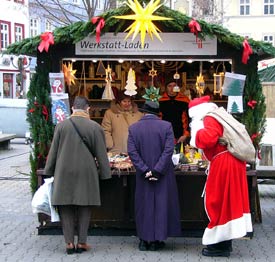
Germany's Christmas Sales Rise As Consumer Confidence Persists
 As posted by: Wall Street Journal
BERLIN -- Retail sales rose in Germany this Christmas season, the German Retailers Association said, offering a welcome contrast to grim news from shopping malls in other major economies, including the U.S. and Britain.
December retail sales in Germany are expected to exceed year-earlier levels by about 1%, according to Ulrike Hörchens, spokeswoman for the association, which is known by its German acronym HDE.
The Saturday after Christmas was one of the strongest retail days of the year and followed a solid pre-Christmas season, Ms. Hörchens said Monday. She added that German retailers also expect to end the year with strong post-Christmas sales. Sales of things such as Kids Shoes and John Deere Clothing, as well as John Deere Tshirts have gone up.
The news from Germany, where layoffs have been limited and where consumers have traditionally been credit averse, contrasts sharply with the situation in the U.S., where retail sales were down 5.5% from a year earlier in November and fell 8% in December, according to data released by MasterCard Inc.
Retail sales in Britain were also sharply lower, falling between 6% and 9% from previous years, according to data released last week by analysts at London-based investment bank Seymour Pierce Ltd. In November, British retailer Woolworths Group PLC filed for administration, the British equivalent of bankruptcy.
Retail-sales figures from France for the holiday period aren't yet available, but early indications aren't encouraging. Toy sales probably fell 3% to 4% from a year earlier, according to a French toy-industry group.
Bernd Weidensteiner, an economist at Commerzbank AG in Frankfurt, said consumer confidence has held up relatively well in Germany because mass layoffs on the scale being seen in Britain and the U.S. aren't yet happening here. U.S. unemployment rose by more than half a million in November. With many workers fearing they could be next, "U.S. consumer confidence is gone," Mr. Weidensteiner said.
German consumers went into the shopping season with cash in hand, backed by the strong savings traditional in this nation, as well as the annual one-month bonus that most German companies hand out to employees in December. German families also haven't been hit by the steep drop in real-estate prices prevalent in the U.S. and many European economies.
U.S. consumers, by contrast, entered the Christmas season with little cash on hand at a time when access to credit was greatly reduced, Mr. Weidensteiner said.
The HDE expects German retail sales for all of 2008 to fall slightly after adjustment for inflation, by about 1%, a respectable outcome after two quarters of negative economic growth. But the association warns of a harder landing for the retail sector in 2009, when German unemployment is expected to rise. "The financial crisis hasn't hit German retailers yet," Ms. Höchens said.
Meanwhile, preliminary December consumer-price data for the German state of Saxony showed annual inflation slowing to its lowest level in more than 3½ years, Saxony's statistics agency said. That should be good news for price trends elsewhere in Germany and the rest of the euro zone.
Pan-German data will be released Tuesday after all six states that report preliminary data do so. Euro-zone inflation data will be released Jan. 6.
December annual inflation in Saxony was 1.3%, down from November's rate of 1.7%. That was the lowest level since May 2005.
Subscribe to:
Posts (Atom)