231-922-9460 | Google +

Showing posts with label personal computers. Show all posts

Thursday, December 10, 2009

'Black Friday' Golden For Computer, TV Sales

LA Times


The number of items sold was up after Thanksgiving compared with last year, a report says. But customers grabbed bargains and ended up spending less on consumer electronics -- $2.7 billion, down 1.2%.

Holiday shopper Thanety Bunseam was reluctant to buy anything big this year, but a few days ago the 57-year-old factory worker could be seen resting on the curb outside a Best Buy store with his quarry: a 52-inch LCD TV and a new Sony PS3 game console.

"I got it free with the TV," he said, pointing to the PS3. "They have the game with the TV, so now I buy."

Despite tough economic times, consumers like Bunseam are shelling out money this year for big-ticket electronics such as laptop deals and flat-panel televisions.

During the week of Black Friday, a critical period for beleaguered retailers, the number of computers sold rose a whopping 63% over the previous year while LCD TV sales were up 15%, market research firm NPD said Wednesday.

But there was a downside.

The main reason for the increased sales volume was deep discounts -- so much so that overall revenue for consumer electronics was lower than last year, NPD said.

Combined sales totaled $1.2 billion for Nov. 22 through Nov. 28. That was down 1.2% for the Black Friday week in 2008.

At least that was a smaller decline than last year. In 2008, spending was down 3.4% from 2007.

"This year retailers and manufacturers knew it wasn't going to be about increasing revenue," said NPD analyst Stephen Baker. "It needed to be about getting consumers excited to shop and moving those products out of the stores." Consumers were looking for bargains and computer deals.

He expects the spending pattern for electronics to continue through the holidays.

"The overall picture is better than last year," Baker said. "But don't expect to see any sales growth, in dollars, in the industry."

Laptop computer sales were certainly aided by slashed prices. The average price tag on a laptop last year for Black Friday was $638, according to NPD. This year it was $475. That's a decline of a little more than 25%.

But there was another factor.

Both Microsoft and Apple came out with updated operating systems for computers in the last few months.

This made getting new computers or laptops, often with a faster processors and more memory, especially attractive.

"If there was the right product and the right price, consumers were very willing to go out and buy," Baker said.

"There was not a reluctance to spend, there was a reluctance to spend too much."

Shoppers were well aware that they were in the driver's seat.

"This year everything was about value," said Hovik Pogosian, a salesman at the Best Buy store in Atwater Village.

"When shoppers came in, what they wanted to know was: 'What are the best notebook deals I can get?' "

Thursday, July 16, 2009

Dell Says Tech Spending Is Likely to Remain Weak

Demand Suppressed by Deferred Business-Computer Purchases, Consumer Predilection for Lower-Cost Devices

By The Wall Street Journal

AUSTIN, Tex. -- Dell Inc. executives said world-wide technology spending is weak and likely will remain so for the near future as companies delay computer purchases and consumers gravitate to low-cost devices.

"We're going to run the business assuming relatively weak demand continues," said Dell Chief Financial Officer Brian Gladden, speaking at the Round Rock, Texas, company's annual conference for Wall Street analysts.

Chief Executive Michael Dell added that big customers are delaying new technology purchases during the recession and are "elongating the life cycle" of personal computers, notebooks, laptops and refurbished computers. He said spending should pick up next year.

The remarks came a day after Dell said its profit margins are shrinking because of high component prices and other factors, which Mr. Dell said the company didn't see coming. The computer maker has been trying to turn itself around amid a weak market, but progress has been slow. In 4 p.m. composite trading Tuesday on the Nasdaq Stock Market, Dell shares were down $1.05, or 8.1%, to $11.97.

CEO Michael Dell, pictured in March in Beijing, says customers are delaying technology purchases.At the conference, Dell executives outlined their latest strategy to revive profit growth. They said Dell is cutting costs to expand profit margins and likely will acquire other companies, but they provided little specific information on future plans.

"I think investors were hoping to hear more," said Shaw Wu, an analyst with Kaufman Bros. In a report Tuesday, Mr. Wu lowered his revenue and profit predictions for Dell's current fiscal year and said Dell's problems seem to be "company-specific," since the overall PC industry is improving.

Dell has been struggling to grow since 2006, when its direct-sales model faltered and it lost market share to Hewlett-Packard Co. H-P eventually toppled Dell as the world's largest PC maker by units and revenue. Company founder Mr. Dell returned as CEO in 2007 and promised a turnaround staked on cutting costs and expanding in areas like consumer sales.

Dell's consumer division accounts for only about 20% of company revenue, and its operating-profit margin of 2.4% last fiscal year is lower than other Dell businesses. Dell's consumer chief, Ron Garriques, on Tuesday said consumer operating margins should reach the "mid-single digits" in two or three years.

Mr. Garriques said he is trying to sell more devices through cellular carriers. Dell already sells netbooks -- mini-PCs that cost less than $500 -- through carriers, which subsidize devices for consumers, who then use the netbooks to access the Internet over the wireless networks.

But Mr. Garriques declined to say whether those other devices would be cellphones or other machines. People briefed on the matter say Dell has been developing phones and a hand-held Internet device.

Mr. Gladden added that Dell could face some repercussions from the struggles of CIT Group Inc. The struggling lender works with Dell to finance computer purchases from businesses. "It's a critical partner," Mr. Gladden said, adding that if CIT folds, Dell would have to find new financing partners. He said Dell also has $35 million in "accounts receivable" from CIT.

Intel Core i7 laptops coming--or have they already arrived?

Intel Quarterly Net Revenue Trending Upward.
by Wall Street Journal


Intel Corp. provided fresh evidence that PC sales are rebounding for some vendors, though the company's second-quarter results were marred by a rare loss due to a $1.45 billion antitrust fine.

The Silicon Valley chip giant posted revenue and profit margins for the period ended June 29 that were much stronger than the first quarter.

"While the global economic environment is still recovering, our customers signaled increased confidence" with their ordering patterns, said Intel Chief Executive Paul Otellini during a conference call Tuesday.


Intel projected that revenue would expand further in the current period, with additional improvements in profit margins. The company's stock jumped 7% in after-hours trading following the news to $18.02. It finished the 4 p.m. Nasdaq Stock Market session at $16.83.

"These results really do show that the worst is behind for Intel," said Doug Freedman, an analyst at Broadpoint AmTech.

The company declared in April that the PC market had bottomed out, and suggested that revenue would be flat with the $7.1 billion reported in the first period. Analysts were expecting slightly better than that.

Instead, Intel reported second-quarter revenue of $8.02 billion, up 13% from the first quarter though still 15% below year-earlier levels.

The improvement in profitability was more dramatic; Intel in April projected a gross margin percentage for the second quarter in the "mid-40s," but Tuesday reported 50.8%.

The company's remarks contrast sharply with those of Dell Inc., which is second to Hewlett-Packard Co. in global PC sales. Dell on Monday projected shrinking profit margins, and on Tuesday told analysts that companies continue to put off purchases of computers, laptops, notebooks, servers, and refurbished Dell computers.

But Intel's sales lately have been much more closely tied to spending by consumers -- particularly for laptop computers -- while most of Dell's sales go to businesses.

Mr. Otellini said Intel had a strong rebound in shipments of microprocessors for laptop computers, though he said sales of chips for server systems also were surprisingly strong because of demand spurred by a new chip family dubbed Nehalem, which offers a big leap in computing performance.
[Chart]

Stacy Smith, Intel's chief financial officer, added that the company reduced inventories and headcount. "We have a nice tailwind going into the third quarter," he said in an interview.

Not that all is rosy. Intel, which helped push for cheap laptops called netbooks, faces analyst fears that the low-priced chip called Atom used in those products will steal sales from more profitable products. Intel said that its average sales prices declined from the first quarter, even excluding Atom.

Then there is the fine from the European Union, which in May found that the company had abused its dominant position in competing against Advanced Micro Devices Inc.

Because of the fine, Intel swung to a loss of $398 million, or seven cents a share, from a profit in the year-earlier period of $1.6 billion, or 28 cents a share.

Intel, which is appealing the EU ruling, had not posted a quarterly loss since the mid-1980s.

Friday, September 5, 2008

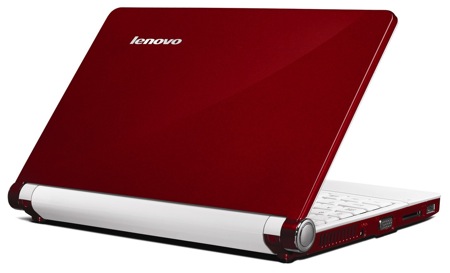
Lenovo to Sell Computer Aimed at Novice Users

Lenovo Group Ltd. said it plans to offer a low-cost "netbook" computer, priced at $399.

Lenovo's decision comes after top PC makers including Hewlett-Packard Co., Dell Inc. and Acer Inc. launched cheaper notebook PCs that sell for as little as $299. The companies are hoping to tap first-time computer users in emerging markets.

The IdeaPad S10, designed to be a second or an introductory computer, will perform simple tasks such as surfing the Internet, emailing, listening to music and running basic applications. The keyboard will be 85% of the size of a full-function notebook PC's keyboard.

Lenovo plans to offer the IdeaPad computer in two configurations, one with 512 megabytes of memory and an 80-gigabyte hard drive and the other with one gigabyte of memory and a 160-gigabyte hard drive.

Lenovo also plans netbook models designed specifically for students and teachers.

Wall Street Journal; August 5, 2008

Wednesday, September 3, 2008

Siemens Set to Pull Plug On Venture With Fujitsu

In a move that could set the stage for the sale or dismantling of a leading European maker of personal computers, Siemens AG has informed Fujitsu Ltd. that it wants out of their nine-year-old joint venture, people familiar with the matter say.

Fujitsu has a right of first refusal to buy Siemens's 50% stake in Fujitsu Siemens Computers, though it is unclear whether the Japanese technology company is interested in acquiring Siemens's half. Fujitsu President Kuniaki Nozoe said at a news conference Tuesday that mobile phones are a more promising way to boost sales overseas than PCs, raising doubt about the company's commitment to the venture.

FSC, as the joint venture is known, had €6.6 billion ($10.29 billion) in sales in its latest fiscal year. However, it has failed to live up to expectations amid fierce competition from rivals such as Dell Inc. and Hewlett-Packard Co. Siemens Chief Executive Peter Löscher, who joined Siemens last year as part of a management shake-up in the wake of a bribery scandal, hasn't been happy with the performance of the venture.

If Fujitsu didn't want Siemens's stake, other global PC makers could try to buy out both parties. The PC division of International Business Machines Corp. was acquired by Lenovo Group Ltd. in 2005, part of a wave of consolidation in the industry brought on by cutthroat pricing and shrinking margins.

One banker estimated the Fujitsu Siemens venture could be valued at between €2 billion and €3 billion, or between $3.12 billion and $4.65 billion.

A spokesman for Siemens, Europe's largest engineering company by revenue, declined to comment. Representatives for Fujitsu and the PC joint venture couldn't be reached.

Since 2005, Munich-based Siemens has been aggressively selling assets in a bid to raise its profitability. Last week, the company said it would sell two telecom assets, including an 80% stake in its cordless-handset unit. Siemens, which aims to focus on the industrial, energy and health-care segments, recently outlined plans to cut 16,750 jobs world-wide, or about 4% of its work force.

FSC, which also makes mainframes and servers, had a pretax profit of €105 million in its last fiscal year. The agreement between Siemens and Fujitsu calls for their venture to be extended to 2014 if neither side alerts the other this year that it wants to exit.

By: Dana Cimilluca
Wall Street Journal; August 6, 2008