231-922-9460 | Google +

Showing posts with label stock market. Show all posts

Tuesday, August 7, 2012

Google Googles for Yield, Finds Auto Bonds

Story first reported from WSJ.com

Feeling lucky, Google Inc.  has found a new place to park some of its $40 billion cash hoard: bonds backed by car loans.

The Mountain View, Calif., company has plowed hundreds of millions of dollars in recent months into asset-backed securities, tied largely to automobile loans and consumer credit-card payments. Among Google's recent purchases: triple-A-rated debt from car makers Honda Motor Co.  and Hyundai Corp.  Google had previously restricted itself to U.S. Treasurys, high-quality corporate bonds and other low-risk securities.

Google's foray into auto lending is the latest sign that ultralow rates on the longtime standby of corporate treasurers, highly liquid Treasury securities, are pushing cash-rich U.S. companies to find new places to put their money. That shift has been a boon for bond issuers, even if buyers are only trying to squeeze a bit more juice out of their portfolios.

"We are not trying to hit a home run here," said Google's treasurer, Brent Callinicos.

The shift has benefited issuers of bonds backed by credit cards and auto loans. Through Aug. 2, $60.68 billion of bonds tied to car loans had been sold in the U.S., according to Thomson Reuters. That is up 50% from a year earlier and the highest figure at this point of the year since 2005.

Market participants say the ABS offerings have grown to meet demand, enabling companies to borrow in larger chunks—in some cases at rates unseen since before the crisis. Late last month, a unit of Nissan Motor Co. priced $1.4 billion of bonds—increased from a planned $1 billion—at an average rate of 0.48%, a record low.

Google, the fourth-most cash-rich company in the S&P 100 after General Electric Co., Goldman Sachs Group Inc. and Microsoft Corp., according to FactSet, isn't alone in piling into these offerings. The search firm joins diversified manufacturer 3M Co.  and payroll-services company Automatic Data Processing Inc., which also have purchased asset-backed securities this year, the companies said.

About 80 firms, including asset managers and a handful of corporations, look into buying bonds in the typical auto ABS deal, said Brian Wiele, head of the Americas securitization syndicate at Barclays. That is double the typical figure of a year ago, he said, and deals are being sold in about a day and a half—roughly half of the average time last year.


"We have seen very good participation from corporates," said Amanda Magliaro, head of the asset-backed syndicate at Citigroup, which led the Nissan offering. "Investors have confirmed their own belief that the asset-backed market is safe and very liquid."

The auto portion of an ABS index compiled by Barclays has returned 2.34% this year on deals with an average maturity of just over two years. That compares with 0.30% for comparable Treasurys this year.

Some recent asset-backed securities have been priced to yield as little as 0.5%, but even that is enough of a premium to two-year Treasurys yielding 0.2% for company treasurers as they weigh acquisitions and other longer-term options for deploying cash.

"Auto and credit-card ABS performed well during the crisis," said Scott Krohn, vice president and treasurer in the financing arm of 3M, based in St. Paul, Minn.

So far, asset-backed securities represent less than 1% of Google's cash.

The company says it buys short-term, high-quality debt and participates in deals that are usually overcollateralized. That means for every $100 of loans in the pool there may be only $85 of bonds, for example—lowering the risk that purchasers of the debt will have their payments squeezed by defaults.

An ADP spokesman said the company's ABS holdings account for a number in the low-single-digit percentage of its investment portfolio.

John Bella, managing director in ABS at Fitch Ratings, said net losses on auto asset-backed securities have fallen steadily since the crisis four years ago, and the deals are now backed by stronger collateral, or loans made to so-called prime borrowers.

Their high credit scores and the strength of the loans' performance during the most recent downturn may have helped investors gain more confidence in the debt as an alternative haven.

Only about 1% of the loans originated in 2011 and packaged into auto asset-backed securities are expected by Fitch to default, compared with 2.6% of the loans in auto deals originated in 2007, Mr. Bella said.

Still, there are risks to the bonds in an economic slowdown, should consumers fall behind on their loan repayments.

For more national and worldwide Business News, visit the Peak News Room blog.
For more local and state of Michigan Business News, visit the Michigan Business News  blog.
For more Health News, visit the Healthcare and Medical News blog.
For more Electronics News, visit the Electronics America blog.
For more Real Estate News, visit the Commercial and Residential Real Estate blog.
For more Law News, visit the Nation of Law blog.
For more Advertising News, visit the Advertising, Marketing and Media blog.
For more Environmental News, visit the Environmental Responsibility News blog.

Friday, March 30, 2012

Chinese Real Estate Developers Arrested for Corruption

Story first appeared in the Yahoo news.

HONG KONG  - More than $5 billion was wiped off the market value of Sun Hung Kai Properties on Friday, after the billionaire owners of Asia's largest real estate developer were arrested on suspicion of corruption.

Hong Kong's Independent Commission Against Corruption (ICAC) arrested the owners in the agency's biggest investigation since it was set up in 1974 to root out what was seen as widespread corruption in the government and police.

The arrests on Thursday come just days after Hong Kong elected its next leader, pledging land for cheaper public housing, and as soaring property prices, the most expensive in the world, have stirred public discontent. Home prices almost doubled in the five years to end-2011.

The owners were released late on Thursday but were expected to return for more questioning, according to a source familiar with the matter. Local media reporters said the brothers were still inside a Deepwater Bay luxury compound on the south side of Hong Kong on Friday.

The owners are worth $18.3 billion, according to Forbes magazine, the second-biggest family fortune in Hong Kong after Asia's richest man,  founder of rival developer Cheung Kong (Holdings) .

Shares in Sun Hung Kai slumped more than 15 percent to 15-week lows when they resumed trading on Friday. The company owns some of the former British colony's largest properties, including its tallest building, the International Commerce Centre that houses Morgan Stanley and the Ritz Carlton.

BUSINESS AS USUAL

Sun Hung Kai said the owners would continue with their duties as chairmen and managing directors, and normal business operations would not be affected.

In the past two weeks, Sun Hung Kai has also disclosed that the employee in charge of project planning and land acquisitions, had been arrested for suspected bribery, and the executive director of architectural and engineering services, had died, peacefully - meaning of the company's seven executive board members, three have been arrested, and one has died.

Details of what is behind the arrests remain unclear.

The unfolding scandal has gripped Hong Kong, the world's most densely populated city which was returned to Chinese rule by the British in 1997.

The potential conflict of interest in a senior government official living - rent-free, according to media reports - in an upscale residence owned by an influential property family has not escaped public and media attention.

FAMILY FEUD

The owners' family had a public feud in 2008 that ended with the elder being ousted as chairman. The two younger brothers, backed by their mother, claimed the elder brother was mentally unfit to run the business, claims the elder brother has denied.

That aside, the brothers who run the company's construction and engineering departments, and look after legal and financial issues - have a relatively low media profile.

Others also expressed concern about the impact on Hong Kong's reputation for corporate governance.

A loan banker in Hong Kong, who asked not to be named as his bank is a lender to Sun Hung Kai, said there was unlikely to be any significant impact on the company's business.

WALTER'S WRIT

In a writ filed in Hong Kong in 2008 as part of his bid to avoid his ouster, the eldest brother said his brothers repeatedly disagreed with his attempts to improve management at the company. He also said he tried to investigate the sale of a parcel of land in Hong Kong's New Territories at more than the asking price, and look into why construction contracts awarded by Sun Hung Kai went to a select number of contractors.

The ICAC had an 88 percent conviction rate on the 443 people it prosecuted in 2010.

Over the past four decades, Sun Hung Kai, listed in 1972, has built some of Hong Kong's most expensive property, from luxury hilltop apartment blocks and harbor-front skyscrapers to landmark office buildings.

The company's net profit has soared to HK$48 billion ($6.18 billion) in the year to last June from $10.4 billion two years earlier.

Monday, August 23, 2010

S&P 500's Refusal to Decline Reflected in Most-Expensive Commodity Stocks‏

Bloomberg

 
For all the signs of a U.S. slowdown, American stocks are up 4 percent in the third quarter, led by commodity producers that have been trading at the most expensive levels since 2004.

The 32 mining companies, seed-makers and chemical suppliers in the Standard & Poor’s 500 Index gained 10 percent since the end of June, pushing the average price to 17.4 times annual profits, the highest level of any industry, data compiled by Bloomberg show. Premium valuations for companies from Dow Chemical Co. to Allegheny Technologies Inc. preceded rallies in the past as demand for raw materials signaled economic growth.

Optimism in commodity stocks runs counter to reports last week showing U.S. jobless claims rose to the highest level since November and housing starts trailed economists’ estimates. David Rosenberg, the chief economist for Gluskin Sheff & Associates Inc., says the probability of the second recession in three years is greater than 50 percent.

“If the market really believed the double-dip story, which I don’t think the stock market believes, materials stocks would not be doing this well, that’s for certain,” said Nick Sargen, chief investment officer at Fort Washington Investment Advisors in Cincinnati, which oversees more than $30 billion. “The interesting thing is that materials would do as well as they did. I would have expected some softening of commodity prices.”

Weekly Loss

Basic-resources stocks were the biggest gainers today in European trading, led by BHP Billiton Ltd., amid speculation that a proposed mining tax in Australia will be scrapped or diluted after the ruling Labor party failed to win a majority at the weekend election.

The S&P 500 rose 0.7 percent as of 9:42 a.m. in New York.

The S&P 500 slipped 0.7 percent to 1,071.69 last week, falling to the lowest level in a month and bringing its 2010 loss to 4 percent. Commodity suppliers gained 0.6 percent after Melbourne-based BHP Billiton Ltd. bid $40 billion for Potash Corp. of Saskatchewan Inc. More than $165 billion in takeovers of raw-materials producers has been announced this year, the most since 2007, according to data compiled by Bloomberg.

Mining and chemical companies in the S&P 500 are about 22 percent more expensive than the index based on price-earnings ratios using profits over the last 12 months, data compiled by Bloomberg show. The industry has been the most expensive relative to income since June, data compiled by Bloomberg show.

Economy Proxy


Before 2009, when the S&P 500 gained 24 percent for its biggest rally in six years, the last time metals and mining shares traded so far above the index was in 2004, data compiled by Bloomberg show. That was just after the start of a five-year rally in which the S&P 500 doubled. They commanded a bigger premium in 1994, before the S&P 500 tripled over six years, the data show.

“It’s an important leading indicator,” said Bruce McCain, who oversees $25 billion as chief investment strategist at the private-banking unit of KeyCorp in Cleveland. “The strength we see in some of those is good reassurance there is more underlying economic strength than had been feared.”

Money managers at JPMorgan Chase & Co. and Russell Investments are confident about mining stocks even as the U.S. slows because they expect China to spur demand. The American economy’s growth rate in the second quarter is forecast to be revised down to 1.4 percent on Aug. 27 from the last estimate of 2.4 percent on July 30, according to a survey of economists.

‘Growth Story’

While Chinese GDP slowed between March and June, the rate of expansion remained above 10 percent for a third quarter, data from the National Bureau of Statistics showed. It’s projected to increase by 10 percent in 2010 and 8.9 percent next year, according to the median estimate of economists surveyed by Bloomberg.

“We are trying to take advantage of a very real global growth story” with investments in materials companies, said Stephen Wood, the New York-based chief market strategist for Russell Investments, which manages $140 billion. “It’s not a brisk one, but it’s a real one. A double-dip recession is a low- probability scenario.”

The Reuters/Jefferies CRB Index of 19 raw materials has gained 3.3 percent since the end of June, led by wheat, which climbed 41 percent as droughts in exporting countries including Russia threatened to reduce supplies. Sugar advanced 24 percent as delays worsened at ports in Brazil, the world’s biggest exporter. Copper increased 11 percent and cotton rallied 9 percent, according to data compiled by Bloomberg.

‘Growth Dynamics’


Rising materials prices and high valuations for producers say little about prospects for growth in the U.S. and Europe, Rosenberg said in a telephone interview from Toronto. The economist was among the first to predict the 2008 recession that sent the S&P 500 down 38 percent, propelling him to the No. 2 ranking by Institutional Investor magazine that year.

“The basic materials complex is no longer just a cyclical play, it’s also a play on secular growth dynamics as it pertains to the most dynamic part of the global economy right now, which is emerging Asia,” Rosenberg said. “It’s commanding a premium relative to how it’s traded in the past.”

A 1.4 percent U.S. growth rate in the second quarter would be the slowest since the economy contracted in last year’s third quarter. Forecasts for the second half and next year are deteriorating. The median estimate of 55 economists surveyed by Bloomberg is for U.S. GDP to increase by 3 percent in 2010 and 2.8 percent in 2011, down from 3.2 percent and 3.1 percent in May.

TIPS Spread


Initial jobless claims rose by 12,000 to 500,000 in the week ended Aug. 14, exceeding all estimates of economists surveyed by Bloomberg, the Labor Department said Aug. 19. Work began on 546,000 houses at an annual rate last month, fewer than the 560,000 median forecast of economists surveyed by Bloomberg, Commerce Department figures showed on Aug. 17.

The difference between yields on 10-year notes and Treasury Inflation Protected Securities, a gauge of trader expectations for consumer prices, narrowed last week to 1.56 percentage points, the smallest gap since September 2009, from a high of 2.49 percentage points in January, data compiled by Bloomberg show. Yields on two-year Treasury notes last week declined to the lowest level on record, data compiled by Bloomberg show.

Concern about deflation is higher than at any time since November 2002, equity derivatives strategists at Citigroup Inc. wrote in an Aug. 16 report. U.S. stocks had their biggest one- day drop in three weeks on Aug. 11 after Federal Reserve policy makers led by Chairman Ben S. Bernanke said the pace of economic recovery “slowed in recent months.”

July Rally


“Most companies borrow for their businesses,” said Olivier Sarfati, head of equity trading strategies at Citigroup Inc. in New York. “With deflation, the price of whatever you’re selling decreases, but your debt doesn’t. It makes debt difficult to repay, and just repaying debt takes all your profits.”

Stocks surged in July as companies in the benchmark measure of U.S. shares topped the average analyst profit projection by 10 percent. S&P 500 earnings increased 49 percent during the second quarter from the year-earlier period, based on reports by the 484 companies through Aug. 20, and the index jumped 6.9 percent.

The third straight increase in profits followed a record nine-quarter slump, data compiled by Bloomberg show. The recovery is forecast to produce earnings gains of 36 percent this year and 16 percent next year, according to forecasts compiled by Bloomberg. Raw-materials producers are projected to help lead the increase, with net income gaining 67 percent in 2010 and 26 percent in 2011, the data show.

Market Multiple


Dow Chemical, the largest U.S. chemical maker, trades at about 17.6 times earnings over the past 12 months, compared with a 14.2 multiple for the S&P 500. It’s among the materials stocks Morgan Stanley recommends, said David Darst, the New York-based chief investment strategist for the firm’s brokerage clients. In March 2003, the valuation was almost five times the market’s.

Allegheny Technologies, a producer of titanium, nickel and steel held in Russell Investments’ U.S. Core Equity Fund, trades at 46 times trailing earnings. Its premium peaked in March 2003 at nearly 8 times the index’s multiple.

“We’re still in this period where the redeployment of capital at the business level is very strong, which means we’re going to increase utilization of materials very heavily at a time where people are very bought into the notion of not necessarily a double-dip recession, but slower economic growth,” said Kenneth Fisher, the chief executive officer of Fisher Investments Inc., which oversees $35 billion from Woodside, California. “That’s a big argument for overweighting materials across the board.”

Wednesday, July 28, 2010

Ten Stock-Market Myths that wont Go Away

The Wall Street Journal

 
The Dow Jones Industrial Average last week ended up pretty much where it had been a little more than a week earlier. A rousing 200-point rally on Wednesday mostly made up for the distressing 200-point selloff of the previous Friday.

The Dow plummeted nearly 800 points a few weeks ago -- and then just as dramatically rocketed back up again. The widely watched market indicator is down 7% from where it stood in April and up 59% from where it was at its 2009 nadir.

These kinds of stomach-churning swings are testing investors' nerves once again. You may already feel shattered from the events of 2008-2009. Since the Greek debt crisis in the spring, turmoil has been back in the markets.

At times like this, your broker or financial adviser may offer words of wisdom or advice. There are standard calming phrases you will hear over and over again. But how true are they? Here are 10 that need extra scrutiny.
 
1 "This is a good time to invest in the stock market."

Really? Ask your broker when he warned clients that it was a bad time to invest. October 2007? February 2000? A broken watch tells the right time twice a day, but that's no reason to wear one. Or as someone once said, asking a broker if this is a good time to invest in the stock market is like asking a barber if you need a haircut. "Certainly, sir -- step this way!"
 
2 "Stocks on average make you about 10% a year."

Stop right there. This is based on some past history -- stretching back to the 1800s -- and it's full of holes.

About three of those percentage points were only from inflation. The other 7% may not be reliable either. The data from the 19th century are suspect; the global picture from the 20th century is complex. Experts suggest 5% may be more typical. And stocks only produce average returns if you buy them at average valuations. If you buy them when they're expensive, you do a lot worse.
 
3 "Our economists are forecasting..."

Hold it. Ask your broker if the firm's economist predicted the most recent recession -- and if so, when.

The record for economic forecasts is not impressive. Even into 2008 many economists were still denying that a recession was on the way. The usual shtick is to predict "a slowdown, but not a recession." That way they have an escape clause, no matter what happens. Warren Buffett once said forecasters made fortune tellers look good.
 
4 "Investing in the stock market lets you participate in the growth of the economy."
Tell that to the Japanese. Since 1989 their economy has grown by more than a quarter, but the stock market is down more than three quarters. Or tell that to anyone who invested in Wall Street a decade ago. And such instances aren't as rare as you've been told. In 1969, the U.S. gross domestic product was about $1 trillion, and the Dow Jones Industrial Average was at about 1000. Thirteen years later, the U.S. economy had grown to $3.3 trillion. The Dow? About 1000.
 
5 "If you want to earn higher returns, you have to take more risk."

This must come as a surprise to Mr. Buffett, who prefers investing in boring companies and boring industries. Over the last quarter century, the FactSet Research utilities index has even outperformed the exciting, "risky" Nasdaq Composite index. The only way to earn higher returns is to buy stocks cheap in relation to their future cash flows. As for "risk," your broker probably thinks that's "volatility," which typically just means price ups and downs. But you and your Aunt Sally know that risk is really the possibility of losing principal.
 
6 "The market's really cheap right now. The P/E is only about 13."

The widely quoted price/earnings (PE) ratio, which compares share prices to annual after-tax earnings, can be misleading. That's because earnings are so volatile -- they're elevated in a boom, and depressed in a bust.

Ask your broker about other valuation metrics, like the dividend yield, which looks at the dividends you get for each dollar of investment; or the cyclically adjusted PE ratio, which compares share prices to earnings over the past 10 years; or "Tobin's q," which compares share prices to the actual replacement cost of company assets. No metric is perfect, but these three have good track records. Right now all three say the stock market's pretty expensive, not cheap.
 
7 "You can't time the market."

This hoary old chestnut keeps the clients fully invested. Certainly it's a fool's errand to try to catch the market's twists and turns. But that doesn't mean you have to suspend judgment about overall valuations.

If you invest in shares when they're cheap compared to cash flows and assets -- typically this happens when everyone else is gloomy -- you will usually do very well.

If you invest when shares are very expensive -- such as when everyone else is absurdly bullish -- you will probably do badly.
 
8 "We recommend a diversified portfolio of mutual funds."

If your broker means you should diversify across things like cash, bonds, stocks, alternative strategies, commodities and precious metals, then that's good advice.

But too many brokers mean mutual funds with different names and "styles" like large-cap value, small-cap growth, midcap blend, international small-cap value, and so on. These are marketing gimmicks. There is, for example, no such thing as "midcap blend." These funds are typically 100% invested all the time, and all in stocks. In this global economy even "international" offers less diversification than it did, because everything's getting tied together.
 
9 "This is a stock picker's market."

What? Every market seems to be defined as a "stock picker's market," yet for most people the lion's share of investment returns -- for good or ill -- has typically come from the asset classes (see No. 8, above) they've chosen rather than the individual investments. And even if this does turn out to be a stock picker's market, what makes you think your broker is the stock picker in question?
 
10 "Stocks outperform over the long term."

Define the long term? If you can be down for 10 or more years, exactly how much help is that? As John Maynard Keynes, the economist, once said: "In the long run we are all dead."

Thursday, May 13, 2010

Market Inquiry Focusing on One Trader

NY Times
Regulators Dissect Trades, Searching for Cause of Plunge


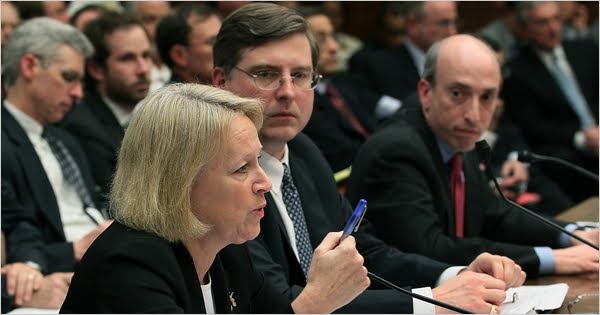
WASHINGTON — Regulators examining the causes of the brief stock market free fall last Thursday are looking closely at heavy selling in the market for stock-index futures by a single trader, beginning 10 minutes before stock prices began to plummet.

Gary Gensler, the chairman of the Commodity Futures Trading Commission, said at a Congressional hearing on Tuesday that during that crucial time period, the futures trader, whom he would not identify, accounted for about 9 percent of trading volume in the most actively traded stock-index derivative contract, known as the 500 e-mini futures contract.

All of the trader’s orders were to sell, Mr. Gensler said, while most of the other 250 traders who were active in the same market that day were both buying and selling securities.

As the trader’s orders went through, the futures index on the Chicago Mercantile Exchange began to plummet.

The identity of the trader remained unclear. Terrence A. Duffy, executive chairman of the CME Group, which operates the Chicago exchange, said on Tuesday: “We obviously won’t divulge that market information. We are in contact with the folks that did the trade. There is no question that it is a bona fide hedger” and not someone intending to disrupt the markets.

Moments after the trade, individual shares traded on markets around the country started to drop sharply, and regulators are looking at whether the trade in the futures market could have been a catalyst for the spiral.

Mr. Gensler emphasized that regulators were continuing to search for the causes of the brief panic and were likely to find other trades that could also have contributed to the plunge.

In singling out the trade in the Standard & Poor’s e-mini futures contract, however, regulators are suggesting they view that trading activity as critical to understanding the sequence of events that erased more than 600 points from the Dow Jones industrial average in minutes on May 6.

As stock markets began to decline, regulators say they believe, other factors came into play that accelerated the fall, including the absence of circuit breakers on several electronic exchanges even as the New York Stock Exchange’s own circuit breakers kicked in.

Three rival exchanges stopped routing trades to the exchange’s electronic market after they perceived technical problems there. Market experts say they believe this prompted high-frequency computer traders, who account for a vast swath of trading, to withdraw from the market.

She cautioned against drawing too direct a conclusion, however. “It must be recognized, however, that the fact that stocks prices follow futures prices chronologically does not demonstrate what may have triggered the price movements,” she said.

Mr. Gensler also pointed to several factors in the market for individual stocks that could have led to the market’s decline, including the overall turbulence in the global economy, particularly in Europe, which had made traders edgy.

The two agencies said Tuesday that they would form a joint committee of academics, market participants and former regulators to address regulatory questions raised by last Thursday’s market turmoil.

Ms. Schapiro said the S.E.C. had issued several subpoenas to unidentified people or entities to help gather information related to the market crash. She said regulators needed the subpoenas to gather information from nonregulated entities, a group that would include some hedge funds.

Ms. Schapiro said the enormous increase in trading volume in recent years was complicating efforts to draw clear conclusions about the plunge.

When a special commission examined the market crash of 1987, for example, investigators looked at a day when trading on the New York Stock Exchange totaled about 600 million shares. Last Thursday, 10.3 billion shares of stocks listed on the exchange changed hands.

Ms. Schapiro said the S.E.C. had already begun to examine whether high-frequency traders, whose computer-driven systems trade millions of shares of stocks daily, should be subjected to stricter trading rules to protect market integrity and quality.

The evolution of electronic stock markets in recent years has resulted in high-frequency traders taking over many of the market functions previously filled by stock exchange specialists and market makers who provided the bulk of stock market liquidity, Ms. Schapiro said.


The major stock exchanges also testified to the subcommittee on Tuesday, with each generally pointing fingers at the others.

In its testimony, the Nasdaq exchange pointed to technical problems related to the New York Stock Exchange’s electronic trading system called Arca.

During the market chaos this caused three exchanges to stop routing orders to the New York Stock Exchange because of what they saw as slowness in response times or unreliable quotes being posted by the exchange.

The New York Stock Exchange says there was no problem with its technology. But market experts said the decision by the exchange’s rivals — Nasdaq, BATS Trading and CBOE — to make that move added to the nervousness of high-frequency traders who abruptly withdrew from the market.

“The normal stabilizers were pushed out by the systems glitches,” said James J. Angel, a professor at Georgetown University who studies financial markets.

Mr. Gensler and Mary L. Schapiro, the chairwoman of the Securities and Exchange Commission, both emphasized on Tuesday that their agencies’ investigations had not yet settled on a single cause of Thursday’s volatile trading and that numerous factors could have contributed. Their comments were in testimony prepared for the House Capital Markets Subcommittee.

“Ultimately, we may learn that the extraordinary disruption in trading, however it may have been triggered, was the result of a confluence of events,” Ms. Schapiro said, “which, taken together, exacerbated what already had been a down day and led to an extraordinarily steep price drop and recovery. However, we are not prepared at this time to draw that conclusion.”

Mr. Gensler’s comments about the potential cause were the most pointed of any regulator in the five days since the markets suffered what Ms. Schapiro called a “profoundly disappointing and troubling” break in the stock market’s stability and integrity.

For now, both regulators said that they had largely ruled out several other potential causes that had been widely discussed since Thursday, including erroneous or so-called fat finger trades, unusual trading in Procter & Gamble stock, and hacker or terrorist activity.

The regulators’ testimony provided the first official timeline of the events that preceded the mini-crash.

At the time the futures trader entered the market at 2:32 p.m. Eastern time on Thursday, stock prices had already fallen significantly. The Dow Jones industrial average was down by about 1.5 percent by 2 p.m., Ms. Schapiro said, and Mr. Gensler noted that in the next 24 minutes, several closed-end mutual funds, which trade on stock exchanges in a manner similar to stocks, fell by 50 percent or more.

Shortly after the futures trader began entering sell orders at 2:32, “the market decline began to steepen,” Ms. Schapiro said. By 2:42, the Dow was down 3.9 percent. Then, the bottom fell out, with the Dow diving nearly 5.5 percent in the next five minutes, before rebounding by about 5 percent in the next minute and a half.

“Our preliminary analysis shows that this precipitous decline in stocks, and the subsequent recovery, followed very closely the drop and recovery in the value of the e-mini S.& P. 500 future, which tracks the normal relationship between futures and stock prices for the broader market,” Ms. Schapiro said. 

Sunday, April 19, 2009

In Spite of Everything, Health Care Stocks Perform Well
Story from San Francisco Chronicle

Health care stocks, which have been plagued by a variety of ailments in recent years, are emerging as one of the stock market's few bright spots.

Over the past three months, health care companies in the Standard & Poor's 500 are up 4.4 percent on average, compared with a drop of 7.9 percent for the overall index. The only other S&P 500 sector in positive territory is consumer staples, up 0.27 percent.

Health care and consumer staples traditionally outperform other sectors when the economy slows, under the assumption that no matter how bad things get, people will always need food, drink and medical care.

While that is undoubtedly a factor this time around, some analysts say the sector's recovery could be more than temporary.

"I'm bullish now for the short, medium and long term," says Jonathan MacQuitty, a partner in Abingworth Management Inc. in Menlo Park, which specializes in health care investing. "I'm not always short-term bullish, but I think health care will be the best performing sector for the next 12 months."

The strength in health care follows several years of underperformance, which drove many stocks to cheap or reasonable valuations.

Investors have long fretted about the ability of big pharmaceutical makers to replace blockbuster drugs losing patent protection and what would happen to drug and managed care companies if a Democratic president teamed up with a Democratic Congress and got serious about reining in medical costs.

While those fears remain, they are taking a backseat to worries about housing, energy, the financial system and geopolitics. "There is more of an emphasis on financial and energy regulation than health care reform," says Brian Belski, chief U.S. sector strategist with Merrill Lynch.

Belski believes that investors are now seeing health care stocks not so much as a defensive play but as a growth story. He says it is one of the few sectors that has delivered double-digit earnings growth over the past few quarters and is still expected to grow moderately in coming quarters.

"It's hard to beat demographic trends," he says. "The population is getting older. Biotech, life science and medical device (companies) are still at the forefront of innovation," he says.

Belski admits that health care is benefiting from people fleeing financial stocks and, more recently, energy.

The sector has also been buoyed by foreign firms with strong currencies looking to buy U.S. companies on the cheap. Since last year, overseas firms have completed or attempted takeovers of MedImmune, MGI Pharma, Millennium Pharmaceuticals, Barr Pharmaceuticals and Genentech.

Mutual funds focused on health care are up 6.84 percent over the past three months, according to Morningstar. It is the only category of stock funds - domestic or international - in positive territory during the period.

Funds with the greatest exposure to biotech companies are doing the best, says Morningstar analyst Wenly Tan.

Biotech companies in general have done a better job developing new drugs than old-line pharma companies, making them prime candidates for takeovers or distribution deals.

"Biotech companies are a lot more mature these days, they are holding onto more cash. They are not turning public as early as they used to," Belski adds.

Within the sector, Belski favors biotech, medical device and life-science companies that make manufacturing equipment. His favorites include biotech company Celgene, Johnson & Johnson, device maker Medtronic and Thermo Fisher, which makes medical equipment and chemicals.

Among S&P 500 companies, the biggest health care gainers over the past three months include generic-drug maker Barr (up almost 57 percent thanks to the takeover offer), biotech giant Amgen (up 51 percent), Varian Medical Systems (up 37 percent), Celgene (up 21 percent) and King Pharmaceuticals (up 19 percent).

Laggards include managed-care companies Coventry Health (down 22.2 percent) and UnitedHealth Group (down 16 percent); Biogen Idec (down 12 percent); Merck (down 10 percent); and Aetna (down 9 percent).

Health care heals itself

Performance of S&P 500 industry sectors

S&P sectorLast 3 monthsYear to date
Health care4.39%-7.29%
Consumer staples 0.27 -2.73
Technology-4.22 -11.69
Consumer discretionary -5.51 -9.18
Utilities-8.32 -12.51
Industrials-8.49 -13.08
Materials-12.34 -8.30
Telecom services -14.02 -24.13
Energy-14.05 -8.58
Financials-18.56 -31.53

Source: Bloomberg