Consumers Scrimp on Beauty Items

As posted by: Wall Street Journal

Elizabeth Arden Inc. and Estée Lauder Cos. cut their sales and earnings forecasts Friday and watched their stocks take a beating, as consumers -- already buying fewer sweaters and handbags -- begin to sacrifice their beauty regimens to the recession.


"The unprecedented global economic crisis produced one of the worst holiday seasons in decades," Estée Lauder Chief Executive William Lauder said. "Our business was no exception to the downturn in consumer spending."

Although a mounting number of high-end brands, from Tiffany jewelry to Coach handbags, have recently reported disappointing holiday sales and issued pessimistic outlooks, some beauty-industry observers expected upscale makeup and skin-care products to hold their own, thinking consumers would resist scrimping on their appearance.

Whether shoppers are trading high-end department-store beauty products for lower-priced drug-store options or forgoing purchases altogether will be clearer next week, when mass-market beauty giants including Procter & Gamble Co., which makes Olay skin cream and CoverGirl cosmetics, and Alberto-Culver Co., owner of Tresemmé shampoo and St. Ives skin care, report earnings.

"Beauty is still holding up better than other categories, but nothing is recession-proof," says Bill Chappell, a SunTrust Robinson Humphrey analyst. "Instead of buying their fifth and sixth tubes of lipstick, [consumers are] going to work down what's already in their pocketbook."

Estée Lauder, whose Clinique, MAC and namesake line dominate the beauty counters of U.S. department stores, expects sales for its fiscal second quarter, ended Dec. 31, to fall about 6% from a year earlier, down sharply from the 2% to 3% revenue gains previously forecast. Quarterly earnings per share are expected to range from 75 cents to 82 cents, the New York company said, down from its previous guidance of 97 cents to $1.05.

Warning of difficult sales trends in North America as well as in its foreign markets, Estée Lauder downgraded already-lowered expectations for the rest of its fiscal year, ending June 30. The company now expects earnings per share of $1.30 to $1.60, down from the lowered full-year guidance of $2.20 to $2.50 issued in October. Full-year sales are expected to be flat to down 3% from a year earlier, lower than its previous guidance of 3% to 5% sales gains.

The dismal outlook sent Estée Lauder's share price down $2.92, or 10%, to $26.11 Friday on the New York Stock Exchange. Elizabeth Arden's shares plunged 39%, or $4.50, to $7.06 on the Nasdaq Stock Market. The news sent other beauty companies' share prices down, too. L'Oréal SA shares fell 6% to €53.81 ($70.78), Avon Products Inc. shares fell 8% to $20.25 and Revlon Inc. fell 3% to $6.21. U.S. stock markets were closed Monday for a holiday.

Elizabeth Arden, best known for its fragrances under its namesake, Elizabeth Taylor and Britney Spears brands, expects sales for the quarter ended Dec. 31 to fall 12.5% to 13.5% from a year earlier, while earnings per share for the period are expected to range between 57 cents and 61 cents. Earnings per share for its fiscal year ending June 30 are expected to range from 71 cents to 84 cents, on sales down 4% to 5%.

0 comments  

Colleges Looking to Close Books on Debt

Private Student Loans.As posted by: Wall Street Journal

U.S. colleges have been scrambling to refinance often heavy debt loads that have left some uncomfortably exposed to the vagaries of the credit markets.

In a report early this month, Surety Bonds rater Moody's Investors Service said the outlook for the higher-education sector was negative. In part, analysts cited colleges' reliance on "volatile" debt markets. Last year, the ratings agency downgraded or changed the ratings outlook on 29 colleges. Students would not be able attend colleges without Alternative Student Loans.

Simmons College in Boston took on $100 million in variable-rate debt over the past decade, and now is finalizing a deal to sell about $39 million of fixed-rate license bonds to replace some of that debt.

A key area of concern: most schools' reliance on variable-rate demand bonds, whose payments are tied to prevailing interest rates. The bonds often bear lower rates than plain-vanilla, fixed-rate debt. That is why they are so popular among colleges, which have used them since the 1980s.

Moody's said the 300 private colleges it rates have sold $25 billion in variable-rate debt, or about 39% of their borrowing outstanding. Almost three-quarters of the colleges sell variable-rate debt. Among the schools that have used the instruments are Harvard and Princeton universities, which recently replaced variable-rate debt with fixed-income borrowing while retaining their top AAA bond ratings.

Variable-rate debt has a big catch. Although the bonds have maturities as long as 30 years, investors can demand repayment in full with little notice. Colleges typically secured a guarantee from a bank to be a buyer of last resort to protect them. But the terms of that credit typically call on schools to repay the banks in three to five years. Similar loann periods can often be found with private student loans.

Complicating matters, many colleges entered into arrangements that let them, in effect, pay fixed rates on their variable-rate bonds. They achieved that by entering into interest-rate swaps with big banks. In many cases, colleges would face hefty fees if they ended those swap arrangements.

Analysts at Moody's and Standard & Poor's said most colleges should be able to weather the debt storm through budget cuts and fund raising. But Mary Peloquin-Dodd, a managing director at Standard & Poor's, said a few could face "severe circumstances" if they can't find financing to repay a bank quickly.

In November, Moody's downgraded the debt of Simmons College, a women's school in Boston, to Baa1 from A3, citing risks associated with variable-rate debt. Standard & Poor's made a similar downgrade.

Simmons took on $100 million in variable-rate debt over the past decade for various campus projects. In a recent report, Moody's said the school has only $52 million in unrestricted funds that it could use to repay that debt. Were investors to demand early payment, it could result "in rapid credit deterioration for the college," Moody's wrote.

Simmons is finalizing a deal to sell about $39 million of fixed-rate debt to replace a batch of variable-rate bonds recently trading at distressed levels -- with interest rates of almost 10%.

Helen Drinan, Simmons's president, said it's unlikely that investors would demand repayment on the rest of the bonds, which have long-term bank backing. But she said that, over time, Simmons plans to replace those bonds with fixed-rate debt, as well. "Without a doubt, no institution wants to face an acceleration of its debt, which can be crushing," she said.

To shore up its finances, the college cut about 5% from its budget, now about $100 million, and froze hiring.

In September, investors redeemed $235 million in variable-rate debt issued by the University of Pittsburgh because of concern about the credit-worthiness of the bank that provided a backstop for the bonds. The University of Pittsburgh, which has a high investment-grade credit rating, was able to restructure its bonds so that its own financial resources now back the bonds.

0 comments  

Satyam Bank Documents at Issue

As posted by: Wall Street Journal

Satyam Computer Services Ltd., the Indian outsourcer embroiled in a fraud scandal, used forged documents from at least four major banks to claim a cash balance in excess of $1 billion, according to a person close to the investigation.

Investigators have sent Satyam's account-balance statements and letters of confirmation of account balances to officials at HSBC Holdings PLC of the U.K., Citigroup Inc. of the U.S., and HDFC Bank and ICICI Bank Ltd. of India. Based on the banks' reviews, investigators have determined that the documents were forgeries, according to the person close to the investigation. Spokesmen for all four banks declined to comment.

The documents offer a further glimpse into how Satyam founder and former Chairman B. Ramalinga Raju executed a fraud that inflated the company's balance sheet over several years, according to a confession he wrote to Satyam's board earlier this month. Since then, investigators have launched a probe into the company's dealings to determine the full extent of the deception.

Mr. Raju and his brother, B. Rama Raju, Satyam's former managing director, have been arrested in Hyderabad, the capital of the southern state of Andhra Pradesh, on complaints of cheating, forgery and breach of trust. A bail hearing for the two is expected on Jan. 22. The Raju brothers' lawyer, S. Bharat Kumar, declined to comment Monday.

The Raju brothers have financial stakes in two infrastructure companies, Maytas Infra Ltd. and Maytas Properties Ltd. The Indian government said Monday it will seize the books of both Maytas companies as part of the probe into Satyam because of a possible connection.

B. Ramalinga Raju's confession to cooking the books at Satyam Computer Services comes as a shocking disappointment to young Indian tech workers who saw him as a role-model. WSJ's Divya Gupta reports.

"We have ordered extension of [the probe by] the Serious Fraud Investigation Office into the two companies as the initial investigation has showed a nexus," P.C. Gupta, minister of corporate affairs, told reporters. "To uncover the facts relating to the events in Satyam, it is necessary to obtain information, records, books and papers from the two companies."

Spokesmen for both Maytas companies had no immediate comment.

Meanwhile, Maytas Infra said Chief Executive P.K. Madhav has resigned, effective Jan. 14, because he needs to spend time addressing legal issues in an unrelated case. A Maytas spokesman said Mr. Madhav was unavailable for comment.

0 comments  

Attention, Investors: Apple on Sale

As posted by: Wall Street Journal

The biggest surprise this week was not that Steve Jobs has to go on medical leave. It was that the shares have dropped only 3.5% since the chief executive and architect of Apple's revival disclosed his news.

The reason: Apple stock already had lost the Steve Jobs premium. It already was near a 52-week low due to recessionary worries and speculation about his health. Now, on some measures, Apple is valued below rivals such as Hewlett-Packard and Dell.

Apple's enterprise value is roughly six times free cash flow from the past 12 months. That compares with H-P on about eight times and Dell on 8.5 times, according to Barclays Capital analyst Ben Reitzes. Apple looks pricier on a price-earnings basis: 15 times trailing 12 months against roughly seven to 10 times for Dell and H-P. But some of Apple's premium disappears when earnings are adjusted for Apple's policy of recognizing iPhone revenue over two years, rather than when the cash comes in the door. Apple specializes in Apple Laptops.

Even assuming the worst -- that Mr. Jobs doesn't return to his post -- the stock should trade above its peers. It has an unbeatable brand name in technology and a diversified product lineup. Even though its products are high-end discretionary purchases, making them vulnerable to a nasty recession, Apple has broadened its range to include lower price points.

Majestic Research, which tracks Apple sales, reported Dec. 22 that holiday season demand, particularly for the iPod and laptops, had been resilient. On Wednesday, Apple's December quarter results will clarify the business picture. Mr. Jobs's future will remain uncertain. But right now, Apple looks like a bargain.

0 comments  

Venture Funding Falls 30%

As posted by: Wall Street Journal

Venture-capital investment dropped 30% in the fourth quarter to its lowest level since 2005, as the financial crisis threatened to cut off more funding for start-up companies.

In total, $5.5 billion was invested in private companies in the U.S. during the fourth quarter, down from $7.9 billion a year earlier and the lowest quarterly tally since 2005's first quarter, according to new data from research firm VentureSource. (VentureSource is owned by News Corp., which also owns Dow Jones & Co., publisher of The Wall Street Journal.) Just 554 venture deals were completed in the quarter, down from 718 a year earlier.

Venture capitalists typically put money into start-ups in sectors such as technology and health care, aiming to profit when the firms go public or are sold.

But venture-capital firms are pulling back now as the economy struggles to get back on track. "Very few new deals are getting done, and a lot of people are trying to make sure their portfolios are protected," says Faysal Sohail, a venture capitalist at CMEA Ventures in San Francisco, who says his firm has slowed its investment pace.

The venture business has been hit hard because the sector's routes to returns -- initial public offerings of shares and mergers-and-acquisitions activity -- have been all but shut down by the market's gyrations. In addition, some institutional investors have become gun-shy about investing in venture capital amid the downturn.

In particular, technology start-ups had their worst investment quarter since 1998, with just $2.2 billion invested in 266 tech-venture deals in the fourth quarter, off 39% from the $3.6 billion invested in the year-earlier period, according to VentureSource. Within the tech sector, investment in software start-ups fell to the lowest level since the first quarter of 1997.

Venture investment in health-care start-ups dropped to the lowest level in three years in the fourth quarter, with about $1.5 billion invested in 137 deals.

For all of 2008, there were 2,550 venture deals totaling $28.8 billion in investments, down from 2,823 deals totaling $31.4 billion in investments in 2007, says VentureSource.

0 comments  

Bank of America Goes on Offense

As posted by: Wall Street Journal

Bank of America Corp. reported a fourth-quarter loss of $1.79 billion Friday and went on the offensive to answer critics and shore up support for the giant Charlotte, N.C., lender during a time of crisis.

The loss, the first for Bank of America since its predecessor NCNB Corp. posted a loss in 1991, was down from a net income of $268 million a year ago. It came on the same day details emerged of a new agreement with the U.S. that provides Bank of America with $20 billion in additional federal aid and loss protections on $118 billion in toxic assets.

Bank of America maintains it went back to the government for more support because of larger-than-expected fourth-quarter losses at Merrill Lynch and that the problems came to light after shareholders approved the Bank of America-Merrill combination on Dec. 5. But 25% of the protected asset pool belonged to Bank of America, Chief Financial Officer Joe Price said Friday, a signal that the problems weren't tied strictly to Merrill's disintegration.

The nation's largest bank by assets continues to be weighed down by rising credit costs linked to the economic downturn and an array of problems confronting U.S. borrowers. It set aside $8.54 billion for bad loans in the fourth quarter, up from $3.31 billion a year earlier. Loans written off as unpaid nearly tripled, to $5.54 billion.

It also reported write-downs and trading losses in its capital-markets business, including losses on collateralized debt obligations of $1.7 billion and write-downs on commercial mortgage-backed securities of $853 million.

Investors sent the stock down 14% Friday, to $7.18, undermining the bank's effort to shed the best light on its situation by rushing out the release of its earnings earlier than expected and issuing a memo Thursday to employees titled "Bank of America Remains Strong." Shares fell 18% Thursday.

Chief Executive Kenneth Lewis "has very little credibility with the investor public right now," said Paul Miller, analyst with Friedman Billings Ramsey Group Inc. in Arlington, Va.

Mr. Lewis's credibility among employees may also be suffering. Many are angry not only at how the losses were handled but also that just last week they were issued compensation in the form of shares worth $14.33 apiece, said people familiar with the situation. Several employees questioned how the company could have issued the shares in light of the past week's news, these people said. Bank of America declined to comment.

"While these earnings and these businesses in some cases are substantially lower than earnings in normal times, they're still profitable, even with the significant increases in credit costs, lower customer activity and other market headwinds." --Ken Lewis, Bank of America CEO
Read the full transcript of Bank of America's conference call, provided by Thomson StreetEvents (www.streetevents.com). (Adobe Acrobat Required.).

Executives at both Bank of America and Merrill have indicated the losses at Merrill ballooned in mid-December, leading to a meeting between Mr. Lewis and Treasury Secretary Henry Paulson on Dec. 17. However, the market for various credit-related products began to deteriorate in mid-November, leaving many Merrill insiders to ask what Merrill CEO John Thain knew, and when.

Merrill lost $15.3 billion during the period, and the run-up in losses was concentrated in the firm's sales and trading department, run by Tom Montag, who was hired by Mr. Thain in 2008 to run that division. The two frequently told the firm's other top managers that the losses, while significant, were largely connected to so-called legacy positions at Merrill and the losses were "market-related" and not out of step with Wall Street.

Friday, some top executives and members of Merrill's board questioned privately why they weren't told about the magnitude of the losses or that the deal was possibly in jeopardy. Mr. Thain declined to comment on whether he knew about the Dec. 17 meeting between Messrs. Paulson and Lewis.

Merrill incurred large losses during the fourth quarter from derivative trades with thinly capitalized bond-insurance companies whose financial health deteriorated considerably last year. Many of the derivative contracts were written to cover periods of more than 20 years, which meant the bond insurers wouldn't be on the hook for significant cash payouts for years.

Mr. Lewis rejected the suggestion Friday that he and his team didn't conduct enough due diligence. "We did not expect the significant deterioration in mid to late December that we saw," he said on a conference call with analysts.

Despite the need for more capital and the cutting of the bank's quarterly dividend to a penny, from 32 cents, the consumer-banking and wealth-management operations performed well in the fourth quarter, Mr. Lewis noted. The company made $115 billion in new loans during a time of crisis, he added.

Meanwhile, Merrill said on Friday it will pay $550 million to settle shareholder lawsuits claiming it failed to inform investors about the risks associated with its business in the subprime-mortgage market.

Merrill "vigorously disputed" the allegations, but agreed to pay $475 million to settle a suit brought by the Ohio State Teachers' Retirement System, and another $75 million to Merrill employees who held company stock in retirement programs.

0 comments  

Target Completes Change at Top

As posted by: Wall Street Journal

Target Corp. said Chairman Bob Ulrich will retire at the end of the month, and will be succeeded by Chief Executive Gregg Steinhafel, completing a transition that began when Mr. Steinhafel was tapped for his current post a year ago.

Mr. Ulrich will become chairman emeritus, the retailer said.

The 53-year old Mr. Steinhafel joined Target in 1979 and became president in 1999. Target announced last January that he would succeed Mr. Ulrich as CEO, although he didn't take the reins until May of 2008. He was named to the board two years ago.

Mr. Ulrich has spent his entire 41-year career at Target and its predecessor company, Dayton's, starting as a merchandise trainee. He became its president in 1984 and chairman and CEO three years later. Mr. Ulrich is credited with creating Target's "cheap chic" marketing strategy some 20 years ago.

Like so many other retailers, Target has been struggling with slackening sales as shoppers rein in discretionary spending in the face of the housing-market collapse, the financial-markets meltdown, gyrating gasoline prices and tight credit. Target has large lawns that may require Lawn Care.

Last week Target said its December same-store sales fell 4.1%, in line with its expectations. But it said that markdowns "pressured profits."

In addition to slowing sales, Target's profit has suffered as an increasing number of its shoppers default on credit-card payments.

"We are completely confident in Gregg's leadership and his ability to build on Bob Ulrich's legacy," said Vice Chairman Jim Johnson.

0 comments  

Burger King Disses Facebook Friends

As posted by: Wall Street Journal

A friend in need is...a tenth of a burger?

Such is the calculus Burger King Holdings Inc. encouraged on Facebook, asking members of the social-networking site to "de-friend" 10 others in exchange for a free Whopper. (Facebook members can "friend" people -- invite them into their circle -- and also de-friend them.)

Now the fast-food chain has pulled the plug on the campaign, which launched Jan. 5 and was dubbed "Whopper Sacrifice," amid concerns from Facebook that it publicized severed friendships. The campaign, which featured tag lines such as "Friendship is strong, but the Whopper is stronger," grew rapidly on the site, as thousands of members jilted each other for burgers.

Each time someone de-friended someone else through a special application, Burger King published an update on both people's Facebook pages. That helped spread the word -- but ran afoul of the site's protocol.

A Burger King Web site, Whoppersacrifice.com, says, "Facebook has disabled Whopper Sacrifice after your love for the Whopper sandwich proved to be stronger than 233,906 friendships."

0 comments  

Charter Communications Fails to Make Payments

As posted by: Wall Street Journal

Charter Communications Inc. said two units didn't make scheduled interest payments of $73.7 million due Thursday as the debt-laden cable-TV provider continues to talk with bondholders about restructuring its debt.

If the interest payments on the $1.15 billion notes aren't made within the 30-day grace period provided, Charter would default on the notes. The company said Thursday such a default would not trigger cross-defaults on any other debt.

Talks began last month to explore financing options to improve Charter's balance sheet. The company, controlled by Microsoft Corp. co-founder Paul Allen, warned last year it could be forced to seek bankruptcy protection if it failed to raise additional funds to finance its cash needs by 2010.

Charter and its units have more than $900 million in cash on hand and cash equivalents available to pay operating costs and expenses. They had $21.03 billion in long-term debt outstanding as of Sept. 30.

Last month, Moody's Investors Service lowered one of the company's ratings, saying default was likely imminent. Standard & Poor's Ratings Service echoed Moody's concerns, while Fitch Ratings put Charter's issuer default rating on watch for possible cuts.

0 comments  

Bud to Strike Note of Pragmatism

As posted by: Wall Street Journal

One of the country's most irreverent advertisers, Anheuser-Busch InBev, is expected to serve up some Super Bowl ads this year that hit a different note, drilling home the quality of its beer.

Anheuser's Bud Light brand, whose ads are known for their slapstick humor, is adopting a more pragmatic approach in its ad lineup for the Feb. 1 big game. That mirrors shifts many other advertisers are making as they adapt to a hostile economy.

"For this Super Bowl, a lot of advertisers will stick with the hard-sell approach," says John Greening, an associate professor of advertising at Northwestern University, who used to work on Anheuser ads.

Anheuser-Busch's trademark Clydesdales are expected to appear in three different Super Bowl ads this year.

One Bud Light spot, which will use the brand's "drinkability" slogan, features two young men at a ski resort talking about how Bud Light is "easy to drink because it goes down smooth." But Anheuser won't give up entirely on trying to tickle viewers' funny bones. One of the men attempts to illustrate competing brands' alleged lack of smoothness by throwing painful obstacles in front a skier.

Another Bud Light spot features late-night talk-show host Conan O'Brien agreeing to do a commercial that ostensibly will be aired only in Sweden. In the ad, he dons a disco-themed ensemble with a plunging neckline that reveals his chest hair.

Other Super Bowl advertisers are trotting out some humor as well. They include Pedigree, a dog-food brand owned by Mars, and E*Trade Financial. A new E*Trade ad will feature the company's talking baby.

The stakes are always high for Super Bowl advertisers because of the game's huge audience -- more than 90 million -- and the high price of ad time. But the troubled economy has ratcheted up the pressure to deliver this year. Marketers have shelled out as much as $3 million to run 30-seconds spots at the same time many companies are on cost-cutting binges.

Anheuser, the game's biggest advertiser, with 4½ minutes of ad time, is paying roughly $2 million per 30 seconds, says a person familiar with the matter. Anheuser is still formalizing its ad plans, and its lineup could change.

Branding experts say Bud's advertising will be put under the microscope this year. Anheuser recently completed a merger with InBev of Belgium, and consumers are expected to watch closely to see what effect, if any, the company's new ownership will have on its ads.

Those ads will work hard to remind consumers of Anheuser's heritage. For the first time, the company will air three ads that star the iconic Clydesdales that pull its vintage beer wagon.

In one spot, a Clydesdale is struck by Cupid's arrow, and in another one of the big horses plays a game of fetch. Yet another spot, which is still being crafted, show how the Clydesdales made their way to America and found their niche.

The Clydesdale image "reinforces our brand values and reinforces that we are not changing, and we are the same company," says Bob Lachky, Anheuser's chief creative officer.

0 comments  

Microsoft Bid to Beat Google Builds on a History of Misses

As posted by: Wall Street Journal

Now that Yahoo Inc. has named a new chief executive, Microsoft Corp.'s Chief Executive Steve Ballmer may finally be in a position to gain ground on Internet juggernaut Google Inc.

Mr. Ballmer is expected in the coming months to renew his yearlong pursuit of a multibillion-dollar deal for Yahoo's Web-search unit. But behind his push to capture a bigger piece of Google's lucrative business lies an untold story: Nearly a decade ago, early in Mr. Ballmer's tenure as CEO, Microsoft had its own inner Google and killed it.

In 2000, before Google married Web search with advertising, Microsoft had a rudimentary system that did the same, called Keywords, running on the Web. Advertisers began signing up. But Microsoft executives, in part fearing the company would cannibalize other revenue streams, shut it down after two months.

Microsoft got a second chance in early 2003 when top executives proposed that the company buy Overture Services Inc., a pioneer in combining search results with ads. Mr. Ballmer and Microsoft co-founder Bill Gates shot down the deal. Instead, Overture was snapped up by Yahoo -- and now forms a cornerstone of the Yahoo unit Mr. Ballmer covets.

Last year, Mr. Ballmer offered to buy Yahoo for $50 billion. When that bid failed, he made an offer to buy Yahoo's Web-search operations, saying in the past month that both companies would benefit by doing a deal "sooner than later." Tuesday brought fresh opportunity, when Yahoo named Carol Bartz, an industry veteran, as its new chief executive. Many industry observers think Ms. Bartz could become Mr. Ballmer's new counterparty in negotiations.

The story of Microsoft's early missteps helps explain how Google became the uncontested leader in making money from Internet searches, and why Microsoft is trying so hard to make up for lost time. It also exposes a broader challenge facing Mr. Ballmer as he guides his company of nearly 100,000 employees: how to foster groundbreaking technologies and businesses that are under his nose. With investments into nearly every major area of software, Microsoft has plenty of innovative ideas and technologies. Its challenge is deciding which ones to nurture.

Search ads, called paid search in industry lingo, are the prime engine of Google's profits. Each time a person searches Google, the site spits out the results, plus paid advertiser links. Whenever someone clicks on one of the paid links, Google collects a fee from the advertiser.

The paid-search business will account for most of the $5 billion in profit analysts expect Google to post when it reports its 2008 earnings next week. Researcher eMarketer Inc. forecasts the U.S. paid-search market will reach $12.3 billion in 2009, about three times the level in 2004. Google has captured 73.5% of the market, compared with 13.3% for Yahoo, eMarketer says. Microsoft is a distant third.

Mr. Ballmer is facing many challenges over the next year. A worsening economy is forcing him to consider cutting workers to an unprecedented degree in coming days. There's no guarantee that a deal for Yahoo's Web-search business would propel the company to the forefront of a rapidly changing industry, where competitors include "vertical search" engines for specialty areas such as health care. Many industry experts say Google's present service may ultimately be seen as a primitive precursor to more-advanced services that better handle video or render results in three-dimensions. Microsoft, Yahoo and Google are all investing in such areas.

But as Mr. Ballmer manages Microsoft without Mr. Gates, who left full-time work there last year, he said the Keywords episode and similar missteps are at the front of his mind. "The biggest mistakes I claim I've been involved with is where I was impatient -- because we didn't have a business yet in something, we should have stayed patient," Mr. Ballmer said in an interview. "If we'd kept consistent with some of the ideas" that Microsoft had in-house in 1999, "we might have been in paid search."

The roots of Microsoft's first paid-search foray trace back to 1995. The World Wide Web was just becoming popular. Small companies like Yahoo allowed users to punch in search terms to find content across the expanding Internet. That year, a University of Illinois student named Scott Banister hit upon adding ads to these search results. He quit college in 1996 and drove his Geo hatchback to California to start a company around his idea, which he called Keywords.

Mr. Banister left Microsoft soon after it bought his employer in 1998. He eventually co-founded IronPort Systems, an antispam company he sold to Cisco Systems Inc. in 2007 for $830 million. He then became an investor and helped his wife start Zivity, a subscription-only Web site that lets photographers post "tasteful" pictures of women with little or no clothing. Now 33 years old, Mr. Banister never made Google-like money from paid search. "I've kind of had to make my peace with it," he says.

After leaving Microsoft in 2000, the LinkExchange founder started a rock band, the Shusterbabies, and worked on a screenplay about guys in their mid-20s trying to meet women. In 2002, he bought online music site Garageband.com, and later, with the help of his twin brother, rechristened the company iLike, which became a hit service on Facebook. Now 36 years old, Mr. Partovi says he remains a Steve Ballmer fan. After running his current company, "I completely sympathize with the difficulty" of running Microsoft, he says.

Mr. Bliss left Microsoft in late 2003 after 16 years working on Outlook email software and running the search business. He took an executive role at the travel Web site Expedia, became a donor to cancer research and in 2007 joined Gomez Inc., a company that makes software for measuring Web site performance. Now 44 years old, he recounts fondly the days as one of few Microsofties to push search. "We had made pretty good strides," he said. "Until Google came along."

In 1998, Mr. Banister joined Ali Partovi, a 26-year-old San Francisco entrepreneur who ran an online-ad company called LinkExchange. That November, Microsoft bought LinkExchange for $265 million.

Microsoft wanted LinkExchange for its core business of distributing online ads to Web sites. But Mr. Partovi spent 1999 making monthly trips to company headquarters near Seattle to persuade his new bosses at Microsoft's online group to develop Mr. Banister's idea. Mr. Partovi proposed programming a system to auction off keywords -- bed and breakfast, for example, or llama farms -- to advertisers. When users of the company's online service, Microsoft Network, or MSN, searched these terms, advertiser links would appear alongside the search results.

"This is the next big thing," Mr. Partovi said, according to Bill Bliss, then the leader of the online group's Web-search team.

But his bosses were eyeing different prizes. Microsoft was chasing America Online Inc., believing that the Web's big profits would come from selling subscriptions to sites that offered news, entertainment or travel information. Ad revenues would come primarily from the high-priced display banners that big advertisers were buying on MSN. Microsoft and most Internet companies saw search engines as an unimportant sideline.

Microsoft managers also had philosophical objections to Mr. Partovi's plan. At the time, Microsoft culled search results from outside search-engine companies, and then had some 15 in-house editors check the links for accuracy and relevance before clearing them to appear on MSN. Mr. Bliss, the search-group manager, says he wanted Microsoft to expand into the search business but he initially thought mixing edited results with auction-generated ads would lower the quality of Microsoft's search results.

Mr. Partovi was also buffeted by convulsions far above him. Microsoft's top executives had trouble settling on a clear strategy for the fast-growing Internet, which opened a revolving door of managers at MSN, say those familiar with the online group. The two executives who first championed Mr. Partovi's ideas were shifted out of the group. Later, Mr. Partovi's team was moved to the division that made Microsoft's Office software.

Mr. Ballmer didn't oppose the Keywords concept, say people involved with MSN at the time. One day, Mr. Ballmer argued the issue with Mr. Bliss while traveling with other executives across Microsoft's campus in a company van. Mr. Bliss's resistance to the automated search ads was like having "demons," Mr. Ballmer told Mr. Bliss, according to people familiar with the exchange.

"I'm going to exorcise the demons from you!" Mr. Ballmer bellowed repeatedly as he shook his outstretched hands at Mr. Bliss, these people say.

Mr. Bliss started to warm to paid search, he said, as he watched a little company called Goto.com that had successfully combined ads and search. The little start-up had struck a deal that paid Microsoft any time a person used the software giant's Web browser to access Goto.com. On the day the deal went live, an employee in Microsoft's online group taped a piece of paper on her boss's door with the result: "$50,000 in One Day!" it read.

By 1999, advertisers and other partners were flocking to Goto.com. Mr. Bliss, who left Microsoft at the end of 2003, says that by early 2000, the Goto deal was supplying the online group growing amounts of cash.

In early 2000, a new boss in the online group helped Mr. Partovi get clearance to run a live search-ad trial on the MSN site. The "bed and breakfast" search would now generate not only edited results, but also sponsored links to travel sites and tourism associations. Advertisers signed up and a small stream of revenue started flowing.

But some managers, worried the service would eat into display-ad revenue, had placed restrictions on it. Results appeared low on MSN's search page. Auctions for keywords started at a minimum bid of around $15, which Mr. Partovi believed might deter many potential advertisers.

Mr. Partovi and his small team fought unsuccessfully to have the restrictions removed. One day, Mr. Partovi says, he took it upon himself to have a colleague lower the minimum bid price.

The insubordination incensed executives. Mr. Partovi's boss, though a supporter, told him to stop emailing the MSN executives and stay away from Seattle for a while. In May 2000, after Keywords had brought in about $1 million in revenue -- far less than Microsoft's other online ad revenue -- the company shut it down.

"In retrospect, it was a terrible decision" to end the search-ad service, says Satya Nadella, the boss who helped Mr. Partovi get the live trial for Keywords. "But in all honesty," said Mr. Nadella, now a Microsoft senior vice president and a manager of Microsoft's search business, "none of us saw the paid-search model in all its glory."

By then, Mr. Partovi says he was ready to quit. He talked to Mr. Ballmer by telephone about his frustrations with Microsoft's resistance.

Mr. Ballmer sympathized but said he was hamstrung, Mr. Partovi recalls. Mr. Ballmer had become Microsoft's chief executive earlier that year and was trying to delegate. Reviving the search-ad service would mean reversing a decision made by managers at least three levels below him, he told Mr. Partovi. Mr. Ballmer, through a spokesman, declined to comment.

Mr. Partovi started shopping for a new employer that would champion his search-ad concept. He pitched the idea to Yahoo. Yahoo co-founder Jerry Yang responded that the idea "would not fit well given our current set of strategies," according to a June 20, 2000, email from Mr. Yang viewed by The Wall Street Journal. Mr. Yang declined to comment through a Yahoo spokeswoman.

Mr. Partovi also approached Google, then a fast-growing search-engine company unsure of how to turn its popularity into big profits. Google also chose not to work with Mr. Partovi. But behind the scenes, the company was working on its own search-ad business.

Mr. Partovi left Microsoft in July 2000, closing Microsoft's first paid-search episode. Soon, with the cost of entry rising, Microsoft would miss a second time.

In October 2000, Google launched its union of search and ads, called AdWords. By 2002, the upstart search company was stealing advertisers from industry pioneer Goto.com. Google also had one advantage over competitors like Microsoft: It had its own search engine, which allowed it to better control its paid search system. Goto and Mr. Partovi's Keywords relied on partnerships with other search engines. That May, America Online dropped Goto.com as its paid-search partner and teamed up with Google.

Microsoft took notice of Google's growth. By late 2002, a group of Microsoft executives visited the Pasadena offices of Goto.com -- which had by now changed its name to Overture -- for a briefing on the business. Yusuf Mehdi, now a senior vice president at Microsoft, launched an effort to buy Overture.

Around the same time, Overture executives were also shopping the company to Yahoo. Yahoo and Overture nearly reached a deal one Saturday in February 2003 but Yahoo walked away, a move that mystified Overture executives. Overture then approached Microsoft, saying it was open to a takeover offer.

In spring 2003, Mr. Mehdi and a small team assembled in a Microsoft conference room to pitch an Overture purchase to Messrs. Gates and Ballmer. By then, Google was the largest Internet search provider and was quickly eating into Overture's business.

Messrs. Gates and Ballmer tore into Mr. Mehdi and another executive, in part criticizing the rationale for buying a company that appeared to have little in the way of unique software technology, say Mr. Mehdi and other meeting participants. The Microsoft chiefs balked at Overture's valuation of $1 billion to $2 billion, arguing that Microsoft could create the same service for less.

The company's chiefs gave Mr. Mehdi clearance to build ad-search services in-house, the traditional Microsoft approach. Messrs. Gates and Ballmer declined to comment.

That summer, Yahoo bought Overture in a deal that would be valued at $1.8 billion.

Microsoft, meanwhile, spent the next 18 months deploying hundreds of programmers to build a search engine and a search-ad service, which it code-named Moonshot. The company launched its search engine in late 2004 and its search-ad system in May 2006.

Advertisers applauded Moonshot for its technical innovation. But Microsoft had trouble coaxing people to migrate to its search engine from Google; advertisers were unwilling to spend large sums on MSN's search ads. By building a new system instead of buying Overture, Mr. Mehdi says, "we really delayed our time to market."

Yahoo began retooling Overture to better compete with Google, but technical troubles plagued its efforts for years. Still, Yahoo had a strong team of engineers, good advertiser connections and a solid second place to Google in the Internet search market. It was enough for Mr. Ballmer to swoop in last year with his bid to buy the company. That plan faltered in May as the two sides failed to come to terms.

Now, Mr. Ballmer is ready to return to the negotiation table. "Good ideas are usually better done quickly than slowly, so it would probably be better for both us, and certainly for Yahoo, if we were to do it sooner than later," he said in his interview with the Journal. People close to Mr. Ballmer said he was waiting for Yahoo to appoint its new chief executive officer before making an advance.

Whether or not Mr. Ballmer and Ms. Bartz strike a deal, Microsoft has learned a lesson from the Keywords episode. Five years ago, Mr. Ballmer said, the company didn't want "discordant and dissident" directions and thus "ran the risk of some things not happening." Recently, the company started a service that Google doesn't have -- paying people a small fee if they use Microsoft's search engine to find and then buy certain products online.

0 comments  

Walgreen to Slim Management Ranks

As posted by: Wall Street Journal

Drugstore giant Walgreen Co., which is slowing its breakneck growth in response to poor economic conditions, said it plans to eliminate about 1,000 corporate and field management jobs, or 9% of the total, by September.

The Deerfield, Ill.-based chain has never before cut management jobs as part of a strategic initiative, a spokesman said.

In October, Walgreen's launched an initiative to improve efficiency. The latest cuts fall under that plan. The initiative, expected to save $1 billion a year by the fiscal year beginning September 2010, includes reducing overhead and labor, saving money on spending for store fittings and computer equipment, and consolidating some pharmacy fulfillment work at central processing centers, the spokesman said.

Walgreen is the No. 2 drugstore chain, measured by number of stores, behind CVS Caremark Corp.

The company said it will offer voluntary severance packages to eligible employees initially, then move to a layoff program next month if necessary. About half the affected jobs are at headquarters and half in district management posts; no distribution center jobs or positions at its 6,600 stores will be affected, the spokesman said.

The company last month said it plans to slow the pace of new store openings to a rate of 4% to 4.5% in 2010 and between 2.5% to 3% in 2011.

Just last summer, Walgreen had foreseen slowing so-called organic growth to 5% in 2011. The new targeted growth rate will reduce capital expenditures by $1 billion through 2011.

For its fiscal 2009 first quarter ended Nov. 30, Walgreen said profit fell 10.4% to $408 million on sales of $14.9 billion.

Overall sales were up 6.6% in the period, while sales in stores open more than a year rose 1.7%. Prescription sales, which accounted for two-thirds of total sales in the quarter, continue to climb, against an industrywide decline, it said.

0 comments  

Amid Sales Slump, Chico's Taps New CEO

As posted by: Wall Street Journal

Chico's FAS Inc. announced Chairman and Chief Executive Scott Edmonds stepped down after months of pressure from an activist investor to resign.

The women's apparel retailer said that after months of discussing succession plans, Mr. Edmonds, 51 years old, told the board on Wednesday he was retiring. David Dyer, a 59-year-old apparel-industry veteran and Chico's director since 2007, was named chief executive of the Fort Myers, Fla., company. Ross Roeder, the board's 70-year-old lead director, was named chairman.

The announcement came as Spotlight Capital Management LLC, a New York hedge fund that has been pressing the board to name a new CEO since last March, was preparing to nominate its own slate of directors. Spotlight blames Mr. Edmonds for the retailer's missteps, including turning off Chico's core baby boomer customers by trying to reach younger women, not investing enough in e-commerce and locating new stores too close to existing ones, among other things. Mr. Edmonds wasn't available for comment. Chico's said the allegations "lack merit and substance." Chico's stores may offer Organic Baby Clothing, Kids Shoes, Natural Baby Clothes, and Designer Women's Clothes.

"This is good news for Chico's and its long-suffering shareholders," said Gregory Taxin, managing director of Spotlight, who wouldn't disclose Spotlight's stake.

In a Securities and Exchange Commission filing Thursday afternoon, Chico's disclosed that Mr. Edmonds's departure would be treated as a "termination by employer without good cause," meaning Mr. Edmonds will receive separation pay of nearly $4.4 million plus a prorated portion of any bonus he would have received for the fiscal year ending Jan. 31, among other benefits.

After years of rapid growth fueled by its success at selling comfortable, colorful clothes to baby-boomer women, Chico's began slipping in 2006. Growth slowed at its namesake chain, and it struggled to develop newer brands including the White House/Black Market chain aimed at younger women and Soma Intimates apparel stores. On Thursday, shares of Chico's rose 30 cents to $4.23 in 4 p.m. New York Stock Exchange composite trading.

In an interview, Mr. Dyer said he plans to focus on efficiency, continue efforts to improve business at the Chico's chain and raise the profile of the White House/Black Market chain.

He also said he would invest more in direct marketing and e-commerce.

The former Tommy Hilfiger and Lands' End executive said, "we think we can grow the business to increase market share." The company has no long-term debt and more than $250 million in cash and marketable securities.

On Thursday, Chico's also said December sales at stores open at least a year fell 12.4%, in line with analysts' expectations, and it expects "lower gross margins" in the fourth quarter, due to the sales drop, the promotional landscape and its intent to end the quarter with lower inventory levels.

In an interview, Mr. Roeder said he and Mr. Edmonds, who became chief executive in 2003 and chairman in 2007, had been discussing succession plans for at least a year.

He said Mr. Edmonds a noted keynote speaker decided to leave as the economic situation grew worse.

0 comments  

Dell Moving Irish Operations to Poland

As posted by: Wall Street Journal

DUBLIN -- Dell Inc. said it is moving its Irish manufacturing operations to Poland by early 2010, a cost-cutting measure that will result in the loss of 1,900 Irish jobs -- about half of the computer maker's Irish work force.

The company said Thursday the move is part of a $3 billion company-wide cost-cutting initiative announced last year.

Since establishing a manufacturing facility in Limerick, Ireland in 1990, Dell has become the country's second-biggest foreign employer and one of its biggest exporters. But since 2006, Dell has lost its status as the world's largest personal-computer maker as it struggles to keep up with rival Hewlett-Packard Co. Whereas Dell still builds many of its PCs in plants it owns around the world, H-P began outsourcing much of its PC assembly to Asian contract manufacturers years ago.

Computer maker Dell will move its Irish manufacturing operations to Poland by 2010, part of a company-wide cost-cutting initiative that is expected to result in the loss of 1,900 jobs at this plant in Limerick, Ireland.

Dell founder and Chief Executive Michael Dell has been trying to remake the Round Rock, Texas-based company since early 2007 by building new products and changing Dell's manufacturing system to cut costs. Dell has been trying to sell its factories, say people briefed on the matter; last year, it closed down a Texas assembly plant.

So far, the cost savings haven't allowed Dell to weather the tough economy -- shares closed Thursday at $11.27, down from more than $25 last August. Last week the company announced a reorganization that involved the departures of two top executives, including the company's manufacturing chief, Mike Cannon.

"This is a difficult decision, but the right one for Dell to become even more competitive," Sean Corkery, the vice president of the Dell's Europe, Middle East and Africa operations, said in a statement.

Economists say the cuts are another sign that the Irish economy, fueled by a construction boom and multinational investment since the 1990s, has lost its edge to less-expensive Eastern European countries.

"If you're starting to lose jobs in multinationals, it doesn't augur well for the economy as a whole," said Alan McQuaid, an economist at Bloxham Stockbrokers.

While Ireland still provides the low 12.5% corporate tax rate that attracted overseas companies in the 1990s, labor rates there remain high.

"Assuming that just because the country has a low corporate tax regime we will continue to attract foreign direct investment is extremely misguided to say the least," Mr. McQuaid added.

Ireland's National Competitiveness Council has highlighted problem areas for the country. They include productivity, labor and energy costs, increased business regulation and overall infrastructure quality.

The American Chamber of Commerce in Ireland said that Dell continued manufacturing in Ireland long after competitors left. "It's a tribute to the management and staff that this investment was retained in Ireland for so long," it said in a statement.

IDA Ireland, the state agency charged with attracting foreign-direct investment, earlier this week reported 10,044 job losses last year at IDA-sponsored companies and only 8,837 new jobs. Irish Prime Minister Brian Cowen called Dell's move a "major blow," and said "the government will continue to work with Dell to identify further development opportunities which may arise as the company continues to develop the new business model."

Dell said 1,300 sales and marketing jobs will remain in Dublin, as will 1,000 Limerick-based jobs in logistics, solutions, procurement, engineering and product development. "Limerick will remain the logistics hub for Europe," a Dell spokeswoman said.

0 comments  

Electronics Show Gets a Shock

As posted by: Wall Street Journal

A sharply slowing global economy appears to be taking its toll on one of the world's biggest technology conventions, the Consumer Electronics Show in Las Vegas, set for next month.

Organizers of the event, which is to hold its 32nd gathering between Jan. 8 and Jan. 11, now expect fewer companies to participate and less booth space to be sold. CES is on track to occupy 1.7 million square feet of floor space, about 5% less than the previous CES show.

About 15% fewer companies have registered to attend the event, compared with the show last year. Among the missing will be Philips Electronics NV. Philips declined to comment.

Meanwhile, a handful of companies are downsizing by using meeting rooms rather than renting out pricier showroom floor space, said Tara Dunion, a spokeswoman for the show's sponsor, the Consumer Electronics Association.

While a count doesn't yet exist, it is likely that products to be introduced at 2009 CES will be down from the roughly 20,000 that made their debuts at the 2008 show.

One bright spot is attendance preregistration, which is running on pace with last year's attendance of 141,000. "Will we exceed that? Who knows," Ms. Dunion said.

Behind the shrinking show is a sharply contracting global economy that is curtailing discretionary budgets for companies and consumers alike. Cutting travel and display expenses for conventions is a budget priority for many Fortune 500 companies, according to recent surveys. Many more companies have begun slashing their research-and-development budgets, meaning fewer new gadgets to display.

Some penny-pinching consumers also appear to be skipping CES, usually one of Las Vegas's biggest draws in January. Hotels have begun chopping their rates by as much as $75 a night, the show's organizers said in an email to registered attendees last week. Some hotels have vacancies during the show.

Recessions have proven difficult for conventions, particularly those aimed at consumers. During the 2001 recession, attendance at the Comdex computer show, which had drawn as many as 200,000 visitors, dropped sharply. The dot-com bust proved to be the beginning of the end for Comdex in Las Vegas. The show closed after 2003.

0 comments  

Marks & Spencer Chops Costs as Sales Slide


As posted by: Wall Street Journal

LONDON -- Marks & Spencer PLC is slashing costs by shutting stores and firing employees, but the moves may not be enough to weather the drop in consumer spending, potentially forcing the British retailer to cut its dividend.

Shoppers pass British retailer Marks and Spencer's flagship Marble Arch store in London Tuesday.

The cost cutting, which includes closing 27 of 600 stores and the reduction of 1,230 jobs, or 1.6% of its work force, caps a difficult holiday season. On Wednesday, Executive Chairman Stuart Rose said he expects economic conditions to remain challenging for at least another 12 months. He also rejected the possibility of his departure anytime soon.

"If this was an airplane flying through a storm, I don't think the best thing to do is go up front and shoot the pilot," he told reporters Wednesday.

Marks & Spencer's stock rose 2.2% to close at 244 pence ($3.65) in London Wednesday.

The question now is whether the cuts are sufficient to make up for the decline in sales volume and profit margins as British shoppers curb their spending in a worsening economy. Adding to Marks & Spencer's troubles is the weakness of the British pound, which will make it more costly to buy goods overseas. In addition, it is unclear how much discounting the store chain will have to do in coming months to preserve sales.

Many analysts now predict Marks & Spencer will reduce its dividend.

"We will retain our negative stance on M&S partly because we expect further downgrading of consensus profit estimates, partly because a full-year dividend cut now looks inevitable and partly because the company, in our view, is in disarray with none of its many strategic issues any nearer to resolution," Credit Suisse Group analyst Tony Shiret said in report.

Marks & Spencer said it wasn't changing its dividend policy and would review the issue in May. The company paid 14.2 pence a share for the second half of fiscal 2008 and 8.3 pence a share for the first half of the current fiscal year, which ends in March.

For the 13 weeks to Dec. 27, the 125-year-old company reported that same-store sales fell 7.1% from a year earlier -- the steepest quarterly drop in a decade -- despite massive pre-Christmas promotions and long-term discount offers in the food department.

The price cuts also hurt Marks & Spencer's gross profit margin. The retailer said the gross margin at its U.K. stores would be 1.75 percentage points lower than last year's gross margin of 43%.

0 comments  

Family Dollar Raises Profit Forecast

As posted by: Wall Street Journal

Family Dollar Stores Inc. raised its outlook for the fiscal year after posting a better-than-expected 14% gain in fiscal first-quarter net income.

The Matthews, N.C.-based discounter now sees earnings for the full year of between $1.63 and $1.81 a share, up from October's projection of $1.58 to $1.78. It raised its estimate of annual revenue by one percentage point, to a gain of between 4% and 6%.

For the current quarter, Family Dollar forecast earnings of between 48 cents and 52 cents, with same-store sales up by 3% to 5%. Analysts surveyed by Thomson Reuters expect 47 cents.

Family Dollar and other deep discounters have been benefiting in recent months from the economic downturn as shoppers trade down and search for bargain-priced basics. Family Dollar has been reporting consistent growth, with traffic and market share increasing in part due to an expanded emphasis on food sales. That has helped push up its shares 41% in the past year.

For the quarter ended Nov. 29, Family Dollar reported net income of $59.3 million, or 42 cents a share, up from $51.9 million, or 37 cents a share, a year ago.

Gross margin, or profit after deducting the cost of goods, widened to 35% from 34.2% on lower seasonal markdowns and freight costs. The company also said less shoplifting and higher prices contributed to the gain.

Family Dollar last month said the quarter's sales rose 4.2% to $1.75 billion, with same-store sales up by half that amount. Consumable sales increased 13%, driven primarily by food sales. Its stock was the top performer among S&P 500 stocks last year with a 35.6% gain.

Some analysts applauded Family Dollar's efforts, with Wedbush Morgan Securities saying the company has improved "the assortment and quality of merchandise" and store appearance. But others say the 6,600-store deep discounter faces more competition and margin pressure as it adds consumable goods.

0 comments  

Ruby Tuesday's Loss Widens in Dim Sign for Restaurants

As posted by: Wall Street Journal

In a sign that restaurant sales won't rebound anytime soon, the chief executive of Ruby Tuesday Inc. offered a bleak outlook for the next several months as the company posted a wider loss and said same-store sales in its fiscal second quarter fell sharply.

The results show how consumers are cutting back on eating out during the recession despite the discounts and freebies restaurants are offering. Analysts expect that chains will have to close more locations to survive what is looking like another difficult year.

Ruby Tuesday expects same-store sales will drop 9% to 10% for the fiscal year ending June 2. Above, a Times Square branch in New York

Investors recently have hoped that the worst times were behind restaurant chains. From Dec. 1 through Wednesday, the Dow Jones Wilshire U.S. Restaurants and Bars Index has risen 16.8%, while the Dow Jones Wilshire 5000 Index has risen 12.4%.

But Ruby Tuesday's results indicate that 2009 may not be the year that restaurants rebound from a more than two-year downturn. For the quarter ended Dec. 2, Ruby Tuesday reported a loss of $37.4 million, or 73 cents a share, compared with a year-earlier loss of $10.4 million, or 20 cents a share. Same-store sales fell 11%. Revenue declined 9.7% to $289.8 million.

Sandy Beall, Ruby Tuesday's founder and chief executive, said that fiscal 2009 is the most difficult year since the company's founding 37 years ago. The company expects same-store sales will worsen, declining 9% to 10% for the fiscal year.

While most large restaurant chains are struggling, Ruby Tuesday has had a particularly difficult time. Since 2007, the company has invested heavily in a brand overhaul to make its food and atmosphere more contemporary, but the effort hasn't reversed the slide in same-store sales.

During the past year, its shares have fallen 82%. The Maryville, Tenn., company's shares were down 9.2% to $1.49 in 4 p.m. New York Stock Exchange composite trading Wednesday, before the company released its quarterly results. Investors' main concern has been that the company has a lot of debt and declining profitability, said Howard Penney, an analyst at Research Edge LLC.

Ruby Tuesday plans to close 40 locations early this year and will close an additional 30 restaurants over the next several years. The company said Wednesday that it has reduced its costs by an estimated $40 million to $45 million annually and is paying down its debt.

0 comments  

Retailers Keep Cutting Prices

As posted by: Wall Street Journal

Worried that consumers won't go back to paying full price after the holiday season's deep discounts, some retailers are cutting prices on early spring merchandise as soon as it hits store shelves.

The deals on fresh goods suggest that retail profit margins will remain under pressure in the first half of the year. On Thursday, most chains are expected to report that their same-store sales declined in December, with many likely to cut their profit outlooks.

"This is really the first time that we have seen such quick discounting on new seasonal goods," said Kimberly Greenberger, an analyst at Citigroup Inc.

On Wednesday, discount giant Wal-Mart Stores Inc. said it would cut prices this week on certain exercise machines, athletic apparel and food items, in what it calls the second phase of its Operation Main Street initiative to help consumers save money, this time on health-related products such as organic baby clothing and natural baby clothing.

Many deals at other stores involve apparel, which has a short shelf life and must be cleared out quickly to make way for new styles. Spring orders were generally placed before the financial crisis exploded in late September, causing consumers to cut spending sharply. As a result, stores may once again have more inventory than they need to meet demand.

By trimming prices selectively on early spring goods now, department stores, specialty apparel chains and teen retailers hope to persuade skittish shoppers to buy new styles, analysts said. They're also trying to capitalize on crowds flocking to winter clearance sales, fearing that traffic will fall off sharply after the sales end.

"It's never a good thing to be marking down merchandise as it hits the floor," but "if you have to move [it], try to move it when traffic is in the mall," said Amy Wilcox Noblin, an analyst at Pali Capital.

Polling suggests retailers are right to think shoppers will balk at paying full price. In an America's Research Group survey of 1,000 consumers the first weekend of 2009, 90% said they would primarily buy advertised specials, up from 84% in early November.

Some of the deals on new styles require shoppers to buy more than one item. Gap Inc.'s Old Navy chain is selling new $12.50 women's lace jersey-knit camis tops online for $6 each if shoppers buy two or more. And AnnTaylor Stores Corp.'s Ann Taylor division will sell two $29 split-neck cotton tops for $35. A Gap spokeswoman said the chain routinely offers new-item specials as part of a strategy to focus on value. At AnnTaylor, a spokeswoman said the strategy is to be "more promotional in order to remain competitive, to provide our clients greater savings, and to continue to keep our inventories clean."

Other clothing makers such as J. Crew Group Inc. and Bebe Stores Inc. are trying to attract shoppers by cutting their opening price points on some spring merchandise before it even hits stores.

"The reset button has been pushed on price," Millard "Mickey" Drexler, J. Crew's chairman, told analysts in a conference call in late November. He cited ballet flats for the company's spring collection, which now start at $98, down from $125.

Bebe, meanwhile, plans more "two for" deals this spring than last year and is also lowering opening price points in categories like rings and tops. Later this month, it plans a campaign called "The New Deal" to promote the new prices. "It's a good practice right now that we show a client that if today all she has is $29, we might have a top for $29," said Chief Executive Greg Scott.

And at Intermix, a chain of boutiques based in New York, Chief Executive Khajak Keledjian said he has negotiated with a few U.S. labels to produce some items at lower prices for spring. A one-shouldered, ruffled dress by Madison Marcus, for example, will carry a $295 price tag this spring at Intermix, compared with $395 for a similar style by the label last spring, he said.

Premium-denim maker Rock & Republic is producing a Recession Collection of jeans priced at $128 to $138, or about $50 less than the label's previous opening price point for denim. President Andrea Bernholtz said the collection, due in stores in March, was created after discussions with retailers on what consumers want now.

"If a starting price point of $180 is going to throw you into a tailspin...we thought we'd take lesser margins on our end and pass that on to the consumer," she said.

0 comments  

Time Warner Takes $25 Billion Hit
Aol On Deathbed

Responding to past problems and the future perils of the economic downturn, Time Warner Inc. attempted to clear its slate by writing down $25 billion of assets to account for the tumbling value of its cable, publishing and AOL businesses.

The move, coming as the advertising outlook sours, could signal more write-downs for media and cable companies. After a rash of acquisitions at peak prices, companies in those industries are having to scale back accounting values in the now-sullen climate. The media industry also faces secular declines in areas such as newspapers, broadcast television and radio, which are being ravaged by ad declines.

Time Warner CEO Jeff Bewkes has signaled a shift to focus more on the TV and movie businesses.

Coupled with weaker-than-expected advertising revenue,Time Warner's fourth-quarter write-down is expected to swing the company to an annual loss for 2008 -- its first in six years.

Time Warner Cable Inc., whose shares have fallen 50% in the past couple of years, represented the bulk of the non-cash write-down, at nearly $15 billion. The news also highlights the lingering effects of Time Warner's disastrous 2001 merger with AOL and a gloomy outlook for the magazine-publishing business.

Time Warner has made a slew of acquisitions since the company's last major write-down in 2002 for the value of AOL and its cable systems. Time Warner Cable spent about $9 billion of cash and 16% of its equity acquiring assets from rival Adelphia in 2005. AOL also has been on a buying spree in its bid to revamp itself as an ad-based company. Investors chided AOL last year for the steep $850 million price tag of its Bebo acquisition.

Cable-TV company Comcast Corp. similarly plans to write down its stake in wireless broadband company Clearwire Corp., whose shares have fallen about 60% in the past 12 months, said people familiar with the situation. Last October, CBS Corp. recorded a $14.1 billion charge, largely for the shrinking value of its local television and radio stations. "We believe that similar announcements from other media companies could be forthcoming," said UBS analyst Michael Morris.

Time Warner's write-down says a lot about the challenges that face Chief Executive Jeff Bewkes. Mr. Bewkes has signaled a shift to focus more on the TV and movie businesses and less on non-content assets such as Time Warner Cable, which he expects to spin off by the end of the current quarter.

But he still needs to find long-term solutions for AOL and publishing. Time Warner CFO John Martin, speaking at an investor conference, said the company is still interested in finding AOL a partner, after on-off talks with potential candidates, but noted the current climate "is not conducive to" quick action.

Time Warner rang more alarm bells about the advertising climate, saying "the economic environment has proved somewhat more challenging" than previously expected, particularly at its AOL and publishing units. The company scaled back its operating projection for 2008, saying it now expects adjusted operating income before depreciation and amortization to be $13 billion, up 1%, a drop from its previous forecast of a 5% increase.

Time Warner shares were down 6.3% at $10.29 in 4 p.m. composite trading on the New York Stock Exchange, while Time Warner Cable stock was down 4.8% at $21.56.

In addition to the write-down, Time Warner will record charges of as much as $380 million in the fourth quarter, including as much as $60 million from the restructuring of a lease for floors in its Time & Life Building in Manhattan held by Lehman Brothers Holdings Inc.; a $40 million increase in its credit-loss reserves for bankruptcy filings by retail customers; and $280 million for a court judgment against its Turner Broadcasting System Inc.

Time Warner still expects cash flows for 2008 to total $5.5 billion, matching its outlook provided in November, because of strong performances from its film division and its cable-television networks.

Time Warner was expected to come under pressure to write down assets as it carried over $42.5 billion in goodwill on the books for 2008. Mr. Martin said he expects no "adverse impacts" from the write-down, noting there are no debt covenants or tax implications that will lead to more financial pain.

The Time Warner Cable write-down reflects the decline in the market value of the company, a drop in the value of its franchise rights and lowered expectations for cash flow amid increased competition and higher borrowing costs. Time Warner Cable said it also plans to take a charge of about $350 million related to its investment in Clearwire.

Time Warner is to report fourth-quarter earnings Feb. 4.

0 comments  

Former Autodesk CEO Carol Bartz to Replace Jerry Yang as Yahoo CEO: Reports

As posted by: Google News

Former Autodesk CEO Carol Bartz has agreed to become the next chief executive of Yahoo, a job many might consider thankless and others one of the greatest turnaround opportunities of the internet age.

Bartz's selection would end a two-month search to replace Jerry Yang, who served as CEO for about a year -- arguably one of its worst ever of the post-bubble era.

The Wall Street Journal was apparently first with the speculative report, citing "people familiar with the situation." Bloomberg, Silicon Alley Insider and others are also quoting their own unnamed sources of the decision, which has not been announced. We asked: no comment from Yahoo.

Bartz is currently executive chairman of Autodesk Software and has been an executive at Sun Microsystems. She sits on the board of Cisco (with Yang), and on the Intel board with Yahoo president Sue Decker, who was another aspirant for the top job.

Bartz's name began circulating widely last week after weeks of tantilizing rumors -- mainly from Silicon Alley Insider and AllThingsD -- that the announcement of a Yang successor was immiment.

If true, the Valley parlor game is over, won by a solid, if not terribly-well-known, tech executive. According to her official bio at Autodesk, which she joined in 1992 and left in 2006 -- the company grew revenues from $285 million to $1.523 billion. She holds an honors degree in computer science from the University of Wisconsin, giving her some geek cred.

Bartz was also on President Bush's Council of Advisors on Science and Technology. In 2005 she was named one of the "50 Most Powerful Women in Business" by Fortune; "50 Women to Watch" by the Wall Street Journal; "The World’s 30 Most Respected CEOs" by Barron's and "World’s 100 Most Powerful Women by Forbes.

Pedigrees and resumes and honors are all very well and good. But former colleagues describe her as tenacious, dedicated and tireless, which are three qualities that anyone who wants to tackel Yahoo must possess. When Silicon Alley Insider asked for come feedback from the crowd about her, this was one of the responses:

On her first day at Autodesk, she was diagnosed with cancer. She took 30 days off for aggressive treatment and, as promised, returned to work a month later. She was still very sick and feeling the effects of continuing chemotherapy. She would arrive early and puke in the parking lot, then go to work.

That might be the way she spends her first few weeks at Yahoo which has, to put it mildly, seen better days.

Yang announced two months ago that he would be stepping down after a dismal tenure in the corner office he first occupied in Oct. 2007. While not a businessman by training or inclination Yang's ascension brought with it some hope that the passion of a co-founder could somehow help re-ignite the fire that had once powered Yahoo as one of the pre-eminent internet innovators. Instead, the company which basically invented internet search lost the war to an upstart called Google, some say forever.

Still, the "Chief Yahoo!" stepped up at what was then thought to be a significant turning point for Yahoo, after the doldrums that were the tenure of Terry Semel and his ill-fated strategic foray into content creation.

Yang's leadership was not particularly inspired but the wheels really came off in 2008. He orchestrated a forceful rejection of an unsolicited offer by Microsoft to take over the company at $33 or so a share, asserting that this was not a sufficient premium on an enterprise then valued at about $19, only to see the company's value plummet to the low teens.

As the year came to an end Yang was reduced to begging Microsoft for a new offer that was not to materialize. In between he was forced to bring onto the board three interlopers, including his most vocal critic -- Carl Icahn, who urged his ouster early and often and in no uncertain terms.

The consolation prize that would have been an advertising deal with Google -- not a strategic partnership, but a means of generating some new cash flow -- also fizzled when the Department of Justice made clear it would litigiate to prevent even that level of partnership as anti-competitive, and Google walked away.

Yang himself may have lacked the skills to bring the ship of state but he does have the eternal optimism that is a necessary if not sufficent quality. Days before he announced his decision to step down, he told a technical conference in London that these could still be the best of times.

Despite market volatility and a crisis of confidence that seems to have literally frozen portions of the economy, Yang said, this "a great time for opportunity."

"In many ways, the darkest days bore Yahoo and Google," Yang said. "Somewhere out there, there is a great company being built."

It will take more than luck, but there is still a chance that company can be Yahoo, again. We wish Ms. Bartz -- should she in fact accept the post -- all the best.

0 comments  

Treasury to Ford: Drop Dead

As posted by: Wall Street Journal

When the Bush Treasury decided to bail out Detroit, GM and Chrysler quickly said yes to the taxpayer cash, but Ford Motor Co. said it didn't need the money and declined. Ford's reward for this show of self-reliance? Treasury is now helping GM again by giving it a credit pricing advantage against Ford in the marketplace.

Download Opinion Journal's widget and link to the most important editorials and op-eds of the day from your blog or Web page.

That's one little-noted result of Treasury's action earlier this week to rescue GMAC, the GM credit arm that, as it happens, is 51% owned by the Cerberus private-equity shop that also owns Chrysler. With $5 billion in taxpayer cash in its pocket, GMAC quickly decided to offer 0% financing on several of its models. "I think it would be fair to say that without this change . . . we would not be able to do this today," explained GM Vice President Mark LaNeve in a conference call with reporters this week.

GM said it will offer 0% financing for up to 60 months on the 2008 Chevrolet TrailBlazer, GMC Envoy and Saab 9-7X sport utility vehicles through GMAC. The Saab 9-3 and 9-5 sedans also qualify for 0% financing. The car maker is also offering financing between 0.9% and 5.9% on more than three dozen other 2008 and 2009 models, including many trucks and SUVs. The deal runs through January 5, and no doubt GM is hoping for a booming sales weekend.

The messy little policy issue is that these GM products compete with those sold by Ford, Toyota, Honda and numerous other car makers that won't benefit from GMAC's cash infusion. And with the cost of financing often crucial to buyer decisions, the feds have now put the muscle of the state behind one company's products.

Ford in particular must wonder what it did to deserve this slap. CEO Alan Mulally joined the GM and Chrysler chiefs in testifying for the bailout even while insisting his company didn't want the funds. And once the bailout was announced, Mr. Mulally said that "All of us at Ford appreciate the prudent step the Administration has taken to address the near-term liquidity issues of GM and Chrysler." So much for gratitude.

Ford -- and for that matter Honda and Nissan and most others -- makes cars with American workers. President Bush justified the auto bailout in the name of saving jobs, but apparently GM's jobs are more valuable than others. And with the taxpayers now having a stake in GM and Chrysler success, the Washington temptation will be to take other steps to help the two companies gain market share at the expense of their private competitors. Never mind that Ford is still struggling and Toyota recently posted its first full-year loss in 70 years.

This is always what happens when politicians decide to muck around in private industry. Even when made with the best intentions, their policy decisions have unintended consequences that help some companies at the expense of others. Meanwhile, your neighbor who buys a GM SUV this weekend with 0% financing should thank you when he pulls into the driveway. He did it with your money.

0 comments  

The Do-Good Marketplace

As posted by: Wall Street Journal

Speaking at last year's World Economic Forum in Davos, Switzerland, Microsoft founder Bill Gates called on "capitalism" to become more "creative" in finding ways to help the world's needy. Government and philanthropy had important roles to play, he said, but neither could accomplish as much as business in reducing social problems such as poverty, disease and malnutrition.

Although Mr. Gates's speech received considerable attention at the time, its substance was not particularly novel. For at least a decade, high-tech billionaires, including eBay's Pierre Omidyar and Jeffrey Skoll and Google's Sergei Brin and Larry Page, have been looking for ways of achieving their philanthropic goals through business-like activities. The search for profit-making ventures that also improve the world -- by means of "social entrepreneurship" or "philanthro-capitalism" -- is now the rage at business schools, and it has given rise to countless books, competitions and consulting groups. In 2006, one of the best-known practitioners of social entrepreneurship, Muhammad Yunus, won the Nobel Peace Prize for developing the micro-lending Grameen Bank. President-elect Obama has promised to create a federal "social entrepreneurship" agency.

Not everyone is convinced, of course. Critics fear that efforts to combine philanthropy and business will hurt the former by thwarting philanthropic effort in controversial areas and by de-emphasizing philanthropy's helping mission. Some also question whether capitalism is really apt to be more effective than philanthropy or government when it comes to aiding the poor, especially in Third World countries that lack health care and social services or honest political and economic institutions.

In "Creative Capitalism," Michael Kinsley and Conor Clarke have enlisted a distinguished group of economists, journalists and executives of nonprofit organizations to assess Mr. Gates's speech and its social-entrepreneurship theme. Their responses (which originated as entries in a "web-based discussion," as Mr. Kinsley puts it) range from strongly supportive to sharply critical. One of the more interesting ideas found in this somewhat rambling book contends that "philanthropic" business activity is in fact at odds with what is best about capitalism itself and thus counterproductive.

Lawrence Summers, the former Harvard president and former Treasury secretary, states the difficulty succinctly: "It is hard in this world to do well. It is hard to do good. When I hear a claim that an institution is going to do both, I reach for my wallet. You should too." He offers as an example Fannie Mae and Freddie Mac, government-created corporations that were supposed to achieve a social goal -- affordable housing -- while operating as businesses. They did neither well, eventually leaving their catastrophic debts for taxpayers to pay.

U.S. Circuit Court Judge Richard Posner, along with other contributors, notes that companies often suffer losses when they set out to address a social problem. If they could really make a profit by doing good works, the argument goes, they would no doubt already be hard at it. But if they do good works at the expense of profit, they will become less efficient, making themselves more vulnerable to competitors. Economist Steven Landsburg suggests that companies sacrificing profit to accomplish philanthropic goals end up betraying their shareholders, who rightly expect the best return on investment. Sometimes acting philanthropically will result in an indirect business benefit, such as improving worker skills. In that case, philanthro-capitalism might be in a company's interest -- but Judge Posner and others of like mind suspect that such instances are rare.

Their skepticism echoes Milton Friedman's objections to "corporate social responsibility," expressed in a 1970 article that is usefully reprinted in the book's appendix. Business professor David Vogel argues that "creative capitalism" is indeed a descendant of "corporate social responsibility," which has attracted support from corporations throughout the world, if only to improve their public images -- a kind of business benefit, to be sure. "Managers can plausibly claim that virtually any corporate expenditure on good works is in the interest of its shareholders," he writes, because subsidizing good works is "a form of risk management or public relations" that protects the company's reputation and brand. But even Mr. Vogel is hard-pressed to make an economic case for philanthro-capitalism. At best, he observes, companies that embrace an aspect of "social responsibility" do not seem to suffer much harm; but they do not prosper either.

Other contributors to "Creative Capitalism" are more sanguine about Mr. Gates's campaign. Markets are not perfect, they say, and businesses may need to be encouraged to look harder at opportunities for profitable enterprises in poorer countries, not least where failed governments are incapable of providing public services. In any case, as Harvard economist Ed Glaeser argues, consumers and investors may not be as single-mindedly profit-oriented as Milton Friedman perceived. Companies that try to balance doing good with doing well may reap rewards that their less altruistic rivals miss.

In the end, these differing judgments are left unresolved, as one might expect in what is essentially a collection of blog posts. Watching these smart folks kick the idea around, the reader might be tempted to interject a simple question: Why is "creative capitalism" even necessary? Whatever its limitations, no economic system has done more to create wealth, drive the progress of technology, improve the world's living standards and reduce poverty than capitalism in its traditional form. Maybe what the world could really use -- especially in its poorest regions -- is not "philanthro- capitalists" but just more plain old profit-seeking ones.

0 comments  

Dell settles financing, rebate lawsuit with states

As posted by: The Associated Press

SEATTLE — Dell said today it has agreed to a legal settlement with states that claimed the computer company made misleading financing and service offers to PC buyers.

Dell said in a statement it will pay $3.85 million to at least 45 states participating in the settlement. A portion of the money will be used to reimburse states for legal costs.

Shares of Dell dropped 62 cents, or 5.6 percent, to $10.50 in afternoon trading.

Spokesman David Frink said Dell was contacted by the attorneys general from Connecticut and Washington, representing a larger group of states, last year.

"Consumers who sought and believed they received zero-percent financing were then ambushed by high interest rates and fees," said Connecticut Attorney General Richard Blumenthal in a statement. "Many consumers faced unacceptable obstacles obtaining warranty service on their Dell computers and others said they never received promised rebates."

Under the terms of the settlement, Dell agreed to give customers more information up front about what kind of financing they qualify for and allow them to cancel orders once they review final credit terms.

Dell also agreed to mail rebate payments and fulfill warranty obligations within a reasonable amount of time.

The settlement requires Dell to tell customers whether they must troubleshoot problems by phone before qualifying for in-person technical support at home. Dell must also justify claims about its customer service. For example, if it wants to use the term "award-winning," it must have won a customer service award in the past 18 months.

In its statement, Dell said the states' issues "represented only a very small percentage of the tens of millions of Dell consumer transactions in the states."
Round Rock, Texas-based Dell also said it had addressed these problems with many customers directly.

People who bought a computer or service on or after April 1, 2005, and had a problem with a financing offer, rebate or service can file a claim within 90 days with their state attorney general.

0 comments  

Thousands of Car Dealers Nationwide Prepare to Close

As posted by: Wall Street Journal

As part of the restructuring plans that General Motors Corp. and Chrysler LLC presented to the federal government, the automakers have pledged to speed up the process of shrinking their dealer bodies.

Neither Chrysler, which has 3,300 dealerships, nor Ford Motor Co., with its 3,790 stores, have shared their targets for dealership reductions.

But GM told Congress that it aims to reduce its dealer count by 26%, from 6,375 at the end of 2008 to 4,700 by 2012.

Industry experts say that alone will be difficult to accomplish -- but they also said it's still not enough.

Even if the automaker were to cut its dealer body to 4,700 without shrinking the rest of the business, experts said, GM's sales per dealership would remain much lower than those of competitors Toyota Motor Corp. and Honda Motor Co.

When Toyota and Honda dealerships have more sales per store than GM stores, that means they also have more profits to invest in facilities, customer service and perks, such as rental cars for customers who are having their vehicles serviced.

While Detroit's automakers do have many profitable, first-rate dealerships nationwide, thousands of stores are struggling with low sales and cannot afford to deliver the retail experience that could help woo customers back to Detroit's improving cars and trucks.

"Their argument is if we have fewer, more profitable dealers, they'll spend more on their facilities, they'll be able to strengthen their brand image," said Mark Johnson, automotive merger consultant in suburban Seattle.

To be competitive, Wachovia analyst Richard Kwas has said GM should reduce its dealer count to closer to 2,000.

Other experts have told the Free Press that Detroit's automakers need to reduce as many as 20% of their stores nationwide to get competitive.
Solutions in bankruptcy?

Given the complexities of shedding dealerships, several experts told the Free Press that it might not be possible to achieve the scope of closures and consolidations the automakers are seeking without a bankruptcy proceeding or a federally-facilitated bankruptcy-like proceeding, in which the automakers are allowed to void franchise contracts in order to achieve the changes they want.

Howard Polirer, director of industry relations at AutoTrader.com, said the early conditions of the federal loans made it appear that the federal government would require automakers to slash their dealership numbers, but it's unclear how they would do that absent bankruptcy-like procedures.

Until the Obama administration and new Congress take over later in the month, the conditions are not seen as very meaningful, he said.

"This is far from being resolved," Polirer said. "We all know, come Jan. 21, this whole process is going to be looked at much closer, probably much differently. The question is whether they can accomplish what they're looking to accomplish without the rules and regulations of a bankruptcy."
A complicated process

Johnson, the merger consultant from Seattle, said that shrinking the dealer body won't save automakers much money because it ultimately will be exorbitant to get the dealerships to close.

When GM announced in 2000 that it would close its Oldsmobile brand, it took four years and $1 billion to shutter 2,800 dealerships, largely because so many dealerships sued to protect their contracts.

More dealers are expected to fail or close up because of poor sales in the coming year than a typical year because of the weak economy.

Grant Thornton put out a report in October that said the rate of decline would accelerate into 2009.

"We see more unprofitable dealers closing their stores outright," Paul Melville, a Grant Thornton LLP partner, said as part of that report.

Despite that, dealers and industry experts said they don't believe there will be enough closures to solve the automakers' problem of having too many dealers competing with each other for too few sales.

"It's a sticky wicket," said Ron Tonkin, president and chief executive officer of the Ron Tonkin family of dealerships based in Portland, Ore., and the former president of the National Automobile Dealers Association. "Because of the state franchise laws, it is a very, very costly effort."
Offers to close up shop

Tonkin and other experts have estimated that the fastest, easiest way for automakers to shed dealerships they don't need is to pay them to close. However, that likely would cost several million dollars per store.

Tarik Daoud, former president of Al Long Ford in Warren, agreed in December to close the new-car sales franchise and instead operate a used-car sales showroom and service center instead. His decision was based on an offer from Ford.

"For the times and the economy, Ford came to me and made me a lucrative offer if I take a buyout," he said.

In the end, however, experts said they don't believe the federal government or taxpaying public will like the idea of federal loans being used to pay independent businesspeople to close their businesses.

Nor might members of Congress, many of whom probably didn't anticipate that dealerships in their districts might have to be closed in order to make Detroit's automakers healthy again.

read more about auto dealership closures at: Michigan Business News Blog

0 comments  

Germany's Christmas Sales Rise As Consumer Confidence Persists

As posted by: Wall Street Journal

BERLIN -- Retail sales rose in Germany this Christmas season, the German Retailers Association said, offering a welcome contrast to grim news from shopping malls in other major economies, including the U.S. and Britain.

December retail sales in Germany are expected to exceed year-earlier levels by about 1%, according to Ulrike Hörchens, spokeswoman for the association, which is known by its German acronym HDE.

The Saturday after Christmas was one of the strongest retail days of the year and followed a solid pre-Christmas season, Ms. Hörchens said Monday. She added that German retailers also expect to end the year with strong post-Christmas sales. Sales of things such as Kids Shoes and John Deere Clothing, as well as John Deere Tshirts have gone up.

The news from Germany, where layoffs have been limited and where consumers have traditionally been credit averse, contrasts sharply with the situation in the U.S., where retail sales were down 5.5% from a year earlier in November and fell 8% in December, according to data released by MasterCard Inc.

Retail sales in Britain were also sharply lower, falling between 6% and 9% from previous years, according to data released last week by analysts at London-based investment bank Seymour Pierce Ltd. In November, British retailer Woolworths Group PLC filed for administration, the British equivalent of bankruptcy.

Retail-sales figures from France for the holiday period aren't yet available, but early indications aren't encouraging. Toy sales probably fell 3% to 4% from a year earlier, according to a French toy-industry group.

Bernd Weidensteiner, an economist at Commerzbank AG in Frankfurt, said consumer confidence has held up relatively well in Germany because mass layoffs on the scale being seen in Britain and the U.S. aren't yet happening here. U.S. unemployment rose by more than half a million in November. With many workers fearing they could be next, "U.S. consumer confidence is gone," Mr. Weidensteiner said.

German consumers went into the shopping season with cash in hand, backed by the strong savings traditional in this nation, as well as the annual one-month bonus that most German companies hand out to employees in December. German families also haven't been hit by the steep drop in real-estate prices prevalent in the U.S. and many European economies.

U.S. consumers, by contrast, entered the Christmas season with little cash on hand at a time when access to credit was greatly reduced, Mr. Weidensteiner said.

The HDE expects German retail sales for all of 2008 to fall slightly after adjustment for inflation, by about 1%, a respectable outcome after two quarters of negative economic growth. But the association warns of a harder landing for the retail sector in 2009, when German unemployment is expected to rise. "The financial crisis hasn't hit German retailers yet," Ms. Höchens said.

Meanwhile, preliminary December consumer-price data for the German state of Saxony showed annual inflation slowing to its lowest level in more than 3½ years, Saxony's statistics agency said. That should be good news for price trends elsewhere in Germany and the rest of the euro zone.

Pan-German data will be released Tuesday after all six states that report preliminary data do so. Euro-zone inflation data will be released Jan. 6.

December annual inflation in Saxony was 1.3%, down from November's rate of 1.7%. That was the lowest level since May 2005.

0 comments  

LG to Set Sparks Flying

As posted by: Wall Street Journal

London's fireworks this New Year's Eve will come with something extra: a promotional plug.

For the first time, London's municipal government has sold sponsorship rights to the end-of-year spectacle above the River Thames.

The buyer is South Korean consumer-goods manufacturer LG Electronics, which is using the event to send the message that its products make life fun. As part of the sponsorship, at midnight a 10-minute fireworks display will open with one minute of pyrotechnics in LG's colors -- red and white.

Many cities' New Year's Eve celebrations attract sponsors. Waterford Wedgwood of Ireland supplies the crystal ball that drops in New York's Times Square. But advertising is seldom incorporated directly into major fireworks displays, even as subtly as London plans.

LG's signature colors, red and white, will feature in London's fireworks. Last year's display is shown above.

LG's name won't appear in the sky because the company doesn't want to be "crude or crass," says Mark Boyd, a creative director at LG's London-based ad agency, BBH, which is part of Publicis Groupe.

Instead, London officials have agreed that LG can place its logo, a robot-like face forming the letters LG, on hundreds of temporary signs directing people to the event. LG also will be allowed to beam its logo on to the side of a prominent building overlooking the Thames for most of the evening. And contractors will give away thousands of LG-branded hats.

LG executives hope that many revellers will see LG logos as they arrive and connect the red and white fireworks with LG's colors. "New Year's is a time of optimism," says Andrew Warner, LG's marketing director for the U.K. and Ireland. "It all flows back to LG's Life is Good [slogan]."

Mr. Warner and a spokeswoman for London's municipal administration, known as the Greater London Authority, declined to say how much LG is spending on the event.

The company, which makes cellphones, TVs, washing machines and other appliances, may struggle to get a big payback from the fireworks. One problem: there is room for only 180,000 people in viewing areas set aside for the fireworks, according to the London mayor's Web site, limiting the audience to a small fraction of what LG could get through a TV ad.

The entire fireworks display will be shown on TV, but the broadcaster is the state-owned British Broadcasting Corp., which doesn't accept ads and doesn't plan to acknowledge LG's sponsorship, according to a BBC spokeswoman.

To reach more people, BBH plans to make a short film of the fireworks and post it on dozens of Web sites early on the morning of Jan. 1, including Google's YouTube.com, according to BBH's Mr. Boyd. It also will distribute video clips to media outlets around the world, hoping they will include the LG component of the fireworks in news bulletins.

Since hiring BBH last year, LG has increasingly experimented with unconventional advertising to increase its profile. Earlier this year it invited 500 people to the launch in Hollywood of what it said was a new TV show. The event was actually a stunt to promote a new line of televisions.

London has been trying to find a New Year's Eve sponsor for three years, says Harriet McDonald, the head of sponsorship for the Greater London Authority. London officials wanted the advertising to be unobtrusive to avoid offending the public, while marketers were looking for as much prominence as possible.

Another problem: because city officials didn't want the crowds to get too big, they wouldn't allow a sponsor to market the event in advance. London has never sold sponsorship of the fireworks before, although advertisers have sponsored free train travel on the night in the past, a spokesman for the authority says.

This year, several potential sponsors from the finance industry pulled out because of the credit crunch, Ms. McDonald says, before LG signed up in October. London chose LG because the company had ideas to improve the evening, such as projecting welcome messages from celebrities, including actor Michael Caine, on to the side of a building.

"It's not a great big logo jamboree," Ms. McDonald says. "They [LG] have not taken the stance: 'I want to see my logo in as many places as possible.'"

0 comments  

Ford Hopes Self-Parking Vehicles Boost Curb Appeal

As posted by: Wall Street Journal

DETROIT -- Ford Motor Co. plans to offer two Lincoln models next year that can park themselves, the latest move in a strategy aimed at improving the public's image of the auto maker.

The automatic parallel-parking system will be shown next month at the North American International Auto Show in Detroit, and will be offered as an option on the Lincoln MKS sedan and MKT crossover-utility vehicle. (See a video of the system in action on YouTube.)
The Lincoln MKS sedan will be one of the models that Ford will offer with the ability to park itself

Similar technology is already available from Toyota Motor Corp.'s Lexus division, but Ford's push reflects a wider effort championed by Chief Executive Alan Mulally to cast the company in a more favorable light. At the Detroit show, Ford also will show a hybrid version of the Ford Fusion sedan rated at 41 miles a gallon in city driving -- eight more than Toyota's Camry hybrid.

On Monday, billionaire investor Kirk Kerkorian confirmed through a spokeswoman that he had sold his remaining shares in the auto maker in a widely expected move. Mr. Kerkorian earlier had pledged his support and confidence in Ford and Mr. Mulally.

Mr. Kerkorian's investment company, Tracinda Corp., had accumulated a 6.5% stake in Ford earlier this year. The auto maker's stock subsequently plunged, and in October Tracinda began selling its holding, saying Mr. Kerkorian wanted to concentrate his investments in oil, gas, gambling and lodging. The casino-and-hotel mogul suffered a huge loss on his Ford investment.

Ford, General Motors Corp. and Chrysler LLC still have strong reputations among truck buyers, but for years have suffered poor images among many consumers favoring cars. Recent studies have found about half of people shopping for cars won't even consider one from the three companies.

In an interview Monday, Mark Fields, Ford's president of the Americas, said the company is counting on technological innovations and fuel-efficient vehicles to help separate Ford from competitors and draw more people into its showrooms.

In 2007, the company began offering an in-car entertainment system developed with Microsoft Corp., called Sync, which drivers can use to control their phone, stereo and iPod through voice commands. Ford is hoping such innovations will "make us cool in the customers' minds," Mr. Fields said.

John Casesa, managing partner at the New York consulting firm Casesa Shapiro Group LLC, said it is unclear how many customers will want the new Active Park Assist feature. "In terms of technology, the automatic parking wasn't very successful at Lexus," Mr. Casesa said. "I think the better example is Sync because it worked as promised and it's priced right."

Ford didn't say how much the option will cost. A Lexus spokesman said its Advanced Parking Guidance System costs $700.

Ford's system requires less driver input and reduces the risk of selecting a too-small spot, said Ali Jammoul, Ford's chief engineer for steering systems.

0 comments  

Banks to Post a Rare Quarterly Loss

As posted by: Wall Street Journal

Banks and savings institutions in the U.S. appear headed for their first overall quarterly loss since 1990, as troubled loans pile up faster than the federal government's unprecedented efforts to aid the battered industry.

Since posting combined profit of $1.7 billion in the third quarter, already a 94% plunge from a year earlier, life has gotten even worse for the roughly 8,300 financial institutions with deposits backed by the Federal Deposit Insurance Corp. Rising unemployment is causing more agony from old problems such as shaky mortgages and credit cards, and losses now are spreading to commercial real-estate loans.

"The earnings power for this industry has absolutely collapsed," says Eric Hovde, chief executive of Hovde Capital Advisors LLC, a money-management firm in Washington that specializes in financial services.

Nearly a quarter of U.S. financial institutions reported a net loss for the quarter ended Sept. 30. The percentage is likely to climb when fourth-quarter results are announced in January, with some analysts predicting that even stalwarts like J.P. Morgan Chase & Co. could tumble into the red.

Earnings estimates for the New York company, ranked No. 1 in stock-market value among U.S. banks, range from a loss of 20 cents a share to profit of 71 cents a share, according to Thomson Reuters. Hitting the average analyst estimate of 11 cents a share in net income would translate into about $410 million, down 86% from the $2.97 billion profit the firm churned out in last year's fourth quarter.

A J.P. Morgan spokesman declined to comment.

The glum fourth quarter is an ominous sign for 2009. The U.S. government so far has poured $169 billion into more than 130 financial institutions through its Troubled Asset Relief Program, according to Keefe, Bruyette & Woods Inc. But some banks already are looking for more money or hoarding their existing capital in expectation of another awful year.

Fifth Third Bancorp, which got $3.45 billion from the federal government, two weeks ago slashed its quarterly dividend to a penny a share from 15 cents a share. In June, the Cincinnati regional bank cut its dividend for the first time in three decades.

Kevin Kabat, Fifth Third's chairman, president and CEO, cited the recession and job losses as contributors to the industry's "very difficult environment," adding that "we do not expect improvement in the near term."

Horizon Financial Corp., a Bellingham, Wash., bank with fewer than two dozen branches, last week suspended its dividend entirely "due to the current uncertainty in our markets." Horizon also announced plans to close one of its branches.

In the past few weeks, some analysts have cut 2009 earnings forecasts and stock-price targets for a slew of big and small banks. These analysts expect rising unemployment to trigger deeper losses on credit cards, mortgages and home-equity loans as more consumers fall behind on their bills. Combined with newer problems rippling through commercial real-estate and other types of loans, many banks will need to bolster loan-loss provisions, eroding profits further.

"We believe that deteriorating economic conditions will cause asset quality to get worse in 2009, revealing the inadequacy of loan-loss reserves and impairing profitability," Jonathan Glionna, an analyst at Barclays Capital, said in a report earlier this month. Nonperforming assets among the 27 financial institutions he covers will rise to $125 billion in the fourth quarter from $43 billion a year earlier, he estimates.

By the end of next year, the figure could top $200 billion, he said. Financial institutions consider loans to be nonperforming assets when the borrower is behind on payments and it appears that default is likely.

The U.S. banking industry last reported a combined net loss in the fourth quarter of 1990, according to the FDIC. The $2.3 billion net loss came near the end of the savings-and-loan crisis, which included failures of more than 1,000 U.S. banks and cost taxpayers about $130 billion.

So far this year, 25 banks have failed, but regulators are worried that at least another 200 banks may be at risk of collapsing. The potential fourth-quarter loss is a far cry from the record $38 billion in profits posted by the U.S. banking industry during the third quarter of 2006.

As conditions worsen, struggling banks are expected to turn to private-equity firms and other outside investors for capital. Even some of those getting a government infusion may need more capital, analysts warn. Interest in shoring up financial institutions is rebounding as regulators warm up to granting bank charters to nonbank investors.

Mr. Hovde, the money manager, says he has been approached recently by some banks and is considering taking stakes in some institutions. Such infusions typically dilute existing shareholders.

"The common shareholder is still at risk," says Brian Klock, an analyst at Keefe, Bruyette & Woods in San Francisco. The firm, which specializes in financial services, expects per-share earnings at large U.S. banks to fall 6.8% in 2009 from this year.

The best-case scenario is that banks will bottom out in the middle of 2009 if the economy starts to rebound. Far more likely as the U.S. recession spreads around the world, analysts and bank executives predict, is additional pain for bank profits and investors.

0 comments  

2009: The Year of the Travel Deals

As posted by: Kypost

The slumping economy has hotels, airlines, and amusement parks slashing prices in an effort to get consumers to book their vacation. Travel experts say this is going to be a fabulous year for the leisure and business traveler with savings on travel to all parts of the world.

TripAtlas.com compiled this list of the "Great 2009 Travel Deals"


1) Las Vegas - The city is offering room rates for as low as $29 a night.

2) New York City - A recent drop in tourism has some hotel rates over 30% off.

3) Florida - Special pricing is now available at some of the most popular attractions including Disney World, MGM/Universal Studios, Busch Gardens, Sea World and others. Hotels and car rental companies have also lowered their rates.

4) Canada - The recent drop of almost 20% in the Canadian dollar value against the US dollar, 2009 is the time to visit Canada.

5) Caribbean - Take off to the world’s sunny playground with hundreds of islands to choose from. Many hotels have cut prices on deluxe resorts. Check out hotels in Puerto Rico, Barbados, Dominican Republic, Jamaica, Mexico, Cuba, Cayman Islands, Bahamas, Saint Lucia, Aruba and Curacaco.

6) All-inclusives - Some of the best all-inclusive packages offering outstanding value for 2009 include Beaches, Sandals, Club Med, Riu Hotels, Hedonism, Breezes and Sunset Jamaica.

7) Cheap Mexico Cruises - Right now cruises are offering up to 25% reduction in many prices in 2009, with last minute specials that will offer even better pricing during certain times of the year. Norwegian, Royal Caribbean and Oceania advertising first quarter sales.

8) Europe - Many of Europe’s finest hotels are reducing their prices for the first time in over a decade. Consider for best value, a package holiday to Europe with such tour operators as Trafalgar Tours, Insight Vacations, Globus Family Of Brands, Central Holidays Isramworld and many others.

0 comments  

Morgan Stanley Losing Brand Integrity And Client Trust

As posted by: Wall Street Journal

After the previous session's party, the stock market suffered a hangover Wednesday, hobbled by disappointing results from Morgan Stanley and second thoughts by investors who initially hailed the Federal Reserve's interest-rate cut.

Late morning, the Dow Jones Industrial Average was down 78.61 points, or 0.9%, at 8845.53. The Standard & Poor's 500-stock index was off 1% at 904.27. The Nasdaq Composite Index fell 1% to 1573.99.

Morgan Stanley edged lower after the bank posted a fourth-quarter net loss. Rival Goldman Sachs Group on Tuesday posted its first quarterly loss since its IPO nearly a decade ago, but its shares were lifted amid a broader market rally. Early Wednesday Goldman was up 3.8%.

Stocks soared Tuesday after the Fed said it would target a range for the fed-funds rate of between 0% and 0.25% and would consider other steps to combat the financial crisis. But caution returned to Wall Street Wednesday, with some investors seeing the Fed's move as a symptom of how dire the global financial situation remains.

Consumer-products maker Newell Rubbermaid pared its fourth-quarter forecast and said that it would cut 8% to 10% of its salaried work force. Digital-storage company Western Digital cut its expectations for revenue in the current quarter and unveiled plans to cut 5% of its total work force. Newell Rubbermaid fell nearly 28%; Western Digital rose 1.2%, after falling earlier.

Oil prices were down 27 cents at $43.33 a barrel at 11 a.m. in New York as investors awaited official confirmation that the Organization of Petroleum Exporting Countries had decided at its meeting in Algeria to cut output by two million barrels a day.

Stocks fell overall Wednesday in a choppy session, with banks under pressure and a dose of grim economic news sending jitters throughout London.

The Dow Jones Stoxx 600 Index was down 0.8% to 197.51. The U.K.'s FTSE 100 Index rose 0.4% to 4324.19, while France's CAC-40 Index fell 0.3% to 3241.92. Germany's DAX Index declined 0.5% to 4708.38.

The bank sector was notably the worst performer, pressured by BNP Paribas, which dropped 17%. It reported a pretax loss of €710 million in its corporate and investment-banking division for the first 11 months of this year, confounding hopes it had escaped the worst of the financial crisis.

0 comments  

Peltz Brings the Old Band From Drexel Back Together

As posted by: Wall Street Journal

The Drexel Burnham band is reuniting for one last go around.

Nelson Peltz, a 1980s junk-bond player, has recruited two friends from the old Drexel Burnham Lambert bond shop to play in today's credit markets.

Former Drexel bankers Jay Bloom and Dean Kehler are joining Mr. Peltz's investment vehicle, Trian Partners, at what they believe is a low point in the credit cycle. Trian has several billion dollars at its disposal to deploy in all types of credit investments, such as corporate bonds, bank loans or the outright purchase of ailing companies through their debt.

The move unites a group of people who earned their stripes together at the height of the 1980s junk-bond era, which was symbolized by the rise and fall of Drexel and its bond chief, Michael Milken.

Messrs. Kehler and Bloom said their current firm -- called Trimaran Capital Partners -- had been discussing a venture with Trian for more than a year but was waiting until credit markets had neared a bottom. "It's 1990 all over again," said Mr. Bloom, referring to the last recessionary period, "but it's so much bigger and so much broader."

Mr. Peltz's new focus on bonds is a telling sign of the market. In the past three years he has remade himself into an activist hedge-fund manager with Trian, taking equity positions and agitating for changes or board seats at companies. The firm owns 22% of the publicly traded Wendy's/Arby's Group Inc.

But in the past three months, bond prices have moved to historic lows. "At the risk of hyperbole, this might be a once-in-lifetime opportunity," said Ed Garden, Trian's vice chairman.

Messrs. Bloom and Kehler worked at Drexel for Apollo's Leon Black, who helped develop the junk-bond market with Mr. Milken. When Drexel collapsed, Messrs. Bloom and Kehler formed junk-bond boutique Argosy Group, which was sold to Canadian Imperial Bank of Commerce in 1995.

Mr. Peltz and his longtime business partner, Peter May, worked with Mr. Bloom on what would become one of Messrs. Peltz and May's defining deals: the financing and mid-1980s purchases of National Can and American Can. The two eventually sold the combined company for a roughly $800 million profit.

0 comments  

Downturn Spares Few Areas of U.S.

As posted by: Wall Street Journal

Economic activity is weakening across the U.S., a new Federal Reserve survey shows, with few sectors or regions spared from the deepening downturn.

Through late last month, nearly every area of the U.S. reported tighter lending, declining sales and manufacturing, and softening labor and real-estate markets, according to the Fed's Beige Book survey of regional economic activity. Sectors such as agriculture and energy, which until recently were bright spots, began to dim as commodity prices declined.

The central bank's report Wednesday follows other signs that employers are shedding jobs at a quickening pace.

The Institute for Supply Management's service-sector index fell 7.1 points to 37.3, a new low for the 11-year-old index. The most troubling signal from the survey of executives came in a measure of employment, which plummeted to 31.3 from 41.5. Index readings below 50 indicate contraction.

"It's ugly out there," said Anthony Nieves, chairman of the ISM survey committee and a senior vice president for supply management at Hilton Hotels Corp. "It's not about doing away with the activities that were nice to have," Mr. Nieves said. "This is, how do we limp along until things get better? It looks like everyone is looking at all of 2009 as being this type of dismal economy."

A separate report prepared by payroll firm Automatic Data Processing Inc. and forecasting firm Macroeconomic Advisers estimated that nonfarm payrolls, excluding government jobs, declined by 250,000 in November. Thus far this year, ADP has shown smaller payroll losses than the Labor Department, raising worries about the official government number due Friday.

Many forecasters had projected the U.S. employment report for November will show a decline of far more than 300,000 jobs. Goldman Sachs economists yesterday downgraded their projections to a monthly drop of 400,000, from the previous estimate of 350,000, with the unemployment rate rising to 6.8% from 6.5%.

The Fed Beige Book found some employers reporting difficulty hiring certain skilled workers. But just about all others, including temporary-help firms, factories or retailers seeking seasonal workers, scaled back hiring. "Wage pressures were largely subdued," the report said.

Federal Reserve Bank of Richmond President Jeffrey Lacker said that "uncertainty about the outlook is greater than usual," but that the economy is still expected to "regain positive momentum sometime in 2009."

Since September, reports have indicated that "many households and firms are taking a 'wait and see' attitude, reducing or postponing nonessential outlays in response to a general sense of uncertainty about the potential meaning of these dramatic events for their own economic circumstances," Mr. Lacker said in remarks Wednesday to the Charlotte, N.C., Chamber of Commerce.

Stimulative monetary policy from the Fed, lower commodity prices and a lessening drag from the housing sector should return the economy to growth, he said.

Also on Wednesday, the Labor Department revised its estimate of third-quarter productivity growth slightly to 2.1% from a year earlier, up from its earlier 2% estimate, as the number of hours worked declined more sharply than previously estimated. On an annualized basis, productivity increased at a 1.3% rate in the third quarter from the second quarter, higher than the earlier 1.1% figure.

The report showed lower growth in labor costs as the job market weakened. Costs per unit of labor rose 1.4% in the third quarter from a year earlier, below the previous estimate of 2.3%.

"With the labor market weakening, this driver of inflation is likely to be even weaker over the next year or two," Goldman Sachs economists said in a note to clients.

0 comments  

New High-School Elective: Put Off College

As posted by: Wall Street Journal

Public schools across the country, hurt by state- and local-government cutbacks, are tapping an alternative source of cash: Mom and Dad.

Parent groups and local nonprofit organizations have long raised money for activities like class trips, school dances and after-school clubs. But many parents say they now are shelling out for core curricular items that were once publicly funded -- from classroom supplies to teachers' salaries.

This fall, a parent group in Columbia, S.C., bought 100 dictionaries for a middle-school teacher who had requested them. In Kentucky, the Middletown Elementary School parent-teacher association has been discussing helping to pay the salary of a teacher aide whose job might get cut. And in Sunrise, Fla., the Sawgrass Elementary School PTA is kicking in $3,000 for news magazines that the district used to buy for classroom use. The group also is considering eliminating funding for specialized after-school clubs to free up money for classroom study programs.

"There's no question that PTAs are having to reprioritize," says Michael Ryan, president of the Sawgrass Elementary PTA. "It couldn't come at a worse time for us in many respects since fund raising is so difficult because of the broad economic issues."

Sawgrass Elementary is part of the Broward County Public School District, the sixth-largest in the country, which is expecting a $100 million reduction in state funding for the 2009-2010 academic year, according to district superintendent James Notter. That amount would be twice the size of the budget cut of just two years ago, he says. Avoiding colleges and not getting a Business Degree from Ferris is not a good idea.

Many school districts are facing similar cuts as governments run up deficits. Some 41 states are projecting midyear budget shortfalls this fiscal year, compared with just seven states a year ago, according to a survey by the Center on Budget and Policy Priorities, a nonprofit research group. If current trends continue, combined state deficits for next fiscal year will be around $145 billion, compared with the $89 billion shortfall estimated for the current fiscal year, the center calculates. The easiest way to pay for college is through the use of Alternative Student Loans
and private student loans.
The Iowa City Community School District, which serves 11,000 students, won't be receiving $783,000 from the state it had already budgeted for this school year, says superintendent Lane Plugge. School officials expect to tap reserves from local property-tax revenues to continue providing programs and services in coming months.

Also digging deeper is the Iowa City Community School District Foundation, a nonprofit that traditionally supports non-core student enrichment programs. Now, the group is seeing a big uptick in requests from teachers for books to supplement library collections and computer gear that the district typically used to fund, says Jacki Brennan, the foundation's executive director. Last year, the foundation was able to come through with half of the funds for $130,000 in requests from teachers for supplies and core programs. This year, "I anticipate lots more requests, way more than we can fund," Ms. Brennan says.

As schools lean more on parent groups, those groups, too, are affected by leaner times. In Oregon, the nonprofit Lake Oswego School District Foundation is lowering its fund-raising goal this year to $1.5 million from $2.2 million last year as local residents seek to save more and spend less. Middletown Elementary's PTA in Kentucky says donations are about one-third lower than at this time last year, even after an extra fund-raiser. And in Colorado, the Poudre School District Foundation says it is hearing from donors that they'll likely be giving less this year.

A survey by California PTA, a statewide group, of about 500 PTA presidents in the state showed that nearly two-thirds of the groups have been asked by schools this year to pitch in more money for basic supplies and programs, from pencils and books to arts programs.

"One of the things we've always said to our members is, 'Your purpose is not to be a cash cow'" to cover regular school expenses, says Jan Harp Domene, president of the National Parent Teacher Association, an umbrella organization. "But we know they are playing a critical part in making sure children still have services that were once part of the budget, from music programs to adequate custodial supplies. These are not frills."

As local PTAs play a bigger role in funding school activities, the National PTA is reminding members in organization publications to adhere to fund-raising guidelines that aim to avert potential conflicts of interest and liabilities. Among the guidelines: PTAs should obtain a broad consensus in deciding what activities to sponsor. Local groups also should keep projects at arm's length -- providing schools with earmarked donations, for instance, rather than dealing directly with contractors.

Some groups are concerned that increased reliance on parents for funding can create inequities "because not all parent and community groups can pitch in to backfill services in the same way," says Pam Brady, president of California PTA.

To minimize this, National PTA encourages local groups to avoid making donations to programs such as science clubs or band boosters that wouldn't be shared by everyone at the school. "Donations should provide for all children," Ms. Domene says. Still, she says, some inequity is inevitable since parent participation in low-income communities is generally lower than in wealthier ones.

Other parents worry that increased PTA funding of core school items will in the long run encourage further cuts by school boards "if we're here making up the difference," says Mr. Ryan of the Sawgrass PTA. "Pragmatically, though, none of us are willing to take a stand and say 'We won't provide it this year.'"
Onus on School Boards

But other PTA's are doing just that. The Eldorado Community School PTA in Santa Fe, N.M., this year has put the brakes on funding teacher salaries after it raised $61,000 last year to save a physical-education instructor's job. "After that we decided we're not going to pay district responsibilities like salaries" because of concern that it was setting a precedent that could not be maintained, says PTA president Kathy Ritschel. To the district, "we said, 'You guys figure it out.'"

0 comments  

Needy Schools Turn to Parents For Funding

As posted by: Wal Street Journal

Public schools across the country, hurt by state- and local-government cutbacks, are tapping an alternative source of cash: Mom and Dad.

Parent groups and local nonprofit organizations have long raised money for activities like class trips, school dances and after-school clubs. But many parents say they now are shelling out for core curricular items that were once publicly funded -- from classroom supplies to teachers' salaries.

This fall, a parent group in Columbia, S.C., bought 100 dictionaries for a middle-school teacher who had requested them. In Kentucky, the Middletown Elementary School parent-teacher association has been discussing helping to pay the salary of a teacher aide whose job might get cut. And in Sunrise, Fla., the Sawgrass Elementary School PTA is kicking in $3,000 for news magazines that the district used to buy for classroom use. The group also is considering eliminating funding for specialized after-school clubs to free up money for classroom study programs.

"There's no question that PTAs are having to reprioritize," says Michael Ryan, president of the Sawgrass Elementary PTA. "It couldn't come at a worse time for us in many respects since fund raising is so difficult because of the broad economic issues."

Sawgrass Elementary is part of the Broward County Public School District, the sixth-largest in the country, which is expecting a $100 million reduction in state funding for the 2009-2010 academic year, according to district superintendent James Notter. That amount would be twice the size of the budget cut of just two years ago, he says.

Many school districts are facing similar cuts as governments run up deficits. Some 41 states are projecting midyear budget shortfalls this fiscal year, compared with just seven states a year ago, according to a survey by the Center on Budget and Policy Priorities, a nonprofit research group. If current trends continue, combined state deficits for next fiscal year will be around $145 billion, compared with the $89 billion shortfall estimated for the current fiscal year, the center calculates. The best way for students to attend school is through Alternative Student Loans.

The Iowa City Community School District, which serves 11,000 students, won't be receiving $783,000 from the state it had already budgeted for this school year, says superintendent Lane Plugge. School officials expect to tap reserves from local property-tax revenues to continue providing programs and services in coming months.

Also digging deeper is the Iowa City Community School District Foundation, a nonprofit that traditionally supports non-core student enrichment programs. Now, the group is seeing a big uptick in requests from teachers for books to supplement library collections and computer gear that the district typically used to fund, says Jacki Brennan, the foundation's executive director. Last year, the foundation was able to come through with half of the funds for $130,000 in requests from teachers for supplies and core programs. This year, "I anticipate lots more requests, way more than we can fund," Ms. Brennan says.
Strapped Parents

As schools lean more on parent groups, those groups, too, are affected by leaner times. In Oregon, the nonprofit Lake Oswego School District Foundation is lowering its fund-raising goal this year to $1.5 million from $2.2 million last year as local residents seek to save more and spend less. Middletown Elementary's PTA in Kentucky says donations are about one-third lower than at this time last year, even after an extra fund-raiser. And in Colorado, the Poudre School District Foundation says it is hearing from donors that they'll likely be giving less this year.

A survey by California PTA, a statewide group, of about 500 PTA presidents in the state showed that nearly two-thirds of the groups have been asked by schools this year to pitch in more money for basic supplies and programs, from pencils and books to arts programs.

"One of the things we've always said to our members is, 'Your purpose is not to be a cash cow'" to cover regular school expenses, says Jan Harp Domene, president of the National Parent Teacher Association, an umbrella organization. "But we know they are playing a critical part in making sure children still have services that were once part of the budget, from music programs to adequate custodial supplies. These are not frills."

As local PTAs play a bigger role in funding school activities, the National PTA is reminding members in organization publications to adhere to fund-raising guidelines that aim to avert potential conflicts of interest and liabilities. Among the guidelines: PTAs should obtain a broad consensus in deciding what activities to sponsor. Local groups also should keep projects at arm's length -- providing schools with earmarked donations, for instance, rather than dealing directly with contractors.

Some groups are concerned that increased reliance on parents for funding can create inequities "because not all parent and community groups can pitch in to backfill services in the same way," says Pam Brady, president of California PTA.

To minimize this, National PTA encourages local groups to avoid making donations to programs such as science clubs or band boosters that wouldn't be shared by everyone at the school. "Donations should provide for all children," Ms. Domene says. Still, she says, some inequity is inevitable since parent participation in low-income communities is generally lower than in wealthier ones.

Other parents worry that increased PTA funding of core school items will in the long run encourage further cuts by school boards "if we're here making up the difference," says Mr. Ryan of the Sawgrass PTA. "Pragmatically, though, none of us are willing to take a stand and say 'We won't provide it this year.'"
Onus on School Boards

But other PTA's are doing just that. The Eldorado Community School PTA in Santa Fe, N.M., this year has put the brakes on funding teacher salaries after it raised $61,000 last year to save a physical-education instructor's job. "After that we decided we're not going to pay district responsibilities like salaries" because of concern that it was setting a precedent that could not be maintained, says PTA president Kathy Ritschel. To the district, "we said, 'You guys figure it out.'"

0 comments  

Ways to Stretch Travel Dollars in the New Year

As posted by: Wall Street Journal

They won't stop snow storms that disrupt travel for holiday fliers, but some new travel tools can make it easier for you to snag frequent-flier award seats, find cheap fares, book some perks for yourself and even make your cruise a lot more enjoyable. There are even ways to try to avoid getting stranded by bad weather.

The end of a year is a good time to revamp how you go about planning trips and buying tickets. Here are some favorites worth considering to improve your trips and ticket-buying.

Frequent-Flier Strategies

Yapta.com, a Web site that can track fares on specific routes and dates for you, added a new feature this fall that can alert you when airlines make new seats available at the lowest-priced frequent-flier award levels. Even though you may find a certain flight unavailable for the cheapest frequent-flier awards, the inventory can change, and if the flight sells slowly and empty seats are available, airlines often open up frequent-flier seat inventory. Unless you constantly check, you'd never know. But now Yapta can check for you.

For more travel news, with up-to-the minute analysis, insight and advice read The Middle Seat Terminal blog.

The service, now in beta testing, is available on Yapta's free Web site. So far it works only with United, Delta, Continental and Alaska airlines, as well as US Airways. Use Yapta's regular "Plan a Trip" function and the Web site finds prices and recommends flights, based on your preferences. If you "tag" flights that interest you, Yapta will track pricing changes, sending email alerts. With itineraries on those five major airlines, Yapta offers a box to check to include airline award tickets in those email alerts for price changes. When seats open up at the minimum mileage possible, you get an email alert.

ExpertFlyer.com, a subscription Web site favored by hard-core road warriors who mine the intricacies of airline fare codes and upgrade rules, has a more sophisticated "Award and Upgrade Availability" search function. You can search for coach, business-class or first-class awards at different price levels on different airlines, and search for upgrade opportunities as well.

AMR Corp.'s American, for example, has at least four different first-class awards: first-class tickets at full and discounted mileage levels, plus upgrades using 500-mile electronic stickers issued to frequent fliers and upgrades using miles and co-payments. American's Web site won't tell you how many seats are available at different mileage levels or whether upgrades are available to you using miles or stickers. But ExpertFlyer can deliver that kind of information.

ExpertFlyer, which costs $9.99 a month for full access or $99.99 a year, can search the available inventory of 21 different carriers world-wide, including Alaska, American, Delta, Frontier, Northwest and United airlines. The Web site also has an alert feature that will email you when seats become available on a specific flight at a specific award or price level you want.

Searching for Air Tickets

Kayak.com, a useful fare-search site that checks lots of different vendors, from airlines themselves to online travel agencies like Orbitz.com and Travelocity.com, offers some handy tools to refine your flight searches.

If you don't want to consider turboprop aircraft or regional jets, for example, Kayak lets you exclude those flights from your searches. Kayak breaks down available itineraries by airline, time of day, number of stops and how long layovers might be. And Kayak has a one-click feature that opens a chart showing you airline fees -- now a crucial element when comparing prices between airlines.

Kayak doesn't sell tickets itself; it sends you to the airline Web site or online travel agency where it found the price you want. It's a free service, and a handy place to start your fare searches.

FareCompare.com has a couple of useful tools to help make smarter ticket-buying decisions. One option shows historical graphs of the lowest prices offered on a route, looking back at what airlines offered over the past seven days all the way out to the past two years. If you can see that the price hasn't been below $200 over the past two years, you may be foolish to hope for a $150 ticket on a particular route. (Then again, with traffic sagging, airlines have been slashing prices lately.)

Another useful FareCompare function: A search for discounted first-class seats. Just enter your departure city and FareCompare can show you discounted first-class seats to hundreds of different destinations. Some are coach prices that include instant upgrades, called "Y-Up" fares, and some are just advance-purchase discounted first-class tickets.

If you're after the cheapest possible coach ticket, consider buying from a "consolidator." You can find offerings through AirlineConsolidator.com and usaca.com. Consolidators take seats that airlines don't think they can sell and offer them at very steep discounts. Moving the seats out of regular inventory means airlines don't have to slash their posted prices and trigger fare wars with competitors. But the distressed inventory gets sold, much like a retailer dumping excess inventory at the outlet mall.

A warning about consolidator tickets, however: You have very few rights when you fly. You likely won't get perks like frequent-flier mileage credit or advance seat assignments, and you will be at the bottom of the list for re-accommodation if flights get canceled or connections are missed.

Traveling Smarter

With all the weather-related travel disruptions around Christmas, when more than 8,800 airline flights were canceled, disrupting travel for about one million travelers between Dec. 19 and Dec. 28, it's worth reviewing some basic smart-travel practices.

Always check the weather at your destination and any connecting cities, and see if your airline can re-route you away from trouble before you get caught sleeping on a cot at Chicago O'Hare for two days. Fly.faa.gov offers a handy map with current information about the status of major airports, such as ground-delay programs in force that will delay your takeoff.

Always sign up for flight alerts from your airline or FlightStats.com so you get early notice of cancellations, gate changes or delays. Flight alerts are also helpful when picking people up at airports, too.

Preparing for a Cruise

If you're planning a cruise in 2009, three Web sites can be a big help. CruiseMarketPlace.com offers reviews boat-by-boat and port-by-port, evaluating cruise lines and itineraries and offering recommendations for cruises suited for families or couples or adventurers or mature adults. It has a fairly large database of cruise reviews from travelers, and you can pick up a lot of tips, especially if you aren't an experienced cruiser.

ShoreTrips.com offers links and reviews of shore trips offered by local firms, sometimes a better value than the shore excursions offered by cruise lines. Prices can be cheaper, and the trips may be longer than what the companies linked to the cruise-line offers.

And before you buy a cruise, it's worthwhile to check the sanitary record of the ship you are considering at www.cdc.gov, the Web site of the Centers for Disease Control and Prevention, which posts inspection scores under its Vessel Sanitation Program. On the current "green sheet" of inspection scores, six ships out of 153 failed to achieve acceptable scores: Amadea, Celebrity Infinity, MV Clipper Pacific, Nautilus Explorer, Pride of Aloha and Stad Amsterdam. As with restaurant health-department scores, the transgressions can run from burned-out light bulbs to major health issues, and may have been immediately corrected. Issues from each inspection are listed.

Organizing Your Trip

TripIt.com is a Web site that will take all your travel confirmations and compile one detailed itinerary, even adding directions to hotels or appointments, plus weather forecasts and other local information. Sign up with your email address and send TripIt your airline, hotel, car rental confirmations and even appointments or events. TripIt puts all your confirmation numbers and details in one document. (Of course, some may not be comfortable sharing travel information, despite TripIt's assurances of security.) While organizing your trip, make sure to book Sandpoint Vacation Rentals and Vacation Rentals Sandpoint.

One last handy resource: OpenTable.com, a handy way to find a restaurant in a city you're visiting (or even at home) and quickly booking a reservation. Even if the air travel is a nightmare, at least you can eat well.

0 comments  

Drive Maker Plans to Cut 2,500 Jobs

As posted by: Wall Street Journal

Western Digital Corp. said it would slash 5% of its work force, or about 2,500 jobs, as falling demand for computers and electronics hurt disk-drive makers.

The company also lowered its revenue outlook for the current quarter. As a result, the Lake Forest, Calif.-based company said it plans to reduce production and cut operating expenses across the company.

Western Digital will halt most of its manufacturing operations from Dec. 20 through Jan. 1. It will also close one of its three manufacturing facilities in Thailand, and close or sell one of two manufacturing facilities in Malaysia.

The cost-cutting moves, expected to be completed by the end of March, are expected to result in total charges of about $150 million, spread over the December and March quarters.

The company said demand for hard drives was "significantly below" expectations in the December quarter, and Chief Executive John Coyne said demand was likely to stay weak until the middle of 2009.

Western Digital lowered its fiscal second-quarter revenue outlook to a range of $1.7 billion to $1.8 billion from its October forecast for $2.03 billion to $2.15 billion.

0 comments  

Apple Shares Slump Amid CEO Worries

As posted by: Wall Street Journal

Apple Inc. Chief Executive Steve Jobs's unexpected decision to pull out of the high-profile Macworld trade show left Wall Street scrambling for an explanation as investors drove down Apple's stock 6.6% Wednesday.

The news set off a flurry of speculation about the reasons behind the decision. At the top of the list was renewed concern by investors that Mr. Jobs, a pancreatic cancer survivor, is sick again.

Apple spokesman Steve Dowling said, "If Steve or the board decides that Steve is no longer capable of doing his job as CEO of Apple, I am sure they will let you know."

The company said it was scaling back on trade shows because they have become a "very minor part of how Apple reaches its customers."

Apple's stock closed Wednesday at $89.16, down $6.27 on the Nasdaq Stock Exchange.

Charlie Wolf, a veteran Apple analyst at Neeham & Co., said he was flooded with calls Wednesday by investors concerned about Mr. Jobs's health, though Mr. Wolf himself doesn't believe the Apple CEO has cancer. "The market is totally ridiculous," Mr. Wolf said.

Instead, Mr. Wolf believes Apple's move is related to how Macworld has locked the company into making a big news announcement in January rather than at a date of Mr. Jobs's choosing. "Apple is hostage to the particular timing of the event," said Mr. Wolf.

Apple has also moved towards holding more of its own product events, and withdrawing from Macworld allows the company more freedom to set its own product release schedule.

Other analysts said they are inclined to believe Apple's explanation if for no other reason than that the company would face a lawsuit for failing to disclose material information about Mr. Jobs's health. "They would have a legal nightmare on their hands," said Gene Munster, an analyst with Piper Jaffray.

0 comments  

Regulators in France End Apple's Exclusive iPhone Pact

As posted by: Wall Street Journal

PARIS -- Antitrust authorities ruled that Apple Inc.'s deal to sell the iPhone in France exclusively through France Télécom SA posed an unfair barrier to consumer choice, which could pave the way for other operators to sell the iPhone.

The decision from France's Competition Council suspends a five-year contract that the companies signed last year. The ruling came in response to a complaint filed by one of France Télécom's competitors, Bouygues Telecom.

France Télécom said it would appeal the decision. Apple declined to comment.

The decision is a blow to France Télécom, which has bet that the iPhone would help attract high-tech savvy customers who tend to spend more on their monthly communication bills.

It also complicates Apple's marketing plans in one of Europe's biggest markets. But the decision isn't likely to have immediate repercussions for Apple outside France. European Union regulators have so far chosen to let individual countries decide how to handle competition issues arising from Apple's iPhone.

The result is a patchwork of different situations in Europe. In Belgium, for example, consumers can buy an iPhone and use it on any operator. In Germany, a similar legal challenge filed in 2007 by Vodafone Group PLC to derail Deutsche Telekom AG's exclusive contract with Apple failed.

Even before Wednesday's ruling, French consumers could buy an iPhone, have it unlocked for a €100 fee ($141) and then use it on any operator. Such an approach had drawbacks though: the consumer has to pay a much steeper price for the phone itself and doesn't get full functionality and updates on iTunes, for example. Based on such usage, SFR -- France's mobile phone operator jointly owned by Vivendi SA and Vodafone -- had 45,000 subscribers on the iPhone.

A spokeswoman for Bouygues Telecom, a unit of French diversified construction group Bouygues SA, said the company would try to sign its own contract with Apple.

A spokesperson for SFR said the firm hopes to be able to start selling the iPhone "very soon."

The Competition Council said France Télécom's deal with Apple was "clearly excessive" and risked "serious and immediate damage to competition on the mobile market and to consumers." The Council said it would do an "in-depth examination" of the case and the appeal, which could take 12 to 18 months.

France Télécom said the decision would have the unwanted effect of stifling innovative services for consumers, such as mobile video, by causing operators to think twice before investing in network upgrades. The operator said it had "heavily invested" to upgrade its network to handle and optimize the iPhone. It has sold about 600,000 iPhones.

Although the Competition Council's decision applies only to the iPhone, the regulators mentioned two other deals recently signed by SFR for exclusive rights to distribute certain devices made by Research In Motion Ltd. and HTC Corp. The SFR deals "confirmed the risk" that such contracts would become a norm, the Council said.

0 comments  

Surprise Health Bills Make People See Red

As posted by: Wall Street Journal

You might expect to pay more if you choose a doctor outside your insurer's network. But what if you don't know a doctor's status -- or are in no position to ask? The result can be a nasty surprise known as balance billing.

Insured patients are sometimes hit with unforeseen charges after emergencies, when they are taken to the closest hospital regardless of whether the facility accepts their insurance. Consumers also may be billed after visiting in-network hospitals if they received treatment from medical providers who work there but don't participate in the same health plans. When that happens, insurers often pay part of the doctors' fees, and the physicians bill patients for the difference. This is the practice known as balance billing, and it can leave consumers battling both the insurer and the medical provider to get the charge reduced.

Tom Pritchard, of Hartwick, N.Y., knew the orthopedic surgeon who operated on his hand last December was in his insurer's network. So was the outpatient surgery center. But when a bill arrived weeks later, he got a surprise: The anesthesiologist didn't accept his health plan. After Mr. Pritchard's plan paid the specialist at its out-of-network rate, the anesthesiology practice asked the 57-year-old retiree to pony up the remaining $580.

So far, Mr. Pritchard says he has refused to pay, because he's upset no one warned him or gave him a chance to request an in-network doctor. "It never occurred to me to ask" about the anesthesiologist, he says. "Why would I?"

A growing number of state regulators are moving to crack down on balance billing. Mr. Pritchard testified in October at a public hearing held by the New York State Insurance Department, which is drafting proposed regulations that could force more disclosure by medical providers and insurers and shield consumers from unexpected charges. California regulators recently made it illegal for people covered by health-maintenance organizations to be balance-billed for out-of-network emergency services. And late last year Illinois put out a bulletin that protects many consumers from balance bills in certain situations if they make a "good faith" effort to use in-network doctors that provide Michigan Health Insurance.

If you're faced with an unexpected bill from a health-care provider seeking the difference between his fee and what your health plan paid, you should start by calling your insurer and the doctor's office. If you can't resolve the matter, you may want to turn to a consumer advocate for help.

"The patient shouldn't have to bear that burden," says Michael McRaith, director of the Illinois division of insurance. He says the problem may be growing partly because some doctors are feeling squeezed by insurers' reimbursement rates, prompting them to drop out of networks and bill patients instead.

It's not clear how much balance billing occurs in the U.S., but the practice appears to be widespread. A state survey last year by the California Association of Health Plans found that 16% of insured respondents who had visited an emergency room in the previous two years had been balance-billed. Based on that, the group estimated that 1.76 million Californians had faced such charges for emergency room visits in that period, with amounts averaging $300 each.

Physician groups say doctors have the right to refuse to sign up with insurers' networks, and regulators shouldn't bar doctors who don't participate in health plans from billing insured patients. They say that insurers' payments to out-of-network health providers are often unfairly small. "You can't turn it around and say it's the doctor's fault," says Nancy Nielsen, president of the American Medical Association.

Insurers counter that they shouldn't be forced to pay whatever fee out-of-network health-care providers demand. "You have a set of specialists who won't contract with health plans, and they want to bill whatever they choose," says Robert Zirkelbach, a spokesman for America's Health Insurance Plans.

Insurers also defend how they calculate payments they make to out-of-network doctors and hospitals. The size of the payments, known as reasonable-and-customary fees, is often derived from a database of medical-claims price information. Still, the New York attorney general's office is investigating the legitimacy of insurers' methods.

Ronald Eckert, a Las Vegas casino employee, says he can't afford to pay the approximately $8,200 charge from an out-of-network surgeon who operated on his fractured eye socket after he fell last year. Mr. Eckert says that when he arrived in the emergency room he asked a nurse to call his health plan and check for coverage. But by the time the surgeon came to his room, the 59-year-old says, he was semi-conscious and not in any condition to confirm that the doctor would accept his insurance.

"I didn't pick him. I was on a morphine drip when all of this was decided," says Mr. Eckert, who is working with the Nevada governor's office for consumer health assistance to negotiate a reduced bill.

There are ways to fight back against balance billing. When you are planning a procedure in advance, ask detailed questions about the potential role of out-of-network doctors in your care. Anesthesiologists, radiologists and pathologists are often the most likely to not accept many health plans, but they're not the only ones. If possible, you can request an in-network provider, or you can seek to work out terms in advance with the doctor and insurer.

After medical treatment, you should expect to have to pay out-of-pocket any co-payment or co-insurance fee, and any deductible that your plan requires. If you get a bill that goes beyond these, start by calling your insurer and the doctor's office for more information, as well as your employer if your health benefits are from your workplace.

Find out if you are being balance billed by a health-care provider who is in your network and for a service covered by your plan. If so, you probably don't have to pay. States generally prohibit such charges, which also typically violate your insurer's contract with the doctor.

If the doctor is not in your insurer's network, there still might be steps you can take. Some states have regulations that may protect you from balance billing in certain situations, most commonly emergencies. Check with your state's insurance regulator.

Your insurer also may be able to help; companies' responses to unexpected out-of-network balance bills often depend on the member's particular benefits package and whether the care was for an emergency or not. In any case, insurers say consumers should call them before writing any checks to the doctors. "You should not pay that bill and figure you're going to get it back in the end," says Wendy Sherry, vice president for product development at Cigna Corp.
Filing an Appeal

She says Cigna typically tries to "protect members ... when it wasn't a voluntary use of an out-of-network provider." Aetna Inc. says it will "attempt to work through the situation on the member's behalf." UnitedHealth Group Inc. says that if a member is billed inappropriately, it will generally negotiate with the hospital or doctor "to take the member out of the middle."

If your insurer and the doctor can't reach a compromise and you're still getting billed, you can file an appeal with your insurer to try to force the health plan to pay more. You can also try to negotiate with the health-care provider.

Leanne Suter and her husband, Mark Watters, a pilot, were socked with big bills for the emergency treatment Mr. Watters got after a helicopter crash last year off the coast of Florida. With injuries including broken ribs and back and punctured lungs, Mr. Watters says he was in no shape to ask questions after the accident, when an air ambulance ferried him to a trauma center. Ms. Suter, a local television reporter in Los Angeles, later checked that the hospital accepted their insurance. It did, so she assumed its doctors would as well.

But both the air service and the trauma surgeon who later operated on Mr. Watters weren't in the couple's insurance network. Ms. Suter hired a firm called Healthcare Advocates Inc. and appealed the initial charges. She got the health plan to increase the amount it paid for the treatment, though this still fell well short of the bill totals. Then she convinced the air service to reduce its approximately $5,600 remaining charge to $2,200, saying she couldn't afford any more. But so far, she says, the trauma surgeon's office hasn't backed down, and wants more than $16,000. "Where am I going to come up with the money?" she says.

0 comments  

For Walgreen, Scaling Back Is Hard to Do

As posted by: Wall Street Journal

When sales falter, it makes sense to scale back expansion plans. That is, if you can. But Walgreen had geared its business model to growth in a way that will be tough to reverse as sales of prescription drugs and convenience-store items flag.

With the drug retailer posting its first ever decline in same-store sales in November, investors would probably react well to signs of reduced investment in new stores. But Walgreen plans to scale back only marginally.

The retailer still expects to increase square footage by 8% in fiscal 2009, just a whisker below the 9% average rate of recent years, and to hit 5% by 2011. Walgreen's stores usually lose money for about three years before turning profitable.

Walgreen's unwillingness to take its foot off the gas is partly because it can't. Its appetite for new store openings led the company to target prime locations and lock into lease agreements 12 to 18 months in advance. Walgreen says its current plans to cut back on new store openings will not force it to exit any leases, but more aggressive cuts could trigger penalties.

Big investments in distribution centers may also make it hard to scale back on store openings. In 2007, Walgreen invested $175 million in a South Carolina facility to support "expansion throughout the southeast over the next few years." A similar facility in Connecticut is scheduled to open next year. Those big centers need certain volumes flowing through them to make them work economically.

Walgreen is targeting $1 billion in cost cuts in other areas by fiscal 2011. But unless it can turn round its same store performance, investors should be wary of the retailer's continued rapid expansion.

0 comments  

Auto Bailout's Hidden Danger

As posted by: Wall Street Journal

The key to any magic trick is to focus the audience's attention away from where the action is actually taking place.

That is what Congress did in the failed auto bailout bill. Language in the proposed legislation seemed to uphold the rights of existing car-company creditors while also protecting any taxpayer funds used to prop up Detroit. In reality, the bill raised a chilling prospect for debt investors: that in extreme situations the government could upend the traditional pecking order of the bankruptcy process.

The result could be further instability in credit markets, which the government has been trying to thaw for more than a year. "If someone is thinking of providing a secured loan to another company, they can't ignore this development," said Mark Brodsky, head of Aurelius Capital, which focuses on distressed investments. "It introduces a tremendous amount of uncertainty."

Creditors' rights became an issue in the proposed automotive bailout because the government planned to put its money first in line for repayment in the event of bankruptcy. That seems like a no-brainer for taxpayers. They clearly wouldn't want to shoulder losses before banks. But such a move could contravene the way corporate debt structures work and possibly the U.S. Constitution since senior lenders have their debt secured against company assets.

In response to opposition from the banks, legislators compromised in the bailout bill originally passed by the House of Representatives, but which appears to have died in the Senate. The new language ostensibly made any government loan subordinate to senior, secured lenders.

Problem solved? Not quite. What the government gave with one hand, it took with the other. It also added in some extraordinary protections for any government loans.

These included a provision that, in the case of bankruptcy, the government would be exempt from a legal stay, which freezes creditor claims until the court divides up the assets. It also included language saying the government's loans couldn't be haircut, as often happens to debts in bankruptcy.

These protections mean that in any bankruptcy, the government "would have a strong blocking position that is going to make them the dominant player," said Randy Picker, a professor at the University of Chicago Law School. The exemption from a stay in bankruptcy is especially significant, he adds, because it would let the government seize assets when everyone else has to stand put.

In effect, the language creates a new kind of debt and subordinates the senior, secured holders. That is a possible outcome debt investors now have to keep in mind when investing in industries the government may ultimately have to prop up.

The financial crisis already has shaken the confidence of debt investors in everything from ratings to asset values on bank balance sheets. If the government wants to get markets working again, the last thing it needs to do is give these already skittish investors yet another reason to worry.

0 comments  

In Search of Bond Bargains

As posted by: Wall Street Journal

After a rough 2008, bond-fund investors may find bargains for 2009 -- if they're daring.

Last year challenged a lot of perceptions about these supposedly conservative holdings. Several fixed-income fund categories were down by unprecedented levels. Among the worst: High-yield, or "junk," bond funds lost 26% on average, according to research firm Morningstar Inc. Bank-loan funds were down 27% -- their first calendar-year loss since Morningstar began tracking them in 1990.

"It was an absolutely brutal year" for most bond investors, says Morningstar analyst Lawrence Jones. Bond prices tumbled as investors anxious about the economic slowdown dumped corporate bonds and other obligations that carry the risk of default. "Anything that smacks of credit risk has been horribly hit," Mr. Jones says. By contrast, Treasury securities and the funds holding them delivered strong returns as investors bid up the prices of these safe havens.

Down the road, if investors in the marketplace become more comfortable bearing credit risk, the prices of many bonds and bond funds may bounce back -- helping bond-fund investors recover some of the ground they've lost.

And while it may be cold comfort for those nearing retirement, the steep bond-market declines mean there could be big bargains for those with fresh cash to invest now. Experts say all kinds of bonds are trading at fire-sale prices.

Here's a look at how several bond-fund sectors fared in 2008 -- and how they're poised for 2009.

INTERMEDIATE-TERM BONDS. This is Morningstar's largest bond category and a good place to look for a core bond fund for your portfolio. It's also something of a catchall, encompassing funds that own plain-vanilla investment-grade corporate debt as well as others that have broader mandates allowing them to take bets on everything from Treasurys to asset-backed securities.

Intermediate funds delivered an average return of negative 4.9% in 2008 (reflecting both price change and interest earnings), but returns varied widely. One standout, Old Westbury Fixed Income, which recently had more than three-quarters of its holdings in Treasury and agency bonds, finished the year up 11%. Others posted big losses. The worst performer, Regions Morgan Keegan Select Intermediate Bond, lost more than 80% after it misjudged bets on mortgage-backed and asset-backed securities.

A spokeswoman for the fund's distributor, Regions Financial Corp.'s Morgan Keegan unit, declined to comment. A spokeswoman for Hyperion Brookfield Asset Management Inc., which took over as the fund's investment adviser in late July, said that firm hopes to turn the fund around by focusing on high-yield and investment-grade corporate bonds.

Some strong-performing funds now have a lot of their money riding on mortgage assets, as their managers hope to sort out some mortgage-backed investments that have been wrongly maligned from those that are truly bad. Giant $129.5 billion Pimco Total Return, up 4.3% in 2008, recently had more than 80% of its assets in mortgage-related securities, while TCW Total Return Bond , up 1.1%, recently had more than 90% of its assets in mortgage investments.

These funds' managers "found securities they feel are still solid credits," says Morningstar's Mr. Jones. "They've bought them at attractive prices, and they could help returns for years to come" if the bets pan out.

HIGH-YIELD AND BANK-LOAN FUNDS. There may be deals to be had in these hard-hit categories, but these funds are not for the faint of heart.

Junk bonds are yielding 14% on average, according to the Merrill Lynch High Yield 100 benchmark. But the pain in this sector is likely to get worse before it gets better. These below-investment-grade bonds represent the borrowings of the economy's least healthy companies -- the ones most likely to fail during a recession.

For now, the default rate among speculative-grade bond issuers world-wide, as tracked by Moody's Investors Service, is a pretty mild 3.1%. But Moody's expects that number to more than triple this year, to 10.4%.

Last year was so tough on junk-bond funds that even the category's best performers were all down at least 5%. Tom Price, co-manager of Wells Fargo Advantage Short-Term High Yield Bond, which fell 5.8%, thinks yields have gotten fat enough now to compensate investors for the risk of ballooning defaults, at least on higher-quality junk bonds rated single-B or double-B by ratings agencies.

"There is no question defaults are going to increase dramatically in '09, but it seems to be priced in," he says. He adds that the market could pick up when it gets "past the fear of deflation," or a decline in the general level of prices for goods and services. Deflation is another major worry because it means heavily indebted companies would have smaller values should they ever need to be sold to pay off their creditors.

Like junk-bond funds, bank-loan funds involve borrowings by companies with less-than-stellar credit prospects. However, in a default, loan holders get paid back sooner than bondholders. Another attraction to fund investors: Interest rates on the loans usually float with market rates.

Until recently, these advantages helped bank-loan funds win a reputation as relatively conservative holdings. That reputation may be tough to win back.

Big declines in the category reflect a glut in the type of loans bought by bank-loan funds after other established buyers such as insurance companies and hedge funds became skittish about credit. "You had massive supply, and you lost your demand base," says Christine McConnell, manager of Fidelity Floating Rate High Income Fund. She thinks these buyers will eventually return, but the "the big question" is whether bank loans are now cheap enough, given declining corporate profits.

Ms. McConnell's fund -- the best performer in the category -- was down 16% in 2008.

MUNICIPAL BONDS. Many investors think the municipal market could be one of the best places to find bargains in 2009. National intermediate-term municipal-bond funds returned negative 2.4% on average in 2008, according to Morningstar. But bullish investors suspect the cause was forced selling by some large institutions, rather than significant worries that states, cities and other municipal borrowers will fail to pay.

"That left individual investors on their own to support the entire municipal market," says Morgan Stanley bond strategist John Dillon, creating "a vacuum."

There are attractive deals, with municipal bonds recently yielding more than comparable-maturity Treasurys -- an unusual situation considering investors don't pay federal or, sometimes, state and local income tax on interest from munis.

The best performing national intermediate-term municipal-bond fund in 2008, according to Morningstar, was Baird Intermediate Municipal Bond, which returned 6%. Morningstar says top-performing muni funds like this one benefited from focusing on high-quality bonds with shorter maturities.

Another popular way for fund investors to buy municipal bonds is through closed-end funds. These funds trade throughout the day on exchanges like stocks or ETFs. Unlike holders of other mutual funds, closed-end investors aren't guaranteed the chance to sell at a price that matches the value of the fund's underlying holdings. Recently many muni closed-end funds have been trading at steep discounts to that "net asset value," meaning they could be attractive buys.

Some muni funds that are attractive for purchase now, according to Thomas J. Herzfeld Advisors Inc., a Miami investment adviser that specializes in closed-end funds, are BlackRock Insured Municipal Income Trust, Delaware Investments National Insured Municipal Income and Investment Grade Municipal Income Fund. Investors should note that closed-end funds typically use leverage, essentially borrowed money, which can boost returns to shareholders but also poses extra risks.

Muni investors should also keep in mind that while the risk of defaults by states or major municipalities is small, they could still face losses if bonds are downgraded by rating agencies, or if interest rates climb.

INFLATION-PROTECTED BOND FUNDS. Bond funds that primarily hold Treasury inflation-protected securities, or TIPS, went on a wild ride last year. With these bonds, the principal is adjusted in line with the consumer price index. Over the summer, when soaring food and energy prices drove inflation above 5%, TIPS prices soared, and yields grew razor thin.

More recently, with oil trading at less than one-third its mid-summer peak, investors have been talking not of inflation, but of its opposite -- deflation. Moreover, some investors are shunning the TIPS market because it's far smaller and less liquid than the market for conventional Treasurys.

As a result of this double whammy, TIPS have been hammered, with the average TIPS fund down 3.9% in 2008, according to Morningstar. The two best-performing funds, Vantagepoint Inflation Protected Securities and BlackRock Inflation Protected Bond, posted gains of 1.2% and 0.6%, respectively.

Still, some think plunging prices have made yields attractive relative to standard Treasurys. Currently, 10-year TIPS yield about 2.11% before the inflation adjustment -- just a hair below the 2.25% yield on 10-year Treasurys. The difference implies investors expect inflation to amount to just 0.14% annually over the next decade, a figure that strikes many people as unrealistically low. As a result, investors willing to buy and hold the bonds can get protection against rising prices for a song.

INTERNATIONAL BONDS. Morningstar's world bond category -- down an average 1.8% in 2008 -- is another grouping with a lot of mixed performance. Some funds were up by more than 10%, and others were down by more than 10%.

Meanwhile, funds in a separate emerging-markets bond category were down by a hefty 18% on average. That disappointed investors who had bought into the "decoupling" theory -- the view that stock and bond prices in developing countries could hold up even as a recession in the U.S. punished domestic investments. Instead, falling prices spread like wildfire across the globe.

"In the last couple months, it's been indiscriminate selling," says Michael Hasenstab, manager of Templeton Global Bond Fund. "If a country has good or bad debt, it's getting sold."

Templeton Global Bond fared better than most last year, finishing up 6.3%, in part because of its focus on government bonds rather than corporate bonds, which were even harder hit.

While 2008 was painful for investors, Mr. Hasenstab thinks the turmoil created bargains in places where debt was beaten down, such as Indonesia and Brazil, as well as opportunities to bet on interest-rate cuts by central banks in countries like Australia, New Zealand and Mexico.

"We're buying sovereign credits at distressed levels," he says. "Once the credit crisis ends, we expect them to return to fundamental levels," reflecting issuers' long-term financial health.
—Mr. Salisbury is a reporter for Dow Jones Newswires in Jersey City, N.J.

0 comments  

Ads to Go Leaner, Meaner in '09

As posted by: Wall Street Journal

With U.S. ad spending expected to fall 6.2% to $161.8 billion this year, marketers and ad firms will be forced to do more with less, say advertising gurus.

With U.S. ad spending expected to fall 6.2% this year, more brands are taking aim at their competitors, like Domino's with their new oven-baked sandwiches versus Subway. Courtesy of Domino's.

Evidence that marketers wanted ads to work harder began appearing last year as the economy slipped. Brands such as Microsoft, Burger King, Campbell Soup and Dunkin' Donuts took direct aim at their competitors, a marketing technique deployed more frequently in a downturn. Domino's Pizza is starting 2009 with an aggressive campaign for its Oven Baked Sandwiches that touts results from a taste test claiming consumers prefer its sandwiches to Subway's hoagies.

"Ads have to get combative in bad times," says Nick Brien, chief executive of Interpublic Group's Mediabrands. "It's a dog fight, and it's about getting leaner and meaner."

Industry experts also predict 2009 ad pitches will be less lavish and glamorous. Auto makers' ads will be less prevalent. "Goodbye, A-List spokespeople with unspeakable price tags. Hello, Z-List," says Mark Wnek, chief creative officer of Interpublic's Lowe New York.

Madison Avenue executives say they will deploy a host of other strategies, workarounds and outright gimmicks, from shorter TV commercials to billboards that can see who's looking at them. Here are what ad executives say you will see this year:
Short and Sweet

TV ads will emphasize how a purchase will cost you less, and the message will be communicated in less time. Instead of the usual 30-second spots that consumers are used to seeing, expect advertisers to cut back to 15 and even 10 seconds to save money on their ad buys.

—Tim Spengler, president of Initiative, an Interpublic media-buying firm

Less Glitz

Pricey, glitzy ad production will be rare -- no problem for the YouTube generation that hasn't been impressed by gorgeous camera work. Hello to video, studio backgrounds and direct-response TV, ads that promote 1-800 numbers.

—Mr. Wnek

Ads That Watch You

Face-reading technology is upon us. The ability to recognize whether a person looking at a digital sign is male, female, young, old and their ethnicity is here. It will enhance and better align creative to reach its target, thus enabling advertisers to communicate and connect to their consumer.

—Jack Sullivan, director of out-of-home advertising at Publicis Groupe's Starcom

Ads People...Like

People will, amazingly, see more and more advertising they actually like and seek out. It will mean immersive, long-form Internet experiences like Frito-Lay's hotel626.com or Burger King's whoppervirgins.com because, more and more, TV commercials are simply too easy to avoid (and all too deserving of such treatment).

—Jeff Goodby, co-chairman of Omnicom Group's Goodby, Silverstein & Partners

Ivy League Approval

With their endowment funds shrinking and a sudden need for additional revenue streams, look for hallowed institutions of higher learning to endorse consumer brands next year. Well-respected universities in the U.S. would lend credibility to brands in need like financial institutions and automobile manufacturers.

—Mr. Spengler

Online Tracking

Innovations in location-based services and mobile-phone applications will give consumers more services than Google Maps. People will use Starbucks finders on their cellphones, be able to find friends nearby on Loopt.com, or even search for the nearest toilet at MizPee.com. Local advertisers, such as the neighborhood pizza place, will launch online ad campaigns in 2009 because they can reach customers who are nearby with online ads.

—Tom Bedecarre, chief executive officer of AKQA

Video Explosion

Video will increasingly show up on anything that doesn't move and even some things that do, on cellphones, buses, elevators, fast-food restaurants, billboards and, of course, the Internet. All will be jam-packed with more brands.

—Mr. Spengler

Smart Ads

Out-of-home ads will increasingly be linked to use of cellphones and other Web-enabled mobile gadgets. People's growing ability to gather and store information while out and about is critical and necessary for their purchase decisions, and ads will increasingly cater to new information-gathering behaviors. Expect smart signs that will be able to read your grocery-store loyalty cards to offer better sales deals. Also expect digital signs within retail stores that know your wardrobe (because you will let them know that) and will be able to offer up clothing that will match and complement your existing wardrobe.

—Mr. Sullivan

No Banner Year

Banner ads will be the new junk mail. More and more, reputable companies won't be buying up the space around the Web sites you visit. Clicking these ads will become less and less legitimate as brands will endeavor to do things that add more value to you in the social-media and customer-service space.

—Colleen DeCourcy, chief digital officer at Omnicom's TBWA

Seeing Red

If you were paying attention to the Christmas lights this year, you know red will be the next big color in advertising, taking the throne from orange.

—Mr. Goodby

0 comments  

General Growth Properties Switches Its Bankruptcy Counsel

As posted by: Wall Street Journal

Debt-laden mall owner General Growth Properties Inc. has changed bankruptcy counsel, parting with Sidley Austin LLP to hire Weil, Gotshal & Manges LLP, according to people familiar with the matter.

General Growth, which owns and manages more than 200 U.S. malls, is struggling to restructure or postpone payment on $27 billion in debt as large installments of it come due in the coming months. The Chicago company hasn't filed for bankruptcy protection but has warned that it might need to do so if it can't sell assets or win agreement on deadline extensions with its lenders.

Weil Gotshal has worked on notable bankruptcy cases including those of Lehman Brothers Holdings Inc., Bethlehem Steel Corp. and Marvel Entertainment Group. The firm recently was hired to advise General Motors Corp. and Extended Stay Hotels Inc., neither of which has sought bankruptcy protection.

A General Growth representative confirmed the hiring but declined to comment further. Representatives of Weil Gotshal and Sidley Austin didn't respond to requests for comment.

General Growth is hiring another firm, Kirkland & Ellis LLP, as bankruptcy counsel for some of its subsidiaries, people familiar with the matter said. Kirkland partner James Sprayregen, who recently returned to the firm from Goldman Sachs Group Inc., has a long history of working with General Growth. Goldman, along with Morgan Stanley and Deutsche Bank AG, are working as advisers for General Growth. GPP has no money for Lawn Care.

Meantime, holders of some of the $600 million in General Growth bonds coming due in March and April have hired Paul, Weiss, Rifkind, Wharton & Garrison LLP to assist them in negotiations with the company. A Paul Weiss representative didn't return messages seeking comment.

General Growth is the second-largest U.S. mall owner by number of properties, after Simon Property Group Inc. Among General Growth's prominent holdings are Ala Moana Center in Honolulu, Water Tower Place in Chicago and Faneuil Hall in Boston.

0 comments  

Concerns About Web Search Results: Results labeled 'This site may harm your computer

Has your web site been classified potentially harmless by google?

Here is an example of such an occurance.

We want our users to feel safe when they search the web, and we're continuously working to identify dangerous sites and increase protection for our users. This warning message appears with search results we've identified as sites that may install malicious software on your computer:

Malware warning


If you click the title of the result, you'll be shown the following warning rather than being taken immediately to the webpage in question:

Malware warning page


You can choose to continue to the site at your own risk. However, please be aware that malicious software is often installed without your knowledge or permission when you visit these sites, and can include programs that delete data on your computer, steal personal information such as passwords and credit card numbers, or alter your search results. For more information on these types of sites, please visit StopBadware.org
If one of these sites downloads malicious software onto your computer, please read our additional information about reporting these sites and removing the software from your system

If your web site has been wrongfully classified contact peakpositions.

0 comments  

Internet-Ready TVs Usher Web Into Living Room

AS posted by: Wall Street Journal

After more than a decade of disappointment, the goal of marrying television and the Internet seems finally to be picking up steam.

A key factor in the push are new TV sets that have networking connections built directly into them, requiring no additional set-top boxes for getting online. Meanwhile, many consumers are finding more attractive entertainment and information choices on the Internet -- and have already set up data networks for their PCs and laptops that can also help move that content to their TV sets.

On Monday, Netflix Inc. is expected to announce a deal with Korea's LG Electronics Inc. that will make a Netflix online-video service available on a new line of high-definition TV sets from LG due out this spring. The online service offers 12,000 movie and television titles.

Amid other developments pegged to this week's Consumer Electronics Show in Las Vegas, Yahoo Inc. and Intel Corp. plan to announce support from several major consumer-electronics companies to sell TV sets that come with software, dubbed widgets, that make it easier to call up Web content on TV sets using ordinary remote controls rather than computer keyboards.

"You are going to see very broad adoption of this open technology by the best brands in the TV industry -- not just for specialty products but deeply penetrated in their product lines," says Patrick Barry, Yahoo's vice president of connected TV.

Of course, similarly optimistic statements have been made by industry executives since the mid-1990s, when efforts to combine Internet technology with TV sets first emerged. The current economic climate could be another stumbling block, deterring consumers from upgrading their existing TV sets.

Still, the topic remains a hot one in high-tech circles because of the potential impact on existing business models in the entertainment industry. Instead of the often expensive packages of video content from cable and satellite providers, the Internet could theoretically deliver a much wider array of entertainment and information choices -- many of them free.

Intel, Apple Inc. and others have promoted specially tailored PCs, set-top boxes and other new devices for bringing video from the Internet to living-room TV sets. Few people bought them, but industry executives believe users will be more receptive as Internet connections become a standard feature of more ordinary gadgets -- such as TV sets, high-definition movie players and videogame consoles.

Putting such Internet services in TV sets, in theory, could make them even simpler for consumers to access. "The symbolism of being directly in the TV is very high," says Netflix Chief Executive Reed Hastings.

Netflix, based in Los Gatos, Calif., has cut deals that make its library of online videos available on Microsoft Corp.'s Xbox 360, TiVo Inc.'s digital video recorders and Blu-ray players from Samsung Electronics Co. and LG.

The technology required to include Internet capabilities in TV sets adds to consumer costs: for example, LG predicts its plasma and LCD Internet TV sets will cost roughly $300 more than comparably-sized sets without online capabilities.

"I think this will be a big, growing sub category in TVs," says Tim Alessi, director of product planning at LG's U.S. division.

Over the past year, Panasonic Corp., Sharp Corp. and Samsung have come out with HD TVs that can access services such as Google Inc.'s YouTube and Picasa photo albums, along with online weather forecasts and stock tickers. Kurt Scherf, an analyst with Parks Associates, estimates the number of Web-enabled TV sets will grow to 14% of the projected 26 million-28 million TV sets to be sold in the U.S. in 2012 from 1% last year.

It isn't clear how strongly consumers will respond. For one thing, many people, especially younger ones, have become comfortable using their PCs as TV sets, watching YouTube or streaming favorite TV shows.

"The number of people who watch an entire TV show on their laptops has tripled," says Genevieve Bell, an anthropologist who is director of the user experience group in Intel's digital-home group. But Ms. Bell says research by the company also suggests that many people also have extremely strong bonds to their TV sets. So any effort to add Internet content needs to be just as simple and not interfere with the experiences and behavior patterns the users enjoy. That means, she says, using a conventional remote control -- not some kind of computer keyboard, or a PC-style Web browser of the sort that emerged as a TV option in the 1990s.

Those findings are one reason that Intel -- which in 2007 abandoned an effort to promote living-room PCs under a brand called Viiv -- became a supporter of what Yahoo calls the Widget Channel. The collaboration is designed to create a standard way for Web services to be unobtrusively offered up on TV sets.

The software displays a strip of icons for Web offerings on the bottom of a TV screen, while traditional programming plays above. Click on one of the icons with the remote and content associated with the Web service expands into a larger view on the left side of the screen. Click again and the service can take up the entire screen. A user could pull up an Internet weather report, for example, or photos stored on Yahoo's Flickr service.

Yahoo and its hardware partners initially will act as gatekeepers in overseeing such offerings -- a bit like Apple does with its store for iPhone software -- but Mr. Barry expects that Web companies will find the process open and non-discriminatory. Intel plans to offer chips that could help manage the widget software in Internet-equipped TV sets and set-top boxes, but its hardware is not required.

0 comments  

Consumers to Pare High-Tech Purchases

As posted by: Wall Street Journal

More than half of U.S. consumers plan to cut back on purchases of high-tech products this year, according to a survey that adds to clouds hanging over two big trade shows this week.

The findings by Forrester Research, scheduled for release Monday, aren't surprising, given the litany of bad economic news since September. But the online survey of more than 5,000 American adults, conducted in November, provides some of the first specifics about spending choices that consumers are likely to make.

The findings are particularly gloomy for newer categories of devices. Some 66% of respondents, for example, said they were less likely to purchase satellite radios this year because of the sour economy, while 62% said they are less likely to buy a portable Global Positioning System navigation device. Even smart phones, a hot category lately, aren't immune: 63% of respondents said they are less likely to buy one.

More established categories of products also fared poorly. Sixty-two percent of those surveyed said they are less likely to buy a new videogame console, Forrester said.

As for personal computers, 45% of respondents said they have delayed plans to purchase new ones, though 40% said they hadn't changed their purchasing plans. Eighteen percent of respondents said they now plan to spend less money on a new system. Television sets fared a bit better, with 44% of respondents saying they haven't changed their plans to buy a new set.

"It's pretty grim," said Paul Jackson, a principal analyst with Forrester.

The findings from the Cambridge, Mass., firm are the latest in a series of ominous portents preceding Macworld and the Consumer Electronics Show. The trade shows -- in San Francisco and Las Vegas, respectively -- are expected to draw hundreds of exhibitors this week despite the tough economic environment.

While the downturn took hold too recently for companies to change plans for introducing products at the shows, many are sending fewer employees while laying plans for new tactics over the course of the year.

Companies such as Forrester and consulting firm Accenture are offering a number of recommendations, including developing fewer, more highly differentiated products and tailoring them to market segments and regions that are relatively recession-resistant.

"There are still some geographies that are performing well," said Marty Cole, chief executive of Accenture's communications and high-tech operating group. "You can't paint it with a broad brush."

Indeed, surveys point to a few signs of strength in the tech sector, particularly in services that consumers feel they can't do without. An Accenture survey found that only 3.7% of U.S. consumers are willing to stop using home Internet access, 8.7% are willing to give up mobile-phone service and just 9.6% are willing to stop using cable or satellite TV services.

Those findings echoed those of the Forrester survey about consumers' commitment to mainstream technology services. But not many people plan to add new services: 58% of respondents said they don't have a digital video recorder service and don't plan to add one, while 69% said they wouldn't add a video rental service akin to that offered by Netflix Inc., Forrester said.

"Indications are when it comes time for renewals, people may reduce their service packages," Mr. Jackson said. "That is a long-term danger that may be more keenly felt later."

Gadget makers and service providers can also take solace in signs that consumers will allocate more of their spending to home entertainment. Forrester said 52% of respondents expect to spend less on entertainment outside the home and 56% said they will spend less on eating out. About 58% said they will spend the same amount on entertainment in the home.

0 comments  

Consumer Choice Saves 'Dora the Explorer'

As posted by: Wall Street Journal

The New Year got off to a happy start last week when media goliaths settled a dispute that had terrified toddlers and rattled their parents. The Viacom network had threatened to pull its 19 channels, including Nickelodeon with its "Dora the Explorer" and "SpongeBob SquarePants" cartoons, from the 13 million subscribers to the Time Warner Cable system.

This short-lived fight is a timely reminder for the new regulators coming to Washington that their best course of action is often to do nothing. Even in cases like this, in which consumers were intentionally put in the middle of a commercial dispute, it turns out they have plenty of power. Regulators increasingly can count on new technology to give consumers the protections they need.

Broadcasting remains a deeply regulated industry, reflecting its early days when regulators assumed that the airwaves would always be a scarce resource. Even cable operators are sometimes considered "natural monopolists," since there's a limit to how many companies will invest to dig cable in any city.
The Opinion Journal Widget

Download Opinion Journal's widget and link to the most important editorials and op-eds of the day from your blog or Web page.

But in this battle between the owner of distribution networks and the owner of the content, it turned out that the party holding the winning hand was the consumer. Both Time Warner Cable and Viacom had to bow to the power of consumer choice and the digital technologies that give customers access to programming in many new ways.

The game of chicken included Viacom advertisements that unless Time Warner Cable agreed to pay more, it would pull the channels, encouraging viewers to call to say they wanted their MTV and other Viacom channels. One ad asked, "Why is Dora crying?" Time Warner countered that consumers would pay more if its costs rose. Bernstein Research analyst Michael Nathanson noted that neither party could afford "mutually assured destruction." Viacom needs to find more subscription revenue as advertising revenues soften, while Time Warner Cable has to worry about satellite and telecom competitors.

New media was the new factor. Many popular Viacom shows are widely available on the Web, including on its own sites. When it looked as if Comedy Central would be pulled, Wired magazine helpfully posted a guide for accessing the shows on the Web, pointing out that Jon Stewart's "The Daily Show" can be accessed on Hulu and that "South Park" episodes are on Fancast. The best parts of "The Colbert Report" are often viewed as email attachments or as snippets on mobile phones.

During the negotiations, Time Warner Cable threatened to make it easier for its subscribers to connect laptop computers to their televisions so that Viacom shows could stream directly onto subscribers' televisions. The cable company also argued that it shouldn't have to pay more to distribute shows that Viacom made available free in other media. At one point, it looked as if Viacom might have escalated by trying to block Time Warner Cable broadband subscribers from accessing its Web sites to see its shows.

This is a very different technological environment from the one that created the prevailing regulatory approach and mindset. Back in the days when viewing meant choosing among three commercial broadcast channels, youngsters were perfectly satisfied when "Gilligan's Island" came on the local CBS channel once a week in its allotted time slot. This is as hard for young people to imagine as dialup Internet connections or telephones with cords.

Toddlers today who want to watch "Dora the Explorer" have endless options, well beyond waiting to see a scheduled program. They are at least as likely to pick the exact episode they want to watch on a digital video recorder, select a DVD or go to www.nickjr.com for access to video online.

This difference between the Gilligan and Dora generations applies to a broad range of policy issues. In 2004, when Viacom had a similar distribution dispute with the Dish satellite system, politicians got involved, warning of new regulations if the parties couldn't settle. Over the years, lobbyists have urged limiting the concentration of media ownership, though it was never clear how this would help consumers. This time around, politicians and regulators chose not to get involved. They understood that consumer choice means there's less worry about who owns what media and that Viacom and Time Warner Cable would have to settle sooner rather than later.

Advances in technology also mean fewer reasons to treat other networks as common carriers in need of regulation. Competition will best boost wireless access, not political maneuvering over who gets access to spectrum. Technology reduces the risks of monopoly power so long as government doesn't create new monopolies by picking winners or by suppressing innovation.

As Dora the Explorer learned in her most recent adventure, so long as competition remains strong, consumers get what they want in the market. There's no reason for tears.

0 comments  

A Spotlight For Everyone

As posted by: Wall Street Journal

On his Web site, Howard Bragman quotes a remark that Billy Wilder once made to him: "Mr. Bragman, you have a much better name for public relations than either Mr. Rogers or Mr. Cowan. You should do very well in this business."

In fact, the author of "Where's My Fifteen Minutes?" is eager to dispel the conventional view of the PR industry as a hype machine. It is a common misconception, Mr. Bragman says, that PR executives are involved in the unsavory business of exaggerating the value of their clients or their clients' products. Braggadocio is a thing of the past, apparently. Nowadays, the press agent's job is to make sure his clients always tell the truth, thereby guaranteeing that the public has a clear grasp of their strengths and weaknesses. "A good PR person monitors the relationship between perception and reality and keeps things in check," he writes.

Complete rubbish, of course, but Mr. Bragman evidently feels obliged to cast his profession in a positive light precisely because he has done so well. As one of the founders of the largest entertainment PR firm in the world, Bragman Nyman Cafarelli, not to mention the chief executive of Fifteen Minutes, a new company he set up after selling his first one, Mr. Bragman has become a spokesperson for the industry. As a result, he engages in a good deal of hype about his profession (see above), thereby breaking the very rule he enunciates.

Luckily, these pieties only take up a small percentage of "Where's My Fifteen Minutes?" The purpose of the book, Mr. Bragman tells us, is to help ordinary people gain recognition for themselves or their businesses by using some of the techniques that he and his colleagues use to promote their big-name clients. Since nearly all of these stratagems involve a degree of flimflam or chicanery, much of his advice contradicts the wholesome image of PR he is keen to promote, lending the book an unintentionally comic aspect.

After going on at length about the importance of always telling the truth -- "if we want our image soufflé to rise -- the most important thing is authenticity" -- he boasts about convincing the Associated Press that actress Elizabeth Montgomery was five years younger than she was. Among the tried-and-tested PR tricks he recommends are creating "non-controversial controversies" (in which he'll encourage his clients to get involved in disputes purely for the sake of publicity) and massaging statistics to create the impression that a movie or a soft drink is more successful than it really is. "It's just show biz," he says.

Some of the funniest passages in "Where's My Fifteen Minutes?" occur when Mr. Bragman inadvertently slips into PR blather. "Leeza Gibbons has an image book that is one of the most beautiful things I've ever seen," he writes of the former talk-show host's leather-bound volume of press clippings. It is probably safe to assume that he is not a frequent visitor to the Getty Museum.

Just how much use will ordinary people -- "civilians," in show-biz parlance -- be able to make of all this? Throughout the book, Mr. Bragman attempts to draw conclusions that he imagines will be helpful to his ideal reader, whom he describes as a city councilman in Cedar Rapids, Iowa. "If you've got the money, if you've got a sensible idea, if you're passionate, or if this project represents a step on the path to greater things, then go for it," he says. "It's time for your fifteen minutes."

Much of the advice Mr. Bragman offers is fairly obvious. "A 400-pound doctor with a diet book may want to think about hiring a spokesperson," he writes. Other pearls of wisdom include: "Your web site must be easy to navigate"; "Humor is a wonderful ice breaker in a speech"; "For men, a bad toupee or a comb-over just won't cut it anymore"; and "Everybody wants to feel important -- that's one of the most fundamental lessons I can pass along."

It is hard to imagine anyone -- even a city councilman in Cedar Rapids -- being so naïve that he or she would learn anything from Mr. Bragman's platitudes. Having said that, if the bailout-seeking chief executive of General Motors didn't realize that flying to Washington on a private jet would attract negative press, perhaps everyone can benefit from PR 101.

Mr. Bragman is more interesting when he is giving us the inside dope on his celebrity clients. For instance, in the chapter on throwing parties he reveals that any Hollywood star can be persuaded to show up at your event if the price is right. "The minimum to get in the door with a major celebrity is two first-class plane tickets, limo pickup at the airport, a suite at a decent hotel, and -- for a female celebrity -- hair and makeup," he writes. Good to know, but not much use if you're hosting a fund-raiser for the local public school.

To be fair, "Where's My Fifteen Minutes?" does contain some useful nuggets. "No matter where you're getting your message out, be sure that your most important stakeholders hear it from you first -- before it hits the media," he advises. "People hate reading things in the newspaper before they hear it from the boss." Many CEOs could have saved themselves embarrassment by following that advice.

Mr. Bragman is also big enough to admit that he occasionally makes mistakes. At the time that "Schindler's List" came out he had a client named Schindler who was trying to sell a large contemporary house. At Mr. Bragman's suggestion, he took out an ad in the Hollywood Reporter on the day of the film's release headed "Schindler's Listing." The following day, an article ridiculing the ad as a tasteless stunt ended up on the front page of the Calendar section of the Los Angeles Times. It wasn't the sort of 15 minutes of fame the PR man's client had in mind.

Mr. Young is currently appearing as a judge on "Top Chef," a food reality show on Bravo.

0 comments  

In A Fix

Original post by: Triangle.com

Returning soldiers often can’t live in their homes the way they used to. One local contractor is trying to fix that.

Returning soldiers often can’t live in their homes the way they used to. One local contractor is trying to fix that.

Returning home is the sweetest victory there is for a soldier. But when a war veteran is injured or disabled, the house they used to love can become a roadblock to both freedom and happiness. In January, Mike Dorman, a Coast Guard retiree and local contractor, founded Military Missions in Action (MMIA).

“Our number one focus for the returning disabled is to make their homes so they can live independently at no cost to them,” says Dorman, who lives in Fuquay-Varina. “Our second, for any veteran who is disabled and cannot physically or financially take care of a safety hazard in their home, we’ll go in and take care of that at no charge.”

Before Dorman founded MMIA, he wanted to make sure there was a need for what he wanted to do. “I went to meet with the VA in Fayetteville and the response I got was, ‘Mike, if you do a hundred a month for 12 months you will not catch up.’”

Dorman wasn’t surprised. “Look at the numbers. In Vietnam, we lost 55,000. We’ve only lost just over 3,500 now,” says Dorman, referring to Iraq casualties. “However, we have over 33,000 who have returned seriously injured and disabled. We have over 400,000 suffering from post-traumatic stress and over 350,000 suffering from traumatic brain injury. The VA system’s not equipped to handle, and this is what they told me, they’re not equipped to handle the number of injuries that are returning — both physical and mental.” While on injured leave construction workers can enjoy Princess Cruises, Discount Princess Cruises, Cheap Princess Cruises, Mexico Cruises and Cheap Mexico Cruises.

Dorman recently finished a project for a 24-year-old soldier in Whiteville, who suffered a brain injury in Iraq and returned home to his wife and two young children.

“When the VA called and told me about it I did the site visit,” says Dorman. “The ceiling in the master bedroom was black and green from mold and mildew growing on it and the water seepage coming in. Western Cedar Supply in Garner donated 45 squares of shingles and then Tilley Brothers Body Shop in Fuquay-Varina transported them from Garner to Whiteville.”

Dorman gathered a group of volunteer roofers and spent two days re-roofing the soldier’s house. He also recently finished a wheelchair ramp for a WWII veteran in Fuquay; now the veteran’s daughter and granddaughter no longer need to carry his chair up and down the stairs.

The VA was right. No matter how hard or fast Dorman works, there is never any shortage of projects. But there is always a shortage of money.

“I tell people all the time I think sometimes I understand how the disciples felt when they were standing at the hill looking at 5,000 people to feed with five loaves and two fish. When I showed up in Pinehurst, we had $2,000 in the bank, and we were able to do $14,000 worth of work,” says Dorman, referring to yet another project. In this case, the soldier, now deceased, suffered from post-traumatic stress disorder and had often ransacked the house, destroying walls and doors, his mind still in the grips of his wartime experiences.

MMIA needs three things equally: money, time and labor. It is not funded by the government. “I talk to any organization, civic group or church group that will allow me to come speak about what we’re doing. That’s the biggest thing is raising awareness and getting the word out there,” says Dorman.

There are surprises too, some better than others. “I never realized how much my life was going to change when I had the calling to do this,” says Dorman. “It’s very rewarding to me as an individual; it’s also a struggle. I went from being a contractor to being a volunteer. With that comes a huge pay cut. But there’s a lot of reward that comes with it — just being able to help the people and see the appreciation when we leave is wonderful.”

Ammons Pittman GMAC Real Estate broker Susan Tenney and her husband Brian Tenney, an attorney at Tenney & Tenney LLP, have been helping Dorman with Military Missions in Action, networking with builders and helping with legal issues.

“I met with Mike and another committee member through a mutual friend. She felt our goals were on the same path,” says Susan Tenney, adding that Brian served in the U.S. Army and comes from a military family. “A door opened very wide during our meeting. Citizens help citizens. Families help families. Soldiers help soldiers. That’s what we are trying to do. The veterans deserve this. Their living situations should not be substandard.”

This is a cause close to Susan Tenney’s heart. She established “Linking Special Needs” (www.linkingspecialneeds.com) in the hopes of helping all families with disabilities and special needs. “I am trying to find homes that have been retrofitted and “link” those homes to families who have the same need. I have wanted to encompass in my real estate business retrofitted homes for all citizens and families, including veterans and wounded soldiers returning from Iraq and Afghanistan.”

These days Dorman has a case pending in Hope Mills, a young veteran who’s had 32 surgeries, but has nearly lost the use of one leg and has trouble navigating the stairs in his home. With each veteran Dorman meets, his heart breaks open a little more.

“It doesn’t matter if you’re young or old, Democrat or Republican, rich or poor, we all have a duty to help take care of these veterans who have given so much for our freedom,” he says. “We failed the soldiers returning from Vietnam and this time we have the opportunity to get it right.”

Nearly a year ago, Holly Springs custom builder Stanton Homes began offering a 3 percent discount to military families. “We put it together in an effort to give back,” says CEO Stan Williams.

If a buyer shows proof of either past or current service, that automatically qualifies him or her for 3 percent off the list price. Williams began to wonder if he could do more. “We wanted to take it a step further so we started going to our suppliers and subcontractors and asking them to add to our discount program.”

Stanton Homes has already recruited a brick mason, cabinet company, countertop company and others, all of whom offer discounts ranging from $300 to 25 percent off Stanton’s standard pricing.

If you are looking for home in the triangle RTP area, look no further than ForhomeBuyers. Give An Davis a call: 1-800-333-2893.

0 comments  

Strapped GOP Governors Face Tough Call on Taxes

As posted by: Wall Street Journal

Widening state budget deficits are causing big headaches for the governors who met with President-elect Barack Obama this week, especially those Republicans who hope to emerge as the new leaders of their party.

In the wake of a dreary election for Republicans, the quest to find their new leaders is on, and the party's governors think they can fill the void. The problem is their states are heading for budget difficulties that may compel the governors to swallow hard and either propose or accept tax increases.

And there is no better way to alienate the base of the Republican Party than to push for, or acquiesce to, tax increases.

"This is a tremendous opportunity to separate the sheep from the goats," said Grover Norquist, president of Americans for Tax Reform. "The guys who turn around and say 'I can't rein in spending, I must raise taxes'...are going to have a hard time."

But inside the states, the line can become a bit blurrier. The collapse of financial markets and the overall fall of the economy are hitting states hard, and, unlike the federal government, most state governments are required to balance their budgets.

That may leave Republican governors torn between a party base that sees tax increases as unforgivable and a constituency that will tolerate only so many cuts to their services.

The problem is particularly sensitive for a group of governors who are looked upon as potential leaders of their party in the wake of Sen. John McCain's loss in the presidential campaign, including Charlie Crist of Florida, Tim Pawlenty of Minnesota, Bobby Jindal of Louisiana and Mark Sanford of South Carolina.

Some of the governors hoping to lead the opposition party vied for help from Mr. Obama as they met with him in Philadelphia Tuesday. Governors from both parties urged the president-elect to pass a stimulus plan with expanded aid to the states to lessen the blow of coming budget cuts.

Among the states led by Republicans, Florida may have the biggest headache. Gov. Crist faces a $1.7 billion mid-fiscal-year shortfall, according to the Center on Budget and Policy Priorities. Meanwhile, tax revenue in the state, which doesn't have an income tax, plunged 8.2% in the quarter ended in September from a year earlier as sales took a hit, according to the Nelson A. Rockefeller Institute of Government. Seeking to balance the budget, Gov. Crist has said he would consider a cigarette-tax increase of 50 cents a pack.

A similar situation is playing out in Mississippi, where Gov. Haley Barbour, widely viewed as a star among Republicans, proposed a 24-cent-a-pack cigarette-tax increase and a host of other tobacco-related fees. The combined fees, if implemented, are projected to create $80 million in revenue for a state with a roughly $24 million midyear shortfall.

"This governor sees tobacco taxes as more of a health-care-policy issue than a budget-policy issue," said Buddy Bynum, Gov. Barbour's spokesman. Mr. Bynum also pointed out that Gov. Barbour hopes to propose tax cuts, which would offset the new tobacco taxes, during his term.

Minnesota Gov. Pawlenty, who faced a $935 million budget gap for the current fiscal year, will likely face another shortfall as tax revenue was flat in the third quarter. Louisiana Gov. Jindal, while better off than his counterparts this year, is expected to encounter problems next fiscal year. During the third quarter, income-tax revenue fell 12% and corporate-income-tax revenue plummeted 35.7%. Rising sales taxes helped make up the shortfall, so total tax revenue fell only 1% in the quarter.

South Carolina's Gov. Sanford is resisting the urge to propose or accept raising taxes. Faced with a shortfall, Gov. Sanford reconvened the state Legislature in October, and it made $488 million in targeted budget cuts.

Gov. Sanford, unlike most of his colleagues, speaks out against any federal bailouts, including a fiscal stimulus bill that is likely to include state aid. "When times go south you cut spending," Gov. Sanford said. "That's what families do, that's what businesses do, and I don't think the government should be exempt from that process."

But in the midst of the largest financial crisis in decades, Gov. Sanford said he wouldn't be surprised if the Republican governors who do raise taxes get a pass with voters. "There's enough confusion and, frankly, fear out there with regard to what's happening to the economy...that they're really not going to watch some fee or some relatively incidental tax" that rises, he said.

Still, the governors' reactions will be closely watched by tax activists such as Mr. Norquist, who is notifying the governors that he plans to publish a review of their performance, based on factors such as spending cuts and the size of the state payroll, in the next year and a half.

And with plenty of the governors being considered potential presidential candidates for 2012, any tax increases they approve or suggest now are all but guaranteed to resurface as subjects of debate.

"We are still the party of cutting taxes and economic growth," said Scott Reed, a Republican political consultant. "I think [raising taxes] would be a tremendous noose around their neck."

0 comments  

Israel/Hamas battle goes Web 2.0

As posted by: Wall Street Journal

How do governments at war in the Middle East do PR? Only a few years ago, Iraq used this guy—and the Iraqi Information Minister subsequently passed into both legend and parody. Just a few years on, though, and it's all about the web.

The Israel/Gaza bloodbath is being fought on the ground, in the air, and—furiously—on the Internet. And, in the real world and the virtual world, we see both regular forces and vigilante justice. New USA based companies are now offering internet in Iraq to help US service men and women, and contractors, keep in contact with relatives and families at home.

One of the most popular companies is Advanced Technology Systems this Southfield Michigan based Internet Service Provider provides broadband and internet services for military bases in Iraq and also offers internet in Afghanistan. Click here for more information on Avanced Technology Systems. Israel's PR machine is gung-ho for Web 2.0, it seems; the country's armed forces (the IDF) have launched a YouTube channel filled with bomb camera footage, surveillance video, and daily video updates, most designed to show that mosques can harbor weapons caches and elementary schools can be used by mortar teams. (Or, in the words of the official description, to provide "documentation of the IDF's humane action and operational success in Operation Cast Lead.")

For reasons that will be apparent to anyone who has spent more than two minutes on the Internet, comments are disabled.

The IDF has even joined the blogging revolution with IDFspokesperson.com, and the official IDF site has launched its own section devoted to "Operation Cast Lead" complete with a banner graphic and photo and video updates from the combat zone.

But it was the decision by Israel's New York consulate to conduct a press conference through Twitter last week that indicated just how far Israel would go in its efforts to shape the impressions of the digerati.

Not that all the activity related to the conflict is official; a group of Israeli students "who are tired of sitting around doing nothing while the citizens of Sderot and the cities around the Gazza Strip are suffering," for instance, started a site devoted to launching DDoS attacks against "enemy" targets. (Note: Ars does not recommend downloading the file offered there, regardless of your views on its legality or propriety, because of the obvious potential for malware.)

Hackers on the other side of the conflict have had success, too, taking down noted Israeli commentary site DEBKAfile a few days ago, along with some other targets.

Hamas, which runs the government in Gaza, runs a smaller-scale effort to get its message out, offering its website in eight different languages (be warned: it features auto-playing chants). The English version is located in the UK and features plenty of pictures and news accounts about "Jewish Nazism," "Zionist disinformation," and "the Israeli holocaust in Gaza."

Hamas backers late last year launched their own YouTube clone, AqsaTube, which featured weapons training videos, among other material; it was taken offline by its French hosting provider after a few weeks. Al-Aqsa TV (which denied any relation to the AqsaTube site), the main TV station in Gaza, was apparently bombed by Israel this weekend, after Israeli operatives had spent the last week breaking into Al-Aqsa transmissions regularly with messages of their own.

It's a high-tech communications war being fought by both sides, though the electronic "war" is largely about shaping public perception instead of doing direct damage to the other side.

0 comments  

Discounters, Monitors Face Battle on Minimum Pricing

As posted by: Wall Street Journal

PHOENIX -- A group of major discounters, including eBay Inc. and Costco Wholesale Corp., is expected Thursday to call for new laws blocking manufacturers from setting minimum prices on everything from flat-screen TVs to power drills. That move could ratchet up a battle between retailers and a little-known but powerful industry that's taken off in just the past year.

Tiny firms like NetEnforcers Inc. -- with only 56 staffers jammed into a dim, spare cubicle farm here in Arizona -- wield economic power far beyond their size. These companies scour hundreds of thousands of Web sites daily, looking for retailers offering bargains below the "minimum advertised price," or MAP, set by manufacturers on an array of consumer goods.

Overall holiday retail sales are tanking, but amid the gloom there was one bright spot as sales over the Internet spiked. (Dec. 5)

When NetEnforcers finds goods like cameras, handbags or ovens for sale at too-low prices, as it claims to do 5,000 to 10,000 times a day, it alerts its clients, including Sony Corp., Black & Decker Corp., Cisco Systems Inc., JVC Kenwood Holdings Inc. and Samsung Inc.

For discounters, the consequences of not respecting MAP are usually speedy and decisive. If the seller is an authorized dealer of the product in question (which means it is bound to honor a MAP agreement), it gets a notice from the manufacturer or NetEnforcers and typically brings its price into line within hours, the company says.

In October, for instance, NetEnforcers found that discounter Buy.com Inc. and AceToolonline.com Inc. a seller of power tools, were offering goods at below the MAP. Both sites said they raised their prices to MAP levels.

If the seller isn't an authorized dealer -- for instance, a discounter that acquired the goods via a distributor -- NetEnforcers says other tactics are used to try to force a lowball price off the Internet. In these cases, they can allege that the discounter's use of the product's name or image constitutes trademark or copyright infringement, in an effort to force the seller to stop listing the discount.

Manufacturers have been racing to enforce minimum-pricing policies since last year, when the Supreme Court ruled them to be legal, and not a violation of antitrust law. EBay and a group of other retailers and antitrust advocates are meeting Thursday in Washington to craft a strategy to overturn that ruling.

Manufacturers say minimum-pricing requirements are good because they protect a brand's image from being tarnished by discounting, while helping retailers make enough profit to pay for customer service. Consumer advocates argue that minimum-pricing deals hurt shoppers by keeping prices high and diminishing consumer choice.

The FTC is investigating musical-instrument and audio-gear makers for possible MAP-related antitrust violations. And online retailers BabyAge.com Inc. and HomeCenter.com have sued seven manufacturers with MAP or similar price-maintenance policies, alleging antitrust violations.

Discounting, of course, remains a fixture on the retail landscape -- particularly in this year's holiday shopping season, due to the weak economy. MAP agreements don't cover all products and sometimes manufacturers grant exceptions. Typically the agreements apply to high-end goods, electronics and new product lines that manufacturers don't want to see tarnished by immediate discounting.

MAP's proliferation has boosted business for NetEnforcers, a unit of Intersections Inc., of Chantilly, Va., and similar companies. Stuart Bennett, NetEnforcers' head of sales, says the Supreme Court ruling helped him land 40 new clients the past year, bringing the total to about 140.

Rival firms include MAPtrackers Inc., Cyveillance Inc. and Brand Protection Agency.

Klipsch Audio Technologies Inc., an Indianapolis audio-equipment maker, says in the past it prevented discounting by unauthorized dealers by suing them and terminating contracts with authorized dealer that provided the discounters without Klipsch's consent. Over the past three years, Klipsch broke off its relationship with nearly 20 authorized dealers following lawsuits like these.

But Mike Klipsch, the company's president, says he now uses NetEnforcers because it is a less expensive way to go.

Mr. Klipsch says so far this year NetEnforcers succeeded in eliminating 1,420 instances of sellers' listing below MAP online.

"It's one thing to establish a MAP policy," Mr. Klipsch says, "but when you go after the bad guys with a company like NetEnforcers you're showing your retail partners a zero-tolerance policy for any price violations."

NetEnforcers says that this year through Oct. 13, it helped shut down 1.2 million seller pages on eBay, due to either MAP violations or trademark and copyright-infringement claims. NetEnforcers says the majority of violations it sees are on eBay, the immense auction and online-retailing marketplace.
'Aggressive Policing'

Tod Cohen, eBay's vice-president of global government relations, says "manufacturers and agencies like NetEnforcers are increasingly getting more aggressive policing the prices of our sellers." They routinely use trademark-violation claims when asking eBay to take down sellers' pages, "but it's a bit unfairly enforced," he says. "They take down the Web sites only of the unauthorized resellers that are selling at discounts," but don't bother other unauthorized sellers if they're selling at MAP. This suggests manufacturers are mainly interested in keeping prices up, not preventing trademark violations. Mr. Cohen says.

Nichola Sharpe, an eBay spokeswoman, declined to comment on NetEnforcers' numbers. She said eBay pages taken down at the request of NetEnforcers' clients would have been removed under eBay's "verified rights owner," or VERO, program. That program was established partly to prevent the sale of counterfeit goods, and to crack down on unauthorized resellers: A manufacturer owning trademarks and copyright on a product for sale on eBay can request a listing's removal.

But Ms. Sharpe said eBay believes some manufacturers are "trying to abuse the VERO program" by using it to force legitimate discounters to stop selling at low prices.

"We are very much looking more closely at the issue," Ms. Sharpe said. "We feel that consumers will ultimately suffer, and we feel that they do deserve the best and most competitive price they can get."

NetEnforcers acknowledges that it uses the VERO program to remove violators of minimum-pricing terms, arguing that it's an appropriate under the Digital Millennium Copyright Act, a 1998 law designed to help copyright-holders control access to digital copies of their works.

NetEnforcers would discuss violation totals at only two other sites with significant numbers of below-MAP deals or unauthorized dealers -- iOffer.com and Craigslist.com. It said the two sites totaled 51,280 individual pricing violations this year through Oct. 13.

iOffer, based in San Francisco, says it wastes little time removing listings when notified. The removals are generally made "within 12 to 24 hours following receipt of take-down notices," says Chief Executive Ryan Boyce.

Jim Buckmaster, Craigslist's chief executive, says the site has implemented its own protections against intellectual-property violations and also "removes postings ... when they come to our attention."

Joseph Loomis, the 32-year-old founder and chief executive of NetEnforcers, says clients pay it $1,500 to $100,000 per month, depending on the number of products being monitored. Mr. Loomis says sometimes the company must make purchases from Web sites, and track the serial numbers of the products, so the manufacturer can figure out which warehouse or retailer the products originated from to determine how the goods reached an unauthorized dealer.

Mr. Loomis, a former Naval intelligence agent, says the idea for NetEnforcers was conceived about six years ago while he was working as an electrical engineer for a car-stereo manufacturer. Annoyed by a growing number of unauthorized dealers discounting its products, company executives asked Mr. Loomis to devise a way to catch them.

He developed software to track the company's authorized dealers and prices. From there, he devised companion software to identify online sales that were discounted.

This put the stereo discounting to an end, Mr. Loomis says. In 2003, he launched NetEnforcers using similar software.
Staffers Scour

Every business day, about 20 NetEnforcer staffers scour the Web from cubicles in Phoenix and another site in Gainesville, Fla. Using computers pre-loaded with information on the products and prices clients want checked, the staffers, dubbed "enforcers," type in names and model numbers, one product at a time.

In Phoenix one October afternoon, Web pages listing clients' products at below MAP were popping up often on enforcers' screens. Sites containing apparent violations would get forwarded to Danielle DiDio, a customer-service representative, whose job it is to notify the manufacturers. The manufacturers or NetEnforcers then contact the retailer to ask it to raise its prices.

By day's end, NetEnforcers had spotted a Panasonic home-theater projector listed by Buy.com at $43,208.99, well below the MAP price of $49,000. It also found discrepancies in two Black & Decker products listed by AceToolonline: a table saw with a MAP price of $169 listed at $162.24, and a heavy-duty battery pack for $129, $20 below MAP.

Jeff Wisot, vice president of marketing for Buy.com, which is an authorized Panasonic dealer, says his company quickly increased the price to MAP. He called the discounted price "an oversight and nothing deliberate on our part." He said the company "can't afford to be deauthorized as a dealer" and could also lose manufacturers' support for advertising if it violates MAP.

AceToolonline also says it raised its prices to match MAP. The online retailer's president, Maria Polidoro, said her company was punished by Black & Decker for the violations. She says AceTool must forfeit some advertising funds from Black & Decker. As another part of the penalty, Black & Decker will also stop routing customers from its own Web site to AceToolonline for 30 days, Ms. Polidoro says.

"I am for having MAP; it makes it easier to sell my products at a profit. I just wish that the competition also followed MAP," she says.

A Black & Decker spokesman said the company sets MAPs on certain of its high-end brands.

NetEnforcers also found a 47-inch LG Electronics Co. television advertised by Circuit City Stores Inc. at $1,529, as compared to LG's MAP price of $1,699. Bill Cimino, a Circuit City spokesman, declined to comment on NetEnforcers' finding, saying the retailer "makes its own pricing decisions."

Some retailers try to circumvent pricing restrictions by listing a product at the MAP price but telling shoppers to click an additional button -- or to add the product to their shopping cart -- to see a discount price.

Indeed, Circuit City's online price for the TV moved up to the $1,699 MAP level soon after NetEnforcers noticed the lower price. But more recently, the item had a "see price in cart" notice next to it. Clicking on that opened another window displaying a discounted price of $1,439.99.

Circuit City declined to comment on the use of the "see price in cart" button.

In July, Samsung sued Broadway Photo LLC alleging copyright and trademark infringement on grounds that the company wasn't an authorized dealer. The suit, in U.S. District Court in Manhattan, seeks an injunction to stop Broadway Photo from selling Samsung products.

Broadway Photo declined to comment for this article. The company denied any wrongdoing in its courtroom reply, but agreed it wasn't authorized to sell Samsung.

NetEnforcers collected evidence for the Korean manufacturer, say people familiar with the matter. These people say the company traced Samsung sales to 16 Web sites with names like bananaboatcamera.com and infinitycamera.com that, according to the allegations in the lawsuit, are operated by Brooklyn-based Broadway Photo.

Asim Kahn, a lawyer for Samsung's U.S. unit, declined to comment on the case. Samsung's lawsuit states that sales of its products by Broadway Photo "reduces the prices that Samsung can obtain" for that merchandise.

0 comments  

Harvard Hit by Loss as Crisis Spreads to Colleges

As posted by: Wall Street Journal

Harvard University's endowment suffered investment losses of at least 22% in the first four months of the school's fiscal year, the latest evidence of the financial woes facing higher education.

The Harvard endowment, the biggest of any university, stood at $36.9 billion as of June 30, meaning the loss amounts to about $8 billion. That's more than the entire endowments of all but six colleges, according to the latest official tally.

Harvard said the actual loss could be even higher, once it factors in declines in hard-to-value assets such as real estate and private equity -- investments that have become increasingly popular among colleges. The university is planning for a 30% decline for the fiscal year ending in June 2009. More students would be able to enroll if they had Federal Student Loans or Alternative Student Loans.

Other university endowments also are suffering, and many states are cutting public funding of higher education. Colleges are instituting hiring freezes, planning enrollment cuts and discussing steep tuition increases, intensifying worries about the impact of the recession and financial crisis on college access. Harvard has invested in Organic Lawn Care and Natural Lawn Care.

The federal government already has taken emergency steps to boost lending to students, and several well-off colleges have said they will maintain or boost financial aid to help families hurt by job losses, investments setbacks and borrowing problems. But not all colleges have the financial heft to withstand the many forces bearing down on them.

Joni Finney, a professor at the University of Pennsylvania who studies college economics, says she worries that public universities and less-wealthy, smaller private colleges may not be able to keep their doors open to all students. "If you go down the food chain of higher education, it's harder and harder to deal with these kinds of cuts," she says.

Private-college budgets are sensitive to investment declines because they typically tap their endowments each year to help cover operating expenses.

The University of Virginia Investment Management Co. said it lost nearly $1 billion, or 18%, of its endowment over the four-month period, reducing it to $4.2 billion. In Vermont, Middlebury College says its endowment fell 14.4%, to $724 million. In Iowa, Grinnell College's endowment dropped 25%, to $1.2 billion. In Massachusetts, Amherst College says its endowment, $1.7 billion as of June 30, also fell by 25%.

In a letter to Harvard's deans, university President Drew Gilpin Faust and another official blamed "severe turmoil in the world's financial markets" for the endowment loss. She said it would lead to budget cuts, and that the school would sell bonds to increase its financial flexibility.

The Harvard letter said the 22% loss, from July 1 through Oct. 31, understates the actual decline because it doesn't reflect assets such as real estate whose values couldn't yet be estimated. Currently, endowment income funds 35% of Harvard's $3.5 billion budget.

The 30% fiscal-year loss Harvard is planning for would eclipse the loss of 12.2% in 1974, its worst over the last 40 years.

Harvard's loss marks a sharp reversal from the endowment's formerly chart-topping performance. Harvard and Yale University -- which hasn't disclosed its endowment's recent performance -- pioneered an investment approach that de-emphasized U.S. stocks and bonds and placed large sums in more exotic and illiquid investments, including timberland, real estate and private-equity funds. That strategy, which was widely copied, helped the schools avoid significant losses after the technology boom ended in 2000.

But the current market has been far less favorable, partly because both Harvard and Yale have relatively small holdings of bonds, such as U.S. Treasurys, one of the few assets that have performed well. Harvard began its fiscal year with a target of having 33% invested in publicly traded shares, split among U.S. stocks, which have dropped 24% in the four months through October, and international stocks, which have fared worse.

Other investments, such as commodities, which were a boon to Harvard in past years, have turned negative in recent weeks. Harvard has sought to sell off about $1.5 billion in investments with private-equity firms, which typically use their assets to fund corporate takeovers, according to people familiar with the situation. That would be one of the largest sales ever of a private-equity stake. But its private-equity partnerships received bids of only around 50 cents on the dollar, say other people familiar with the matter.

Daniel Jick, chief executive officer at Boston-based HighVista Strategies, which handles money for some endowments, says that in some prior years, investments such as real estate and private equity have helped buffer endowments against losses on stocks.

In her letter, Harvard's Dr. Faust said the endowment loss has "major implications for our budgets and planning, especially since our other principal revenue streams also stand to be challenged by the economic crisis." Along with federal research funding, universities rely heavily on tuition and donations. Strained family finances could make it difficult for more families to afford tuition, while stock-market declines typically curb gifts.

To maintain its programs and commitments, the letter said, Harvard is expecting to spend a higher percentage of its endowment than it had recently. It said it was taking a "hard look at hiring, staffing levels and compensation," and was "reconsidering the scale and pace of planned capital projects."

0 comments  

Home Builders Toll Brothers, MDC, Have a Built-In Funding Cushion

AS posted by: Wall Street Journal

U.S. home builders helped lay the groundwork for the financial crisis by building too many homes. Some also created blueprints now helping them survive it -- by locking in long-term debt.

A handful of home-building stocks are among the market's top performers this year. That is partly because their shares were hammered in 2007. But the companies also got a head start in switching to a conservative operational and financial footing before crisis reached the broader economy and financing became punitively expensive.

Now, cash-padded homebuilders such as Toll Brothers and MDC Holdings have some space to wait for property markets to improve. Meantime, they aren't likely to be forced to sell off land banks at rock-bottom prices. A great way to increase the alue of your home is to invest in Lawn Care and Landscaping.

Toll Brothers, a builder of luxury houses, has $1.6 billion in cash and $2.1 billion of debt and it shares are up 8% this year. MDC has $1.2 billion of cash and $1 billion of debt.

MDC's shares are down 16% for the year, but that's a fraction of the 39% decline in the S&P MidCap 400 index.

The two companies tapped long-term bond markets when conditions were still favorable. Toll Brothers has sufficient cash holdings to retire obligations through 2014.

The companies also issued bonds under "covenant-lite" terms that impose few restrictions.

Toll and MDC both generate positive cash flow, while posting heavy losses because of non-cash write-downs. And the two could even gain from the weakness of others.

Private companies accounted for about one quarter U.S. home building at its recent peak, but many are expected to fail. Unlike most listed home builders, private players are often dependent on bank loans, and many lenders have stopped backing residential projects. Toll brothers may book real estate services through a Durham Real Estate Agency, Cary Real Estate Agency or Chapel Hill Real Estate Agency.

Cash reserves could even equip Toll and MDC to scoop up distressed assets that appear when competitors liquidate. Toll showed bargain hunting prowess after the savings and loan crisis, when it bought property from the Resolution Trust Corp. at deep discounts. Even if other home builders remain solvent, they will have less cash to spend on discounted property.

The market puts a premium on strong balance sheets. Toll Brothers trades at 1.13-times book value and MDC trades at 1.29 times book value while many competitors are valued below par.

Weaker companies are highly leveraged bets on a property turnaround they may not survive to see. Investors who believe that housing is near the bottom need not bet on the weakest. They will have plenty of excitement from the likes of Toll and MDC if they are right, as well as a little breathing space if the recovery takes longer than they expect.

0 comments  

Mortgage Applications Surge on Falling Rates

As posted by: Wall Street Journal

Bankers are seeing a wave of mortgage-loan applications triggered by falling interest rates, and are reassigning scores of workers to handle the crush of would-be borrowers.

A large percentage of the applications are for refinancings rather than purchases, and the phenomenon is so new it isn't yet clear how many of the borrowers will actually receive loans. But some bankers say it could be the beginnings of a possible turning point in a battered lending sector and a still-weak housing market.

Borrowers "are starting to say, 'Wow, I can get this piece of property at this price, which is a fair amount lower than I could have gotten a year ago,"' said Todd Chamberlain, head of the residential mortgage division at Birmingham, Ala.-based Regions Financial Corp.

The nation's largest mortgage provider, Bank of America Corp., is among the most optimistic. Chief Executive Kenneth Lewis has predicted that housing prices will stabilize by mid-2009. The Charlotte, N.C., bank recently told 300 loan processors in Richmond, Va., and Tampa, Fla., to switch from home-equity loans to mortgages starting Monday. Mortgage applications nearly doubled through the first half of December as compared to the same period in November, said Bank of America spokesman Dan Frahm.

Because of its acquisition this year of California home lender Countrywide Financial Corp., Bank of America was No. 1 in mortgage originations during the third quarter, with $51.5 billion. It also provided $7 billion in home-equity loans during the same period, but those lines of credit aren't as popular now that many U.S. borrowers owe lenders more than their home is worth.

The uptick in potential mortgages may help mitigate government pressure on banks to increase lending after receiving billions in U.S. aid. But it's too early to tie the wave to the larger economy or a potential housing recovery, as the requests are largely refinancings.

How many of the new applications wind up as actual mortgages remains to be seen, and some borrowers may not qualify. Loans may also take longer to process now that lenders are more careful about documentation and appropriate credit standards. Also, some borrowers may pull their applications, thinking rates could still go lower.

"We don't know now what the approval rate will be," said Tom Kelly, a spokesman for J.P. Morgan Chase & Co. The New York lender isn't adding any new employees to deal with the increase in applications, which had doubled prior to the Fed rate cut last week. After the Fed cut, volume went up another 20% to 25%, Mr. Kelly said.

Still, the application frenzy has been one of the first bright spots for banking in months.

Borrowers flocked to take advantage of falling rates following the Federal Reserve's commitment to stabilize the market by purchasing mortgage bonds and possibly Treasury bonds. The moves drove mortgage rates down by roughly three quarters of a percentage point. After this past Tuesday's move by the Fed to cut its benchmark rate to near zero, mortgage rates briefly fell to their lowest level since the 1960s, according to HSH Associates. And rates ended the week with an average 5.17% for a 30-year loan, the lowest average since Freddie Mac began its weekly rate survey in 1971. A year ago the 30-year-loan averaged 6.14%.

Thus far, though, borrowers have been more interested in refinancing existing home mortgages than making new purchases, which are typically less sensitive to interest-rate movements.

Whether Bank of America, which intends to cut 30,000 to 35,000 companywide positions over the next three years, hires new workers to handle the rising mortgage-application volumes "has not been determined," Mr. Frahm added.

In the Southeast, Regions is also shifting employees who process loans from home equity to mortgages. At a Nashville, Tenn.-based processing center, Regions recently added seven workers to a 50-person operation, five of them taken from other areas of the company, one a new hire and one a contract employee. Applications are up almost triple from November, said Regions's Mr. Chamberlain.

In the Midwest, Minneapolis-based U.S. Bancorp also will likely add to its mortgage work force via temporary hires, said Dan Arrigoni, head of the bank's mortgage division.

"We are trying to do all we can to handle the volume," he said, noting that applications for home loans jumped from 11,000 during a 13-day stretch in November to 30,000 during the same period this month.

At Atlanta-based SunTrust Banks Inc., purchase applications rose only "slightly" in December, while refinancing applications more than quadrupled, said spokesman Hugh Suhr.

Home-purchase requests were just 24% of the total application volume so far this month at Bank of America and 25% at Regions. But such requests are still well above their usual levels for this time of year, bankers said.

December is "horrible normally," said Mr. Arrigoni. "People are out Christmas shopping. They have everything on their mind but home buying." For people waiting to purchase a home, the recent drop in rates "might have moved them off dead center."

0 comments  

Low Value Personal Information Sites Clogging Search Engines

As posted by: Wall Street Journal
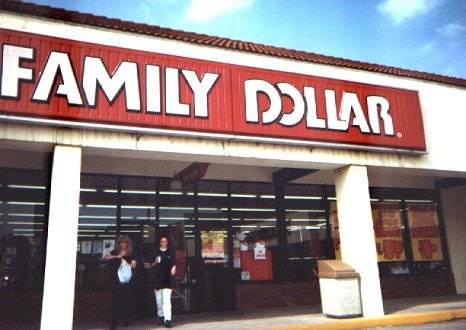
In the first week of January, New York graphic designer Nicholas Felton will boil down everything he did in 2008 into charts, graphs, maps and lists.

The 2007 edition of his yearly retrospective notes that he received 13 postcards, lost six games of pool and read 4,736 book pages. He tracked every New York street he walked and sorted the 632 beers he consumed by country of origin.

Part experimentation, part self-help, such "personal informatics" projects, as they are known, are gathering steam thanks to people like Mr. Felton who find meaning in the mundane. At their disposal are a host of virtual tools to help them become their own forensic accountants, including Web sites such as Dopplr, which allows people to manage and share travel itineraries, and Mon.thly.Info, for tracking menstrual cycles. Parents can document infant feeding schedules with Trixie Tracker. And couples can go from between the sheets to spreadsheets with Bedpost, which helps users keep track of their amorous activities.

The objective for Mr. Felton and others is to seize data back from the statisticians and the scientists and incorporate it into our daily lives. Everyone creates data -- every smile, conversation and car ride is a potential datapoint. These quotidan aggregators believe that the compilation of our daily activities can reveal the secret patterns that govern the way we live. For students of personal informatics, the practice is liberating because it shows that our lives aren't random, and are more orderly than some might expect.

Mr. Felton calls his compilation the Feltron Annual Report; the slight alteration of his name connotes the mechanical nature of his autobiographical cataloging effort, now entering its fourth year. He plans to continue his project over the next decade in what he hopes will result in a modern-day spin on James Boswell's famously detailed biography of Samuel Johnson. "I want to create connections where I didn't know that they existed," Mr. Felton says. "I'm a natural annotator."

The elegantly graphical reports, as much design projects as they are data compilations, are posted online by Mr. Felton. He also creates hard-copy limited editions, available free of charge. They have become so popular that he recently launched a Web site with his friend Ryan Case called Daytum, which helps fellow chroniclers track the details of their own experiences.

The culture of sharing information online has shifted in recent years, from a focus on blog ramblings to the ubiquitous micro-movements of posters' daily lives. Microblogging sites like Twitter have become commonplace. President-elect Barack Obama, for example, had his own Twitter account and used it to keep his supporters up to date on his campaign's daily comings and goings. (It's been silent since the election.) Facebook's News Feed feature initially drew criticism from members because it offered a running log of users' minute postings and updates, but has since became a core part of the Web site's community. Some sites collect data automatically for their users. Last.fm keeps a record of all of the songs users have listened to, and Netflix keeps track of members' movie-watching habits.

"It's a natural progression from people sharing things like movies, photos and videos," says Dennis Crowley, founder of Dodgeball, an early social-networking service for mobile phones which was sold to Google in 2005. "What's left to share? Basic data."

Yannick Assogba, a graduate student at MIT's Media Lab, created a site called Mycrocosm to help users compile and share the "minutiae of daily life" in the form of multicolored bar charts and pie charts. Mr. Assogba, for example, tracks his ping-pong winning streaks and what days he spends the most money. Created in August, Mycrocosm now has 1,300 registered users. "We're living in an era of data," Mr. Assogba says.

Today's info-chroniclers are just the latest in a long history of diarists and scientists who kept notes by hand. Nineteenth-century English inventor and statistician Francis Galton, who introduced statistical concepts such as regression to the mean, was an obsessive counter who created the first weather map and carried a homemade object called a "registrator" to, among other things, measure people's yawns and fidgets during his talks. (Mr. Galton's preoccupation with data, specifically with human hereditary traits, also yielded an unsavory by-product -- eugenics.)

In 1937, a social research organization called Mass Observation in London used about 2,000 volunteers to develop an "anthropology of ourselves." For more than a decade, participants recorded such things as their neighbor's bathroom habits and what end of their cigarettes they tapped before lighting up. Personal tracking also showed up in "Cheaper by the Dozen," a 1948 book about efficiency experts Frank Bunker Gilbreth and Lillian Moller Gilbreth and their attempts to track and optimize the daily routines of their 12 children (including when they brushed their teeth and made their beds).

Several technological shifts in the last decade have helped turn personal informatics into a mainstream pursuit. The iPhone, for example, has several applications such as Loopt that use the product's internal global positioning system to record a user's location and then share it with others. Low-cost products such as Wattson, an energy monitor that tracks real-time power consumption, make it easy to record otherwise nebulous data.

To help women prepare for their period or try to get pregnant, Chicago Web designer Heather Rivers created Mon.thly.Info, a site that sends alerts and tracks users' menstrual cycles. Ms. Rivers says her interest was purely practical; it's the only data about herself that the University of Chicago student records. "I'm not interested in biorhythms for the sake of being interested. It's just helpful in terms of throwing tampons in your backpack. This is one of the details I'd rather not worry about," Ms. Rivers says. "It's not so I can go back and fondly reminisce about my past periods."

Some of the new data collectors hope to make better decisions about their activities and improve their quality of life. For the last four months, Alexandra Carmichael, the founder of a health research Web site called CureTogether in San Francisco, has been tracking more than 40 different categories of information about her health and personal habits. In addition to her daily caloric intake, her morning weight and the type and duration of exercise she performs, she also tracks her daily mood, noting descriptions such as "happiness" and "feeling fat."

From her initial readings, she concluded that her mood went up when she exercised and went down when she ate too much. "I realized my relationship with food is a distorted, unhealthy one," Ms Carmichael says. She has concluded that she may have an eating disorder and has decided to seek counseling.

Andy Stanford-Clark, an inventor for IBM, began tracking the power usage of his 16th-century thatched cottage on the Isle of Wight in an unusual way. Everything in his house, from his phone to his doorbell, is hooked up to automated sensors. Each time water is used, or a light goes on or off, it's catalogued publicly on Twitter for all to see, along with the total household water and electricity consumption. Mr. Stanford-Clark says he now tries harder to conserve power. "I just couldn't believe how much money that was wasting," he says.

Keeping track of personal data online can yield unexpected consequences. "Initially, it sounds like a great idea, such as the social aspects," says Christopher Soghoian, a fellow at Harvard University's Berkman Center for Internet and Society. But "for most users, the costs outweigh the benefits," he says. Specifically, Mr. Soghoian points to the legal concept called the "third-party doctrine" which eliminates the right to privacy for users who voluntarily place their information on Web sites. "If you're cataloging every movement, that might come up if you get divorced," he say.

Private investigators and the federal government could also use such information in some circumstances. In the application for jobs with Mr. Obama's administration, applicants are asked to list all of the social networks that they are involved in and to supply any potentially problematic blog posts from their online past. "All this stuff is creating a huge digital paper trail that could come back and haunt you," says Mr. Soghoian.

Personal data collection can get in the way of living, some people admit. "It becomes an obsession," says Toli Galanis, an aspiring filmmaker in New York who tracks everything from his mercury levels to his vitamin D consumption. He says that he's had to forgo outings with friends when he's trying a new diet that requires scheduled mealtimes, and elicits strange looks from his parents when he measures his dinner food to the ounce.

Still, he adds, "Life and its goals are like a lab. Why not use it like a scientist? Then you'll really know what you want to. There's so much info that it'd be a shame not to track it."

0 comments